With Internet Explorer on the brink of death and its Edge browser close to it with a 4% share of the user base, Microsoft has finally completed the shift of the software’s rendering engine to Blink, the foundation for Google Chrome. This makes Edge one of the latest in a growing family of Chromium based web browsers. But what does this mean for Windows users — and what special features of the new Edge are worth knowing about? That’s what we’ll be exploring in this article.
Software development teams are much larger than the engineers that write code. Writing and deploying code are often only the tip of the iceberg. A well oiled software team will often consist of: All of these people need to know something about what the software development lifecycle is producing and shipping, but the level of information can vary dramatically based on a team member's position. Sleuth was built to automatically generate information to satisfy each team member's needs.
If you haven’t yet heard...Splunk dashboards are new and improved! We released a new dashboard framework as a beta app at .conf19, and have been working hard to improve it since then. This blog post will cover the highest-impact features in the release. For notes on every feature, see the release notes on Splunkbase. To see a run-anywhere dashboard highlighting the key features from this release, copy the JSON definition from our Github.
Today, we’re introducing a small but useful change to the Anomaly detection that configures which hosts the host triggers should listen to. Do you have a stroopwafel in your hand? Yes? Then let’s dig in.
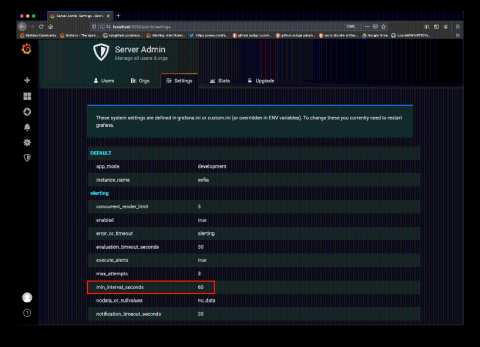
There has long been a request from administrators to have the ability to enforce a minimum interval between alert rule evaluations. This is useful for restricting unrealistic user-defined alert rules that evaluate too often and create unnecessary load in the backend. @Uepoch took the initiative and made all the necessary modifications for this configuration in Grafana’s backend, and we finally pushed it forward and introduced the feature in Grafana v6.6.
Recently, a StatusGator user on our 30 day free trial contacted us to inquire if StatusGator was GDPR compliant. The General Data Protection Regulation, or GDPR, is the European Union’s regulation that grants rights and requirements over personal data. Although we’ve been following the GDPR and its rollout for some time now, we haven’t taken active steps to comply with its requirements. We are based in the United States and don’t actively target European customers.