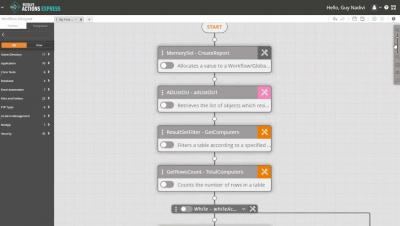
Resolve Actions Express Quick Start Guide
Get up and running with your free trial of Resolve Actions Express in no time!


If you’re a developer who lives and breathes code all day, you probably don’t mind having to write complex configuration files to set up an automation tool or configure a management policy. But the fact is that many of the stakeholders who stand to benefit from security automation are not developers.
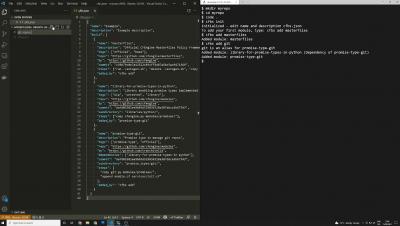
Using modules, you can add custom promise types to CFEngine, to manage new resources. In this blog post, I’d like to introduce some of the first official modules, namely git and systemd promise types. They were both written by Fabio Tranchitella, who normally works on our other product, Mender.io. He decided to learn some CFEngine and within a couple of weeks he’s contributed 3 modules, showing just how easy it is to implement new promise types. Thanks, Fabio!
At Sportsbet, an Australian online betting company with more than 1.25 million customers, one thing we’re not willing to take a gamble on is customer security. That means having strict identity and access management protocols in place to protect customer data and get better visibility into whom our employees are and what they have access to.
Automating data center tasks to increase operational efficiency is a primary goal for most data center professionals, but it can be a struggle. Professionals who have used legacy data center management tools like first-generation Data Center Infrastructure Management (DCIM) software, Excel, and Visio can attest to the fact that they are time-consuming, difficult to maintain, and inaccurate.
I recently had a minor task involving changing an option - on one of our command line tools - from taking a required argument, to taking an optional argument. This should be easy they said; just change the respective option struct to take an optional argument, add a colon to the optstring, and get on with your life. Well, it proved to be easier said than done. My initial expectation was that a solution similar to the one below should just work. And it does work, just not in the way I expected.
In an age when attackers create over a million phishing sites each month, and phishing serves as a beachhead for 95 percent of all attacks against enterprise networks, how can businesses respond? Part of the answer lies in educating users to recognize and report phishing, of course. But user education only goes so far – particularly because the same statistics cited above show that, on average, only 3 percent of users will report phishing emails.
Security touches every aspect of an organization's infrastructure and influences most of its processes. That's a lot to cover, and it seems like there are never enough people to handle the work. Even with budgets increasing by an average of 10% annually over the last 5 years, the recent increase in remote work and cloud adoption is stretching security teams even thinner.
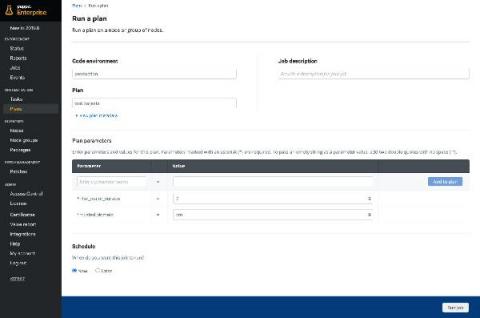
Do you author plans for Puppet Enterprise? Looking for ways to improve them? Read on! The Puppet Plan language allows a variety of methods to pick targets. In this article we will explore two of these methods (TargetSpec parameters and PuppetDB queries) and how plan authors can employ the latter to: Note: the following examples assume that you are running against targets that have the Puppet agent installed.