What is Workload Pricing?
Want more control, flexibility and freedom in the ways you use Splunk? You’re in luck. See how Workload Pricing aligns your investment to the compute power you use, and helps you boost that ROI.


Security is top of mind for many organizations—and for good reason. Recovering from a data breach is extremely costly. In fact, the average data breach costs more than $8.6 million in the US. One of the best ways to defend against cyberthreats is by adopting and implementing security automation.
Many errors can prompt a page in any search engine. The most common ones are the 404 Not Found Error and the 404 Not Supported Error. Yeah, once in a while, you might encounter this notification; the request method' post' is not supported. This prompt gives no one an option but to leave the page. Take it this way; the error message prompts in your website, yet you depend on these search engines to generate more traffic into your website.
Every company exerts some level of effort to manage costs, performance, and risk in their hybrid cloud environment. But to ensure that those activities are performed consistently and efficiently across the board, you need a framework of policies, processes, controls, and tracking. In other words, you need cloud governance.
DaaS (Desktop as a Service) simplifies virtual desktop and application delivery into a cloud-based subscription service that avoids the traditional complexities of on-premises VDI. As such, the potential benefits of DaaS are very attractive to IT teams that wish to establish greater control over desktops, improve security and speed-up provisioning. It’s no wonder that DaaS adoption and consideration is on the rise.
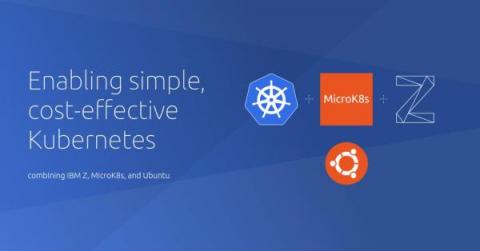
Containerisation has transformed the enterprise IT landscape, driving faster, more secure, and more predictable software delivery than ever before. Thanks to technologies like Docker, building containerised applications is easy, and many businesses are working with hundreds or even thousands of containers. To effectively deploy and manage all of these microservices, a container orchestration tool is essential, and Kubernetes is the leading solution.
March 1st, 2022 — Canonical announces that Pacific Textiles chose Canonical Charmed OpenStack for its infrastructure upgrade. The new private cloud environment allows keeping the legacy workloads running continuously and launching new cloud-native services simultaneously. The professional services team from Canonical helped Pacific Textiles during this migration, from making architectural choices to launching the live cloud.
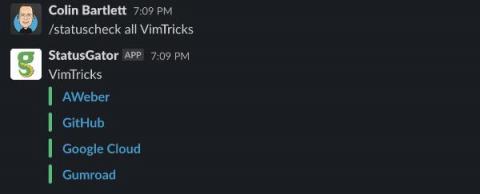
StatusGator’s Slack integration is one of our most popular features. Our users love getting real time notifictations of outages from all the cloud services they depend on. Plus, with a few quick clicks you can check the status of any service you monitor on StatusGator, using our /statuscheck slash command. Now, you can also get the status of all the services in your StatusGator dashboard with one quick command: /statuscheck list. This will list every service on your dashboard.
The following guest post addresses how to improve your services’s performance with Sentry and other application profilers for Python. Visit Specto.dev to learn more about application profiling and Sentry’s upcoming mobile application profiling offering. We’re making intentional investments in performance monitoring to make sure we give you all the context to help you solve what’s urgent faster.
If you’re a website owner, manager, or developer, you know to always check your website’s performance and design on both desktop vs mobile, especially since Google’s big drive for mobile-first. Google has even centred their 2021 Core Web Vitals around making sure that your website is efficient on mobile.