Operations | Monitoring | ITSM | DevOps | Cloud

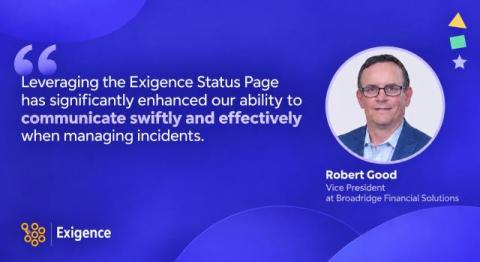
How Broadridge is transforming incident communications with targeted status pages

When an incident impacts thousands of users across multiple products, one-size-fits-all communication simply doesn't work. External and internal stakeholders want transparency, not information overload. Too much information can create as many problems as too little. For global financial technology leader Broadridge, managing incident communications across multiple clients, products, and internal stakeholder groups with precision was critical.

The October 20, 2026 Google Cloud europe-west2 Outage

Multiple Google Cloud services in europe-west2 (London) experienced service disruptions, elevated error rates, API timeouts and processing latency on October 20, 2026, according to Google's incident page. Google's preliminary incident report records the start at 23:00 US/Pacific on October 19, 2026 (06:00 UTC on October 20) and the end at 05:10 US/Pacific on October 20 (12:10 UTC) - 6 hours 10 minutes.

How a Suburban Injury Team Gives Crash Victims Focused Attention

Texas's suburban communities are closely connected by busy roads, growing neighborhoods, and daily commutes that keep people moving between work, home, and family responsibilities. When a crash interrupts that routine, victims may suddenly have to manage physical recovery while dealing with transportation problems, financial pressure, and uncertainty about what comes next. The experience can feel especially overwhelming when several parts of a person's life are affected at once, making focused attention important rather than a one-size-fits-all approach.

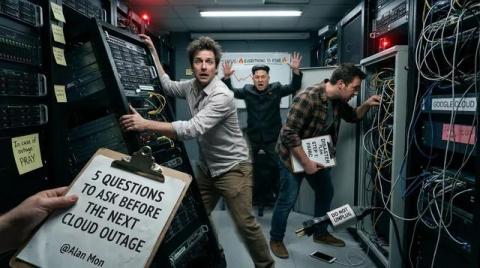
5 Questions to Ask Before the Next Cloud Outage

On October 20, a power failure in one of Google Cloud’s three London zones disrupted Revolut, Lloyds, HSBC and others for hours. One zone failed, errors spread region-wide, and Google warned customers they might not be able to create new workloads to fail over to. Most teams find out how resilient they are during an outage, not before one. These five questions let you find out first.

Before you build your own internal platform, run these numbers

"We'll just build it ourselves" is usually said with confidence and a rough headcount estimate. Six months later, the team that was supposed to spend two sprints on it is still maintaining it a year in, and the platform that was meant to save engineering time has become one of the things engineering time goes to. Build isn't automatically the wrong call. Sometimes it's the right one.

A walkthrough of a root cause analysis with ilert AI SRE

It's 3am and a complaint has made its way to you: customers can't see product reviews. Nothing has crashed, and no alert points anywhere useful. Somewhere in your stack one service is failing, and the one showing the error is probably not it. Before you can fix anything you have to find it, and that search is most of your night. Now imagine you open the laptop, type one sentence and go grab a coffee. By the time you’re back, the root cause is ready, evidence attached. Your job is to check it.

Git worktrees: How to work on multiple branches at once

Git worktrees let you check out multiple branches of the same repository in separate directories. Each worktree has its own files and staging area, but they all share the same Git history. You can work on several branches without repeatedly switching between them, stashing changes, or cloning the repository again. Worktrees are especially useful when working with coding agents. Tools like Claude Code, Codex, and Cursor can use them to handle multiple tasks in parallel without editing the same files.