Operations | Monitoring | ITSM | DevOps | Cloud

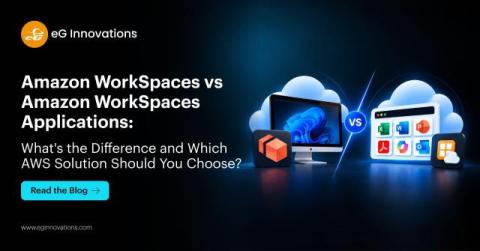
Amazon WorkSpaces vs Amazon WorkSpaces Applications: What's the Difference and Which AWS Solution Should You Choose?

If you’re researching AWS desktop virtualization and application delivery services, it is likely that you have come across Amazon WorkSpaces and Amazon WorkSpaces Applications. While the names sound similar, these two AWS services address different requirements. Amazon WorkSpaces provides a complete cloud desktop, while Amazon WorkSpaces Applications focuses on securely delivering individual applications through AWS-managed application streaming.

Let's Encrypt Is Shortening Certificate Lifetimes

Let's Encrypt is cutting its certificate lifetimes in half, from 90 days down to 45 days by 2028. If your team still has a calendar reminder that says "renew the certs," this is the nudge to finally retire it. The change isn't purely a Let's Encrypt decision. It's part of an industry-wide shift driven by the CA/Browser Forum, and every publicly trusted certificate authority is heading the same direction.

The Cyber Security Arms Race

My content creator friends were eating well last week, figuratively. I would be very surprised if you didn’t hear about any of the security vulnerabilities that were disclosed last week. There were several high profile bugs that could lead to Remote Code Execution (RCE). The vulnerabilities for PHP were so widespread that governmental bodies were advising website owners to take their sites offline until they can implement the latest patches when they became available.

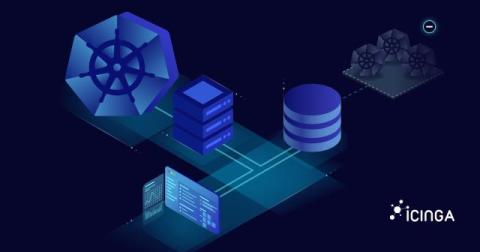
Removing decommissioned clusters from Icinga for Kubernetes

Clusters get retired. A test cluster is torn down, a workload moves to a new environment, a provider contract ends. Icinga for Kubernetes does not know about any of that. Since v0.3.0, several clusters can write into one shared database, and Icinga for Kubernetes Web shows them side by side. But stopping or uninstalling the daemon for a cluster leaves all of its data in place.

How much does it cost to train an AI model? Frontier figures, graded [2026]

Training an AI model costs anywhere from a few hundred dollars to several hundred million, depending entirely on what “train” means. Fine-tuning an existing model: tens to thousands of dollars. Pretraining a small model from scratch: tens of thousands to millions. A frontier run in 2026: hundreds of millions, with Epoch AI projecting the largest runs will pass $1 billion by 2027.

Shipped: See which billing connections stopped sending data, and why

Every number in CloudZero comes from a billing connection. When a credential expires or a permission changes, that connection stops sending data, and your reports show less spend than you actually have. If you catch it early, you can fix the connection before month-end close. You also need to know what broke. For Azure and Snowflake connections, CloudZero now tells you which check failed, so you can send the fix to the right person without opening a support ticket.

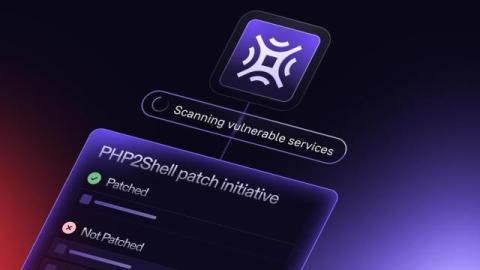
PHP2Shell: Manage security patches at scale with Cortex

"Patch every PHP server. Today." That was the message a lot of engineering leaders got the week of October 20. PHP2Shell is a pair of unauthenticated remote code execution bugs in PHP itself, CVE-2026-109618 and CVE-2026-109619, both rated CVSS 9.2. Attacks started before the patches shipped, and working exploits followed within days.

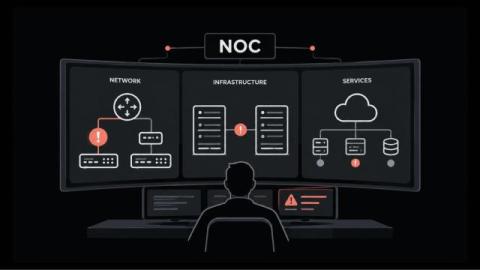
NOC Monitoring: What a Network Operations Center Tracks and How

NOC monitoring decides how fast a network problem turns into a fix. If your NOC watches the wrong layers, it misses the fault. If it alerts on everything, the real fault gets buried. According to Uptime Institute's Annual Outage Analysis 2026, 57% of operators said their most recent major outage cost more than $100,000. Most teams already collect plenty of data through network monitoring. The hard part is turning that data into a short queue of alerts that the right person acts on.

7 weak points in your delivery model to fix before your next audit or outage

An auditor asking for evidence of your deployment process and an incident review asking what went wrong are asking about the same things. The difference is timing. One catches the weak point before it costs you anything. The other catches it in the middle of an outage, with a customer on the phone.