Operations | Monitoring | ITSM | DevOps | Cloud

OpsRamp August 2019: Alert Management, AIOps, Cloud Monitoring, Integrations, APIs

The Summer 2019 release introduced: OpsQ Observed Mode, Learning-Based Auto-Alert Suppression and many more updates to the OpsRamp Platform. This week all OpsRamp customers are being updated to our August 2019 release. Customers and partners should review all the details in our release notes. Here’s a high-level summary of what’s new this month: Observed Mode is now available for Alert Escalation and First Response policies.

Announcing Graylog 3.1

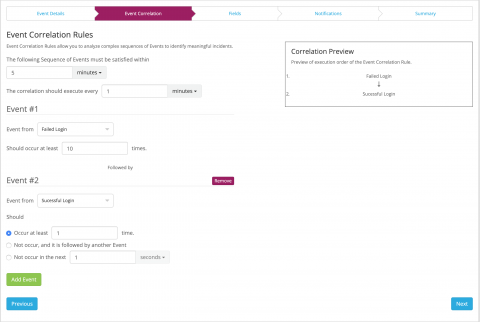
Announcing Graylog v3.1 Today we are officially releasing Graylog v3.1. This release brings a whole new alerting and event system that provides more flexible alert conditions and event correlation based on the new search APIs that also power the views. In addition, some extended search capabilities introduced in Graylog Enterprise v3.0 are now available in the open source edition in preparation for unifying the various search features.

Loki's Path to GA: Query Optimization, Part One

Launched at KubeCon North America last December, Loki is a Prometheus-inspired service that optimizes storage, search, and aggregation while making logs easy to explore natively in Grafana. Loki is designed to work easily both as microservices and as monoliths, and correlates logs and metrics to save users money. Less than a year later, Loki has almost 6,500 stars on GitHub and is now quickly approaching GA.

Introducing On-Demand Logging with Logz.io Drop Filters

Logs need to be stored. In some cases, for a long period of time. Whether you’re using your own infrastructure or a cloud-based solution, this means that at some stage you’ll be getting a worried email from your CFO or CPO asking you to take a close look at your logging architecture. This, in turn, will push you to limit some data pipelines and maybe even totally shut off others. Maybe we don’t need those debug logs after all, right? Wrong.

Top 3 RapidSpike E-commerce Tools: Part 1 - User Journeys

Performance and security are the lifeblood of an e-commerce website. The moment pages start to slow down, or your customers fear their data may be at risk, is the moment your business starts to fail. This post is the first in a series of three that will explore the key tools every ecommerce site needs running 24/7.

Introducing: Sentry's Unified Go SDK

According to Stack Overflow’s Developer Survey 2019, Go is the third most wanted language to learn, as well as the third-best paid technology in the field. It is not a surprise, as it is one of the languages used for writing critical parts of a lot of large systems. The language design and syntax are simple, but developing in Go is far from easy.

Introduction to Error Handling in Angular 7 Using Rollbar

In this tutorial, you will be introduced to errors tracking in Angular 7 using the errorHandler class and Rollbar. This is the last part of the Angular 7 error handling series, you can refer to the first part here, and the second part here. In this series, you have been introduced earlier to handling client side errors and then HTTP errors gracefully in Angular 7 with tools like errorHandlers, Interceptors and even RxJS operators.

Understanding Systemic Issues: The PagerDuty Health Check Process

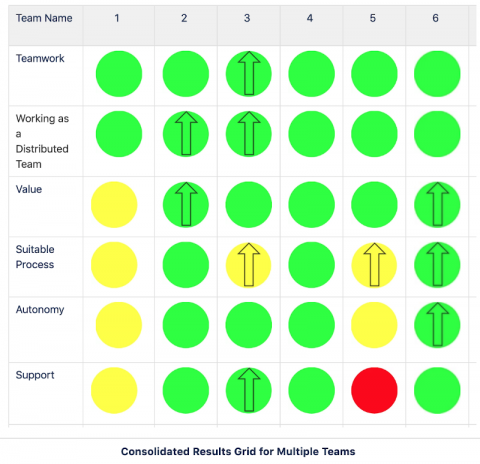
Continuous improvement is one of the fundamental tenets of Agile methodology that PagerDuty’s product development teams emphasize. This already works fairly well at the individual team level via retrospective meetings and postmortems but sometimes we don’t notice larger or systemic issues that are outside the control of a single team. This blog will share the process that we use at PagerDuty to uncover those issues, the outcomes we have seen, and how we have evolved that process.