Operations | Monitoring | ITSM | DevOps | Cloud

What is a Remote Repository? #shortsvideo #shorts #coding

🌐💾 A remote repository is like your code's virtual storage locker, accessible from anywhere. It's where your projects live online, essential for team collaboration, version control, and safeguarding your code. Why use it? For any project where teamwork, backup, and remote access matter. Here are three tips for mastering remote repositories: 1️⃣ Clear Commits: Think of each commit as a clear, concise note to your future self and teammates about what you did and why.
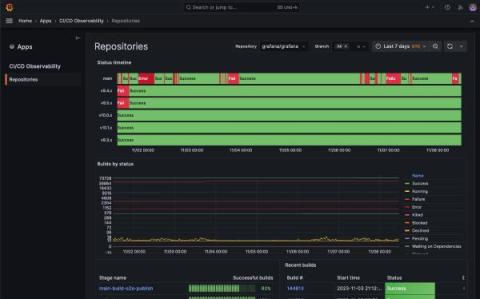
What is CI/CD observability, and how are we paving the way for more observable pipelines?

Observability isn’t just about watching for errors or monitoring for basic health signals. Instead, it goes deeper so you can understand the “why” behind the behaviors within your system. CI/CD observability plays a key part in that. It’s about gaining an in-depth view of the entire pipeline of your continuous integration and deployment systems — looking at every code check-in, every test, every build, and every deployment.

Captains Log: How we are leveraging CEL for Signals

As engineers, we didn't want to make Signals only a replacement for what the existing incumbents do today. We've had our own gripes for years about the information architecture many old companies still force you to implement today. You should be able to send us any signal from any data source and create an alert based on some conditions. We're no strangers to building features that include conditional logic, but we upped the ante when it came to Signals.

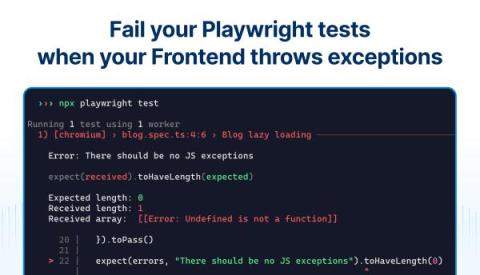
Track Frontend JavaScript exceptions with Playwright fixtures

Table of contents Frankly, end-to-end testing and synthetic monitoring are challenging in today’s JavaScript-heavy world. There’s so much asynchronous JavaScript code running in modern applications that getting tests stable can be a real headscratcher. That’s why many teams rely on testing mission-critical features and treat “testing the rest” as a nice to have. It’s a typical cost-effort decision.

Secure and monitor infrastructure networking with Buoyant Enterprise for Linkerd in the Datadog Marketplace

As organizations adopt Kubernetes, they face gaps in security, reliability, and observability such as unencrypted communication, lack of multi-cluster support, and missing reliability features like circuit breaking. Buoyant Cloud is the dashboarding and automated monitoring component of Buoyant Enterprise for Linkerd, which helps organizations secure and monitor communication between Kubernetes workloads.

Centrally govern and remotely manage Datadog Agents at scale with Fleet Automation

As customers scale to thousands of hosts and deploy increasingly complex applications, it can be difficult to ensure that every host is configured to give you the visibility you need to monitor your infrastructure and applications. To ensure visibility across a growing number of hosts, you need to know that your observability strategy is implemented uniformly across your entire fleet of Datadog Agents installed on these hosts.

IAG Relies on PagerDuty Operations Cloud for Sustainable Growth

Part of the International Airlines Group (IAG), IAG Loyalty operates the loyalty programs for IAG’s airlines—British Airways, Iberia, Vueling and Aer Lingus—and 125+ global brand partners in travel, retail, and financial services. With the PagerDuty Operations Cloud, IAG Loyalty has built a framework that allows engineers to build products and services in a fast and safe way. This has laid the foundation for sustainable growth as a company. Hear more in this video from Colin Lewis, Head of Core Engineering at IAG Loyalty and James Headon, Cloud Operations Manager at IAG Loyalty.

Deploy with Slack

Automate shipping code through Slack, or better yet, skip the manual steps altogether! This preview gives you a taste of what Slack approvals looks like and why you'd want to do it with Sleuth. Give Sleuth a try and see how we give teams actionable insights on how to improve with no-code automations to instantly ship improvements, and metrics to measure their impact — all in a way that both managers and developers love.

Ship code via Slack approvals

Automate shipping code through Slack, or better yet, skip the manual steps altogether! This video covers three steps to use Sleuth to automate code deployments using Slack. A bonus tip shows how to use Sleuth to automate the promotion of builds from staging to production, but in a safe manner with automatic health checks. Give Sleuth a try and see how we give teams actionable insights on how to improve with no-code automations to instantly ship improvements, and metrics to measure their impact — all in a way that both managers and developers love.

What is tool consolidation - and how can AIOps optimize it?

Tool consolidation is the process of analyzing which IT observability and monitoring tools to use, which to add, and which to retire. By carefully determining the usage and value of your current observability stack, your ITOps teams can consolidate redundant tools and those providing little value to reduce your operational costs. While the benefits of tool consolidation are clear, doing so is anything but.