
Operations | Monitoring | ITSM | DevOps | Cloud

Best practices for writing clean, maintainable JavaScript

The world’s biggest language comes with a huge collection of conventions and guidelines from the community’s collective wisdom. Following JavaScript best practices can help achieve faster page loads and better performance, improve code readability, and make maintenance and debugging easier. Carefully crafted code can also prevent errors and security issues, especially if it’s complemented with real-time diagnostic tools such as JavaScript error monitoring.

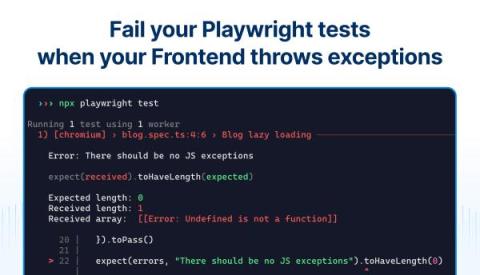
Track Frontend JavaScript exceptions with Playwright fixtures

Table of contents Frankly, end-to-end testing and synthetic monitoring are challenging in today’s JavaScript-heavy world. There’s so much asynchronous JavaScript code running in modern applications that getting tests stable can be a real headscratcher. That’s why many teams rely on testing mission-critical features and treat “testing the rest” as a nice to have. It’s a typical cost-effort decision.

Making your JavaScript projects less noisy

If you’re using Sentry for JavaScript error monitoring, you may be familiar with a common challenge: sifting through noisy, low-value errors that hinder identifying high-priority issues for you and your team. Capturing errors in JavaScript browser project can be tricky. Why? Well, it’s not just a single environment.

New Raygun JS provider v2.27.0 to support performance timing

The popular chromium based browser ecosystem has recently changed how performance metrics can be collected in relation to performance.timing. Before we get into the details, the TLDR is: if you use the Raygun CDN for raygun4js, you’re up to date. If you self-host raygun4js and use Raygun Real User Monitoring, you’ll want to upgrade to version 2.27.0.

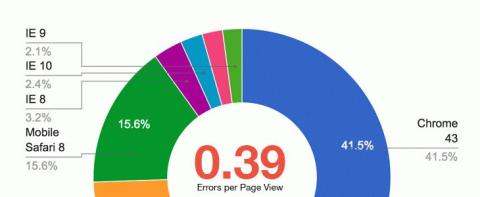
The State of Client-Side JavaScript Errors

As JavaScript has grown more prevalent on the web, so have JavaScript errors. As an error monitoring service, we have a unique perspective on how errors impact the web globally, and we are constantly learning more about how the web breaks. We’re thrilled to share this report today so we can all understand it better, and build a better web. We produce this report every week, you can check it out anytime via the free Global Error Statistics report.

Support for Next.js Middleware and Edge Routes

Third-party JavaScript libraries provide developers with the tools they need to build modern web experiences, and a bit of cheatcode at times to not have to start from scratch. I mean, you don’t want to build an entire monitoring solution, so we help with Sentry’s Next.js SDK that only requires a couple of lines of code.

Best Search Packages for JavaScript

The demand for search functionality is growing, and many developers are trying to incorporate it into their applications. However, building one from scratch is challenging and time-consuming. Fortunately, many open-source libraries are available to relieve developers of this burden. This guide will provide the reader with a list of some of the best search packages for JavaScript.

Take control of monitoring and responding to your production Frontend Javascript errors

We are very lucky on the Rollbar Customer Engineering Team because we get to work with many many development teams. Each team develops, tests, and deploys their applications in their own way. They have chosen different languages and frameworks to solve their particular problem. We learn from each team that we work with, and share these learnings to our Product Design team.