Operations | Monitoring | ITSM | DevOps | Cloud


The latest News and Information on IT Networks and related technologies.


Internal Applications: Monitoring from Behind Your Firewall
As companies decide whether or not to move ahead with an “everything in the cloud” strategy for providing consumer-facing applications, enterprise applications are also getting a new shape with web-based applications to support internal business operations. These applications live inside the private network of the organization and often have role-based access.

Overcoming VPN bandwidth and capacity complications using Firewall Analyzer
As companies move towards a flexible, remote work environment, the demand for VPN services has increased considerably. This need to ramp up VPN infrastructures in such a short time comes with its fair share of operational problems and security concerns. Over purchasing VPN capacity would put a dent in the IT budget while under purchasing would result in loss of productivity.
Alien Wavelengths to Shared Spectrum
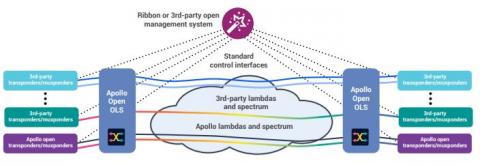
Alien wavelengths are commonplace today. Here a transponder pair from one optical system vendor connects to, and transmits over, the optical line system (OLS) – constituting fixed/reconfigurable multiplexer and amplification elements primarily – from another vendor. (While it can be technically feasible to pair transponders from different vendors, typically this is not done for commercial and operational reasons.)

SolarWinds Recognised by IT Professionals and Industry Leaders for Its IT Management Products, Company Achievements
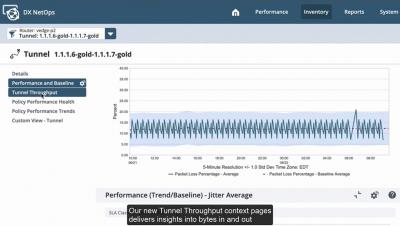
DX NetOps 20.2 Continues to Improve Visibility with Expanded SD-WAN Network Monitoring Coverage

VPN vs. Remote Desktop - Gateway Security Concerns
VPNs and Remote Desktop Gateways are two different tools used to achieve similar goals. That is: access content or software remotely and securely, and improve the overall freedom of the user – whether that’s from prying eyes or the need to have physical access to their business network. But while each option can be attractive, neither is without its security concerns.