Operations | Monitoring | ITSM | DevOps | Cloud

The latest News and Information on IT Networks and related technologies.

Why Cisco embraces Elastic for IT infrastructure transparency

This post is a recap of a presentation given at ElasticON 2020. Interested in seeing more talks like this? Check out the conference archive. Network infrastructure is the engine that drives a company’s business. As companies scale, assets that compose this infrastructure become more complex to manage. That means there’s more hardware, more software, and more subscriptions and services that require tracking.


How to Dynamically Auto-Steer your Traffic to Multi-CDN or Multiple Data-Centers

Whether it’s Cyber Monday deals or streaming the Super Bowl to millions of users, website’s traffic management & SRE teams often struggle to deliver a reliable user experience. Multi-CDN strategy is critical & integral to this process and is often determined by the following factors.

11 Types of Networks: Understanding the Differences

As the number of connected personal and IoT devices skyrockets across the world, the demand for high-speed, high-performance networks continues to climb and transform how people and businesses connect. Over the years, this technological growth has triggered the development of different types of networks to meet shifting demands, and it’s likely that with future technological advancement, more network topologies will continue to emerge.

Features to check for in a network scanner for enterprise networks

Network scanners have become an integral part of every IT admin’s first line of defense against security breaches. Using the right network scanner tool to conduct effective network reconnaissance and diagnosis enables you to pinpoint network issues that can escalate to security risks and network mishaps. A typical network scanner would allow you to scan a range of IP addresses sequentially, and display the active devices within that address block.

Incident Communication Is a Key Part of Resolving Network Issues

You’ve just received a notification—a major network issue has occurred. Hoping it’s a false positive, you complete an initial triage. Dang it! It’s the real thing. If you’re like me, your mind likely turns to one thing: fixing the issue as fast as you can. But hold on! Before you turn completely to fixing it, there’s another important aspect to any incident that you can’t forget, and that’s incident communication.

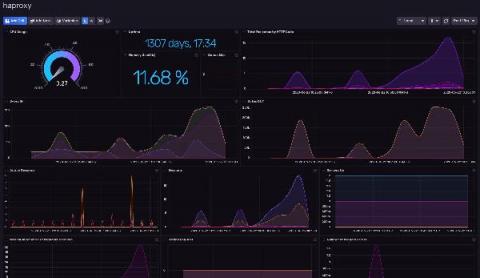
HAProxy Monitoring (the InfluxDB Way)

My personal experience with HAProxy dates back to my work with a previous company, where we used HAProxy to do load balancing between pairs of servers with specific roles. Those servers are the core of the major payment gateway in Uruguay, where thousands of users use them every day to pay their bills, recharge their mobile phones, pay parking fees, and even play lottery numbers.

Connect S.P.A. ups its network performance management game with OpManager!

Connect S.P.A. is a European IT company offering services in networking, wireless, security, monitoring, data center, and servers. It has two data centers and nine servers. Before finding OpManager, the IT company was using a network monitoring tool, but it did not offer enough visibility into its network, which made it difficult to troubleshoot and fix recurrent network issues. This led to unpleasant network downtime experiences, especially since the tool Connect S.P.A.