Challenges with Running Prometheus at Scale
Understanding limitations and challenges scaling Prometheus in modern cloud-native environments. Here we delve into long-term retention, downsampling, high availability, and other challenges.


The latest News and Information on Monitoring for Websites, Applications, APIs, Infrastructure, and other technologies.
Understanding limitations and challenges scaling Prometheus in modern cloud-native environments. Here we delve into long-term retention, downsampling, high availability, and other challenges.
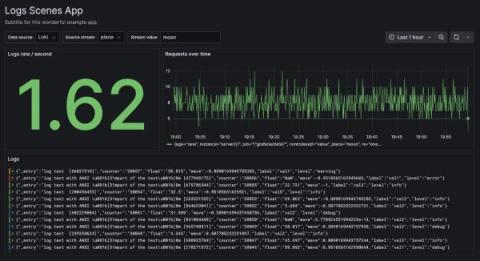
Grafana’s plugin tools help developers extend Grafana’s core functionality and create plugins faster, with a modern build setup and zero configuration. Grafana Scenes, meanwhile, is a new front-end library, introduced with Grafana 10, that enables developers to create dashboard-like experiences — such as querying and transformations, dynamic panel rendering, and time ranges — directly within Grafana application plugins.
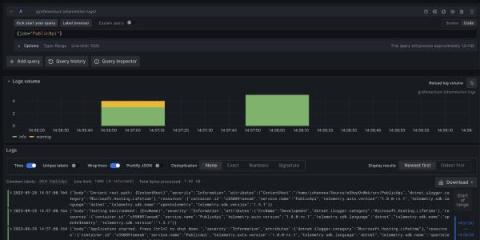
For those who have limited experience with OpenTelemetry, it can be intimidating to instrument.NET applications. But the OpenTelemetry community created a welcome shortcut with the first stable release of.NET Automatic Instrumentation. It simplifies the process of collecting metrics, logs, and traces from your.NET applications, without applying any changes to the source code or adding any dependencies to the OSS project.
We're happy to announce that AppSignal now offers monitoring tools for Python projects. AppSignal helps you get the most out of your Python application's monitoring metrics, with additional support for multiple Python frameworks and packages such as Django and Celery. In this article, we'll walk you through some of our core features to show you how to power up your Python application with AppSignal.
The much-anticipated cybersecurity rules by the U.S. Securities and Exchange Commission (SEC) for public companies have arrived, signaling a significant step forward from the proposed rules released in March 2022. These final rules, effective July 26, 2023, introduce new obligations that public companies must adhere to, promising a more secure and transparent corporate landscape. However, these regulations bring significant compliance challenges and litigation risks.
Catchpoint introduces new capabilities that make the Internet better. Our Fall 2023 Product Launch event showcased Catchpoint’s latest innovations to accelerate time to detection, improve automation capabilities, and further expand our Global Observability Network.
Do you find yourself lying awake late at night, worried that your greatest observability fears will materialize as one of the most horrific specters of Kubernetes-driven chaos reaches up through your mattress to consume your very soul?
Amazon Web Services (AWS) recently released a new cloud deployment option – ”Dedicated Local Zones” targeted at public sector, government and regulated industry use cases. Many customers still rely on on-premises infrastructure to meet regulatory and compliance requirements such as data localization. You can read the details of the AWS announcement including which services Dedicated Local Zones will support, here: Announcing AWS Dedicated Local Zones (amazon.com).