Operations | Monitoring | ITSM | DevOps | Cloud

The latest News and Information on Monitoring for Websites, Applications, APIs, Infrastructure, and other technologies.

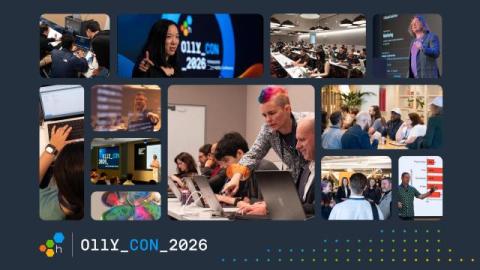
Everything We Talked About at O11yCon 2026

We just wrapped O11yCon 2026, and this year's conversations hit differently. Agent-based software development is here, now. It's no longer an optional choice, and everybody is struggling to understand what their agents are doing and how to make them cost less and perform better. Over the course of fifteen talks, we saw clearly that the old assumptions on how and who (or what) writes our software has been upended. Here are some highlights. We'll have videos available in the near future.

You don't need to pick one: how Sentry and OpenTelemetry work together

You already instrumented the backend with OpenTelemetry. Your services emit spans. Your teams know the OTel APIs. Maybe you already run a Collector. So when you start evaluating Sentry, the obvious question is: Do you need to replace your OpenTelemetry setup with the Sentry SDK? No. The practical answer is usually: keep OpenTelemetry where it already works, add the Sentry SDK where it gives you more application context, and send OpenTelemetry Protocol (OTLP) events to Sentry.

Builder in the loop: Eric Lake on making AURA smarter after every incident

Builder in the Loop is a Mezmo interview series focused on the engineers, product leaders, and operators shaping AURA, an open-source, MCP-native agent harness for production operations. The goal is to get past the polished product layer and talk through the decisions that matter when AI starts interacting with real systems. Key questions include: What should agents be allowed to do? How do they get better over time? Where should humans stay in the loop?

Investigate funnel drop-offs with Product Analytics

For most product teams, funnels are a staple of the analytics toolkit despite a frustrating limitation. You can see which step users are dropping off at, but understanding why requires hours of manual slicing across segments, separate comparison views, and a lot of trial and error before you land on a useful hypothesis. And even when you find something meaningful, taking action typically means jumping to another tool, building a new segment, or filing a request with a data team.

Bridging Bedrock Skills with AI: A Conversation with Jeremy Bradberry

What happens when decades of operational experience meet modern AI-driven networking? In the latest episode of Next-Gen Network Heroes, Bob Slevin sits down with Jeremy Bradberry, Senior Network Engineer at Delaware North, to explore how network engineers can modernize infrastructure without losing sight of the operational realities behind the technology. Jeremy shares lessons learned from working on legacy manufacturing systems, how AI is helping engineers analyze data and automate workflows faster than ever before, and why strong standards still matter in today’s AI era.

Game On: What Retro Gaming Teaches Us About Modern Networks with Jeremy Bradberry

What can decades of hands-on operational experience teach us about the future of AI-driven networking? In this episode of Next-Gen Network Heroes, host Bob Slevin sits down with Jeremy Bradberry, Senior Network Engineer at Delaware North, for a conversation that spans everything from legacy manufacturing systems and mainframes to modern AI-assisted network operations. Jeremy shares how his early career working in industrial environments shaped the way he approaches networking today, giving him what he calls an “X-ray vision” into how technology connects directly to business operations.

Hybrid Cloud Monitoring Explained: On-Prem + Cloud + Kubernetes in One View

Understand what hybrid cloud monitoring is and why it’s critical for managing modern distributed IT environments. Hybrid cloud monitoring helps organizations unify visibility across on-prem infrastructure, public cloud platforms, virtual machines, containers, and Kubernetes clusters in a single monitoring platform. In this video, learn how fragmented monitoring tools create operational blind spots and slow down incident response across hybrid environments.