Operations | Monitoring | ITSM | DevOps | Cloud

The latest News and Information on Log Management, Log Analytics and related technologies.

Tutorial | How to Custom Parsing with LogDNA

LogDNA automatically parses common log types so that you can easily view and search through them. If you have logs that aren't in a format we automatically parse, you can create a custom parsing template so they'll be parsed as well, allowing you to use them in views, alerts, boards, and graphs. In this video, we will show you how to use Custom Parsing templates for a log that we don't automatically parse, such as one from an internal application.

Tutorial | How to use LogDNA Screens

Use LogDNA Screens to display daily log activity from all of your systems or select systems. Use time-shifted graphs to aggregate data from the previous week to compare activity levels in your current week. Our screens let you create an easy-to-read dashboard containing widgets that convey metrics from your logs. These include graphs, gauges, tables, and time-shifted graphs. In this video, we'll create a screen with widgets that provide different views of your webserver's 404s.

Aggregating Application Logs From EKS on Fargate

Today we’re going to talk about logging with Kubernetes on AWS using CloudWatch and SolarWinds® Papertrail™. We’ll cover setting up Papertrail, installing and configuring the rKubeLog package, viewing the logs in the Papertrail event viewer, and cross-checking those logs with the ones we see with kubectl. From there, we’ll set up a few different alerts.

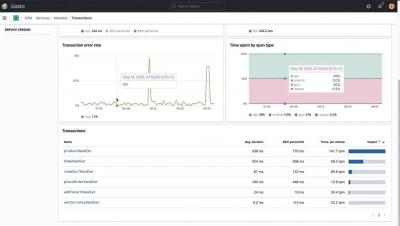
Elastic recognized as a Challenger in the 2021 Gartner Magic Quadrant for Insight Engines

We’re excited to announce that, as a new entrant in the 2021 Gartner Magic Quadrant for Insight Engines, Elastic has been recognized as a Challenger. You can download the complimentary report today. Read on to learn more about creating powerful, modern search experiences with Elastic Enterprise Search.

Now is the time for Sumo!

Sumo Logic transforms an overwhelming volume of data generated from digital services into valuable insights. With Sumo Logic, customers improve how they monitor and troubleshoot applications and infrastructure, manage audit and compliance requirements, detect and resolve security threats, and extract critical, key business indicators to gain insights into customer behavior and engagement.  

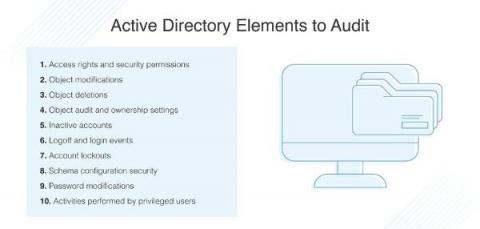
Monitoring Windows Event Logs - Getting Started

Windows event logs are important for security, troubleshooting, and compliance. When you analyze your logs, you can monitor and report on file access, network connections, unauthorized activity, error messages, and unusual network and system behavior. However, Windows servers produce tens of thousands of log entries every day.

How to Understand Log Levels

More than once, I’ve heard experienced software developers say that there are only two reasons to log: either you log Information or you log an Error. The implication here is that either you want to record something that happened or you want to be able to react to something that went wrong. In this article, we’ll take a closer look at logging and explore the fact that log levels are more than just black or red rows in your main logging system.

Hunting for Lateral Movement using Event Query Language

Lateral Movement describes techniques that adversaries use to pivot through multiple systems and accounts to improve access to an environment and subsequently get closer to their objective. Adversaries might install their own remote access tools to accomplish Lateral Movement, or use stolen credentials with native network and operating system tools that may be stealthier in blending in with normal systems administration activity.

Microservices vs. Serverless Architecture

Microservices and serverless are both important topics in the world of cloud-native computing. Yet, although serverless functions and microservices architectures often go hand-in-hand, they’re distinct technologies that fill different roles in modern software environments. Here’s an overview of what microservices and serverless are, how they relate to each other, how they are different, and why you may or may not wish to deploy a serverless microservice.