Operations | Monitoring | ITSM | DevOps | Cloud

This Month in Datadog: Reference Tables is generally available, Attacker Clustering, and more

Datadog is constantly elevating the approach to cloud monitoring and security. This Month in Datadog updates you on our newest product features, announcements, resources, and events. To learn more about Datadog and start a free 14-day trial, visit Cloud Monitoring as a Service | Datadog.

Webinar: Petabyte Scale, Gigabyte Costs: Mezmo's ElasticSearch to Quickwit Evolution

Many engineering teams rely on ElasticSearch for search and analytics, but as data volumes grow, so do the challenges of scale, cost, and performance. At Mezmo, we faced this reality head-on, recognizing the need for a more efficient and scalable solution to support our multi-cluster, multi-petabyte telemetry data backend. After extensive evaluation, we made the leap to Quickwit, an open-source, cloud-native search engine for logs. But making such a fundamental architectural shift—without disrupting customers—was no small feat.

Faster Releases, Fewer Bugs: Firmware Engineer Shares The Surprising Strategy

Shipping faster can seem risky, but Mark Schulte reveals why it might actually lead to fewer bugs. Discover the unexpected math behind releases and how a rapid approach enhances your debugging efficiency. Can breaking down changes hold the key to smoother deployments?

GitKraken Desktop Release 11.0: GitKraken AI

In this release, GitKraken evolves into your development co-pilot with new AI features designed to save time and reduce toil. Learn how to use AI-generated commit explanations, commit message generation, and how to customize your AI model settings with OpenAI, Anthropic, or Gemini—all included with your subscription.

Feature Spotlight - Incident Automations

From managing issues and resources to keeping customers updated, resolving an incident requires a level of multi-tasking that can be overwhelming for even the most efficient of teams. Automating your processes reduces the time needed to diagnose, mitigate, and resolve incidents, and simplifies communication throughout an incident's lifecycle.

Capture Accurate Temperature Data Across Your Supply Chain with the Zebra ZS300 Sensor | Zebra

The Zebra ZS300 sensor captures temperature data and transfers it to SAP via LiquidUI. Paired with Zebra’s compact data bridge, or your own mobile devices, you can stream both temperature and location data to the cloud and your SAP system, where AI agents analyze the information and suggest real-time actions.

Troubleshoot microservice-based apps faster with Splunk Observability Cloud

When something goes wrong with your microservice-based apps, Splunk Observability Cloud offers a unified Observability platform to make debugging processes easier and faster. By using features like the Service Map to identify the cause of the error and Related Logs in Log Observer to pinpoint its location, you can get back up and running quickly, limiting the impact to your bottom line and keeping your customers happy.

Introduction to Private Locations in Splunk Synthetic Monitoring

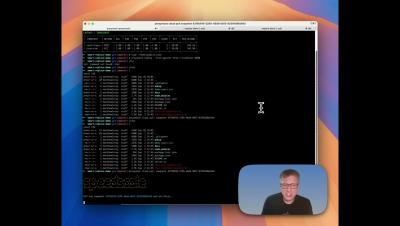
In this tutorial, we’ll demonstrate how to create and use private locations in Splunk Synthetic Monitoring to test internal or pre-production applications within a Kubernetes environment. You'll learn exactly what private locations and private runners are, common use cases, and step-by-step instructions on how to deploy a private runner using Helm. Finally, you'll see how to set up a simple browser test to run synthetics against a service available only within a Kubernetes cluster.

Understanding the Meaning of a Waterfall Chart #coding #chromedevtools #programming

Decode website loading sequences with Todd Gardner's essential guide to waterfall charts in this Concepts of Web Performance tutorial. Perfect for entry-level web developers struggling with slow websites, this video demystifies those intimidating colored bars you've seen in Chrome DevTools, WebPageTest, and monitoring tools like Request Metrics. Learn to interpret the crucial elements of waterfall charts—from request queuing and waiting times to content downloading phases—all visualized on a timeline measured in milliseconds. Discover how to identify two major performance bottlenecks.