Operations | Monitoring | ITSM | DevOps | Cloud

What's New in Tempo 3.0

Tempo 3.0 introduces a major architectural shift that decouples the read and write paths, with Kafka handling durability on the write side and a new live store serving recent traces on the read side. Blocks are now written at a replication factor of one instead of three, significantly reducing storage overhead. This release also brings TraceQL metrics to general availability, adds comparison operators for filtering metric results at query time, and introduces a new Tempo CLI redact command for removing sensitive trace data on demand without waiting for retention to expire.

Inside the Grafana AI Team Weekly: AI Observability for the OTel demo and LLMSpec (May 12, 2026)

This is an excerpt from a real AI team weekly meeting where we talk about the stuff we build and occasionally also demo them! In this one, Principal Software Engineer Sven Großmann demos how he integrated AI Observability into the OTel demo, complete with the guards feature he introduced last week, and Principal Software Engineer Yas Ekinci gives a rare glimpse of LLMSpec, the internal counterpart of the o11ybench benchmark that we use to evaluate Assistant.

ER-to-Physician Communication Workflow: Healthcare Critical Alerting Case Study

When a nurse calls for help, every second counts. ER nurses juggle a lot: admission decisions, discharge approvals, orders, physician consults. When they need support fast, they can't afford to chase down the right person manually. Here's how one physician-led medical group solved it using OnPage: Nurses leave a voicemail on a single intake line It's automatically routed into OnPage as an alert to the on-call triage coordinator.

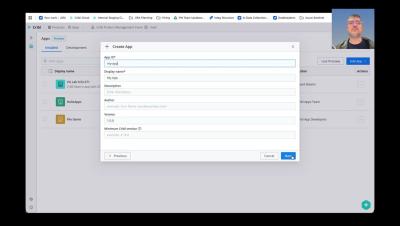
Your telemetry, your apps. Inside apps on the Cribl Platform

You already use Cribl to tame your telemetry data. Now you can turn that data into apps your teams actually want to use. In this video, we walk through how to create apps in the Cribl Platform and show how real apps solve real problems: guided troubleshooting for noisy incidents, opinionated security views, and exec-friendly ROI dashboards. You’ll see how apps sit on top of Cribl Stream, Edge, Search, and Lake, so you reuse the data and logic you already have instead of building custom tools from scratch.

How to Import Microsoft Defender Vulnerabilities into NinjaOne

NinjaOne Field CTO, Jeff Hunter, demonstrates how to automate the vulnerability importation from Microsoft 365 into NinjaOne. While this process can be automated using Microsoft Azure Functions or AWS Lambda, for the purposes of this demonstration we will be using an API server. Chapters.

Never Miss a Device: Achieving Continuous Patch Compliance in an Era of Persistent Threats

Does your organization achieve 95% or greater patch deployment success, as demanded by SLAs and regulatory frameworks? Odds are you don't, as most organizations only hit the 90% mark due to common issue: Devices that miss scheduled maintenance windows leave IT teams like yours scrambling to manually, reactively close compliance gaps.

Uber blew its annual AI budget in 4 months

Uber burned through its entire annual AI budget in under 4 months. Here's what went wrong — and what every engineering org should be doing instead. The data: 80% more code is getting pushed with AI… but only 18% of AI-written code actually ships to production. That's not a productivity story. That's a spend problem. If you're scaling AI tooling without real-time monitoring and guardrails, you're Uber.

Can DevOps work in regulated industries?

Cortex co-founder and CTO Ganesh Datta sits down with Matt Bailey, DevOps consultant and founder of Merge Ready. Matt shares lessons from helping large regulated organizations in finance, healthcare, and government transform their DevOps practices, and explains why DevOps is an outcome rather than a toolchain.