Operations | Monitoring | ITSM | DevOps | Cloud

IT Asset Audit: 7 Steps to Audit Hardware, Software And Digital Assets (2027)

An IT asset audit is one of those processes most IT teams know they should run regularly and rarely do well. Records drift from reality, licenses go unchecked, and the first sign something is wrong usually arrives as an auditor's request or an unexpected vendor notice. This guide explains how to perform an IT asset audit step by step, what to verify for each type of asset, and where the evidence for each check comes from.

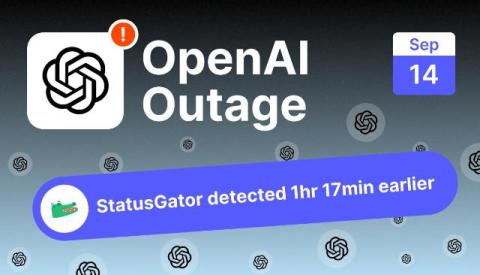
OpenAI outage on September 14, 2026: "some tools are temporarily unavailable" errors hit ChatGPT worldwide

ChatGPT’s tools and workspace features failed for users around the world on September 14, 2026, with the message “Some tools are temporarily unavailable” blocking spreadsheet and document creation, Codex, Projects, file reading, and dictation while core chat largely kept working. StatusGator sent an Early Warning Signal at 14:41 UTC, 1 hour and 17 minutes before OpenAI publicly acknowledged the incident at 15:58 UTC.

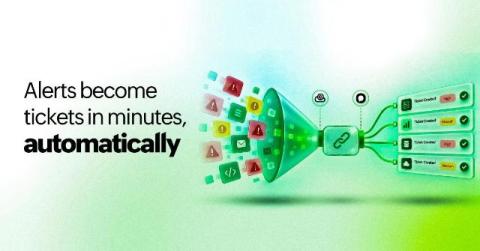
Site24x7 meets HaloITSM: Turn your monitoring alert into a HaloITSM ticket, automatically

Every IT incident response starts the same way. Something breaks, an alert fires, and someone has to act on it. The faster that chain completes, the better your team looks on the SLA reports and the less your users feel it. If you're using HaloITSM, a service desk platform built for enterprise IT operations, that chain now has one fewer link.

AIOps Automation Tools Buyer's Guide

The phrase “AIOps automation” now appears across observability platforms, ITSM suites, orchestration products, runbook tools, and general automation software. The label alone says little about what happens after detection. Some products create a ticket. Some launch a script. Others gather live context, choose an approved response path, execute across several systems, verify recovery, and update the operational record.

Upgrade your desktop: Ubuntu 26.04.1 LTS is now available

Whether you’re a first-time Linux user, experienced developer, academic researcher, or enterprise administrator, Ubuntu 26.04 LTS Resolute Raccoon is the best way to benefit from the latest advancements in the Linux ecosystem on a stable foundation. As with all LTS releases of Ubuntu, Ubuntu 26.04.1 LTS represents the consolidation of fixes and improvements identified during the initial launch of Ubuntu 26.04 LTS. It’s available to download and install from our download page.

VictoriaTraces in VictoriaMetrics Cloud: Complete Observability is Here

Earlier this year, we launched VictoriaLogs in VictoriaMetrics Cloud, bringing fast and cost-effective log management to everyone. Today we launch the final major step toward full observability: VictoriaTraces is now available to all cloud users. With this release, you can now manage all three signals, metrics, logs, and traces, in one place with the predictable pricing, reliability, and the operational simplicity you’ve come to expect from VictoriaMetrics.

The new APM experience: every service monitored from day one, and ready for your AI agent

Coralogix APM has told you which service is behind the latency. From today, the new APM experience tells you what is behind the service: the release, the environment, or the query one layer down. It watches every service you run from the moment it appears, without anyone writing an alert. And everything you see on the screen, your AI agent can use too: in Olly, from the Coralogix CLI, or through MCP in your IDE. A latency chart shows that something got slow.

Platform Engineering Without a Platform Team: How Growth-Stage SaaS Companies Get Production-Grade Infrastructure

If your team is outgrowing a simple PaaS and you do not want to spend a year or more building a platform engineering function, adopt a platform that operates Day 2 for you. Control Plane patches and upgrades the platform, autoscales and right-sizes workloads, and runs them active-active across regions and clouds under a 99.999% SLA. It runs natively on AWS, GCP, and Azure, and on your own clusters or on premises through Bring Your Own Kubernetes.