Operations | Monitoring | ITSM | DevOps | Cloud

Automate your critical workflows with AI agents in 5 steps

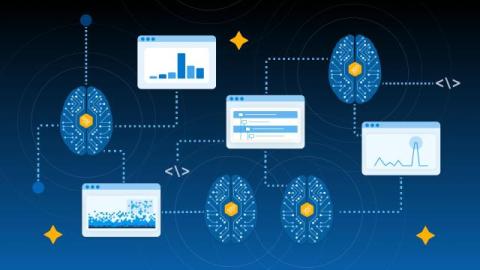
Many teams remain bogged down by operational chaos and manual drudgery, even with access to a variety of automation solutions. These tools often operate in silos, creating disconnected islands of automation that require significant human effort to bridge. Agentic AI offers a path forward, creating a cohesive system that can intelligently and autonomously handle complex operational workflows.

SLAs, SLOs, SLIs, and KPIs

The incident is over. The service is back up. The monitoring dashboard is green, the on-call engineer has stood down, and the post-incident review is on the calendar for Thursday. But there is a question that separates good operations teams from great ones: do you actually know what that incident cost you in terms of reliability commitments? Whether you breached an SLO. Whether a customer-facing SLA is now at risk.

Your CEO Wants You To Ramp AI Usage Without Breaking Budgets. Here's How You Can Do It

Notes from a finance leader whose job this is. A few weeks ago, I traveled to Philadelphia for a conversation with a prospective CloudZero customer. We’d been working with the prospect’s engineering team for some weeks, demoing our platform in view of the RFP they’d drawn up. This stage had gone well, and so the next step was talking it over with the prospect’s CFO. We expected a conversation centered around the key criteria in the RFP.

Your AWS Kiro Agent Can Now Query CloudZero. Here's What To Ask It

CloudZero's new AWS Kiro integration puts cost intelligence directly in your agentic IDE. Ask plain-language questions about spend, attribution, and cost-per-serve without leaving your development workflow. We see a similar pattern playing out across engineering teams running agentic development tools: code gets shipped fast, something moves in the cost data, and understanding why still requires leaving your environment entirely.

Why Runtime Visualization Is the Missing Link in Teaching Real-Time Systems

Guest blog by Florent Goutailler, Associate Professor, Télécom Saint-Etienne, France Teaching real-time embedded systems has always involved a fundamental challenge: the most critical behaviors – task scheduling, timing, and concurrency – are largely invisible at runtime. When students begin working with a real-time operating system such as FreeRTOS, they are introduced to concepts like scheduling, task prioritization, semaphores, and inter-task communication.

Poland's KSC Act Is Now in Force: Why NIS2 Compliance Starts with Infrastructure Automation

Poland’s implementation of the EU’s NIS2 Directive marks a decisive shift in how organisations think about cybersecurity, resilience, and operational risk. With amendments to the Act on the National Cybersecurity System (KSC Act) entering into force on 3 April 2026, enforcement expectations are now real, national, and significantly stricter than many organisations anticipated – including obligations for security controls, incident response, and supply‑chain governance.

Service-Centric Observability as the Control Layer

If distributed architectures have altered how systems degrade, then the way organizations model operational must evolve accordingly. Threshold monitoring evaluates individual metrics. Correlation clusters related alerts. Neither, on its own, explains how instability in one component alters exposure across an interconnected service landscape. In conversations at Nexus Live 2025, ScienceLogic’s annual customer conference, leaders described this distinction with clarity.

Stop watching the looms: why the AI era belongs to infrastructure

I live in Manchester, England now. I moved here from Texas last summer (which is its own story), but the thing I wasn't prepared for is how the Industrial Revolution isn't history here. It's the city itself. And if you're American like me, you might need to hear this: the Industrial Revolution didn't start in the US. It started here. Manchester is where the modern world was born. You see it everywhere. The old cotton mills converted into apartments.

Monitoring Sidekiq Job Performance with AppSignal

When my Sidekiq job starts failing or slowing down, I often feel frustrated, especially if I don’t know how to fix it. If you’re using Sidekiq to run your background jobs, you know what I’m talking about. It’s a vital element of your stack, handling everything from data exports to password reset requests. It runs silently in the background, and most of the time, you’re not even giving it a second thought.