Operations | Monitoring | ITSM | DevOps | Cloud

Intelligent Alerting with RapidSpike and ilert Integration

When it comes to website performance and uptime, every second counts. Businesses rely on tools like RapidSpike to monitor their digital presence, ensuring websites and applications run smoothly. However, effective alerting and incident management are just as critical as monitoring itself. That’s where ilert comes in.
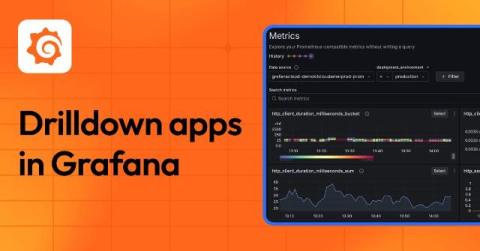
Grafana Drilldown apps: the improved queryless experience formerly known as the Explore apps

When we introduced the Explore apps suite for metrics, logs, traces, and profiles last year at ObservabilityCON 2024, our goal was simple: offer a queryless, point-and-click experience so you can quickly find insights in your observability data—no queries or complicated syntax required. Our commitment to that goal remains unchanged, but we’re excited to announce that the Explore apps have a new name: Grafana Drilldown.

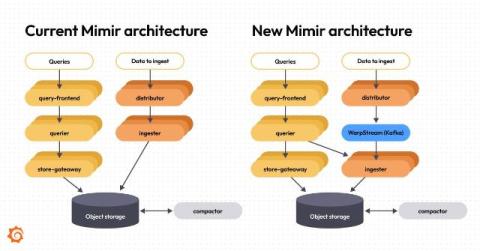
The next generation of Grafana Mimir: Inside Mimir's redesigned architecture for increased reliability

This year Grafana Mimir — the open source, horizontally scalable, multi-tenant time series database (TSDB) — will celebrate its third anniversary. Over the years, Mimir has become the go-to, Prometheus-compatible metrics backend within the open source community, with 29 maintainers and more than 4.6k GitHub stars. Since introducing Mimir, we’ve worked hard to deliver on our promise of making it the most scalable and performant open source TSDB in the world.

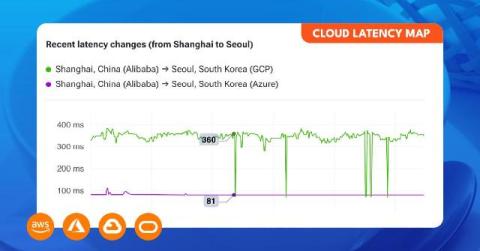
CLM Chowder: Digging Into the Cloud Latency of Azure, Google Cloud, and OCI

CLM Chowder is a new series which highlights notable observations of cloud connectivity surfaced by Kentik’s Cloud Latency Map. In this edition, we look at measurements from Alibaba (China), latency swings from South Africa, and a temporary latency jump from Marseilles to Asia.

An In-Depth Guide to Java Performance Monitoring for SREs

If you've ever had a Java application slow down in production and struggled to pinpoint the cause, you know the pain of performance issues. Java is a powerful, high-level language, but it doesn’t come without challenges—especially when it comes to resource management, garbage collection, and thread handling. This guide will take you through everything you need to know about Java performance monitoring, from key metrics to tools and best practices.

Integrating OpenTelemetry with Grafana for Better Observability

Modern application observability is essential for ensuring system performance, diagnosing issues, and optimizing user experiences. OpenTelemetry (Otel) and Grafana serve as two key components in achieving end-to-end visibility. While OpenTelemetry focuses on instrumenting applications to collect telemetry data, Grafana specializes in visualizing this data, making it actionable and insightful.

OpenTelemetry UI: The Ultimate Guide for Developers

If you’ve ever struggled with understanding distributed traces, managing metrics, or debugging complex applications, OpenTelemetry is your best friend. But what about the OpenTelemetry UI? How do you visualize and interact with all that telemetry data? In this guide, we’ll explore the best ways to use OpenTelemetry’s UI options, from setting up a proper observability stack to choosing the right front-end visualization tools.

How APM and synthetic monitoring work together for better performance

Imagine this: A customer tries to log in to your app, but the page takes too long to load. Frustrated, they leave. Meanwhile, your IT team has no clue there was an issue—until complaints start pouring in. Sound familiar? Performance lags are the new downtime. Lags are not just an inconvenience—they lead to lost revenue and frustrated users. To prevent this, organizations turn to application performance monitoring (APM) and synthetic monitoring to maintain peak application performance.

Transform Data with the New Python Processing Engine in InfluxDB 3

In early January, we announced the launch of InfluxDB 3 Core and InfluxDB 3 Enterprise in public alpha. One of the newest included features is the InfluxDB 3 Processing Engine–a Python-based VM built to enable data transformation, enrichment, downsampling, alerting, and more, all from within the database itself. One month later, we’re excited to deliver a big update enabling new ways to interact with and transform your data.

Logging vs. Metrics

When discussing observability, the “big 3” - logs, metrics, and traces, always get mentioned. But for some, more data doesn’t always mean better. Our lead engineer, JJ, had some advice to share about how logs may not be necessary for everyone. Simplifying your observability stack isn’t difficult - you just need to be intentional with implementation. Check out more MetricFire blog posts below, and our hosted Graphite service! Get a free trial and start using MetricFire now!