Data center capacity planning is one of the biggest challenges for today’s data center professionals. According to a recent survey by Sunbird Software, 72% of respondents said that capacity planning was one of their top objectives. Proper capacity planning results in the right-sized data centers, efficient utilization of resources, and reduced costs, but it is easier said than done.
Status pages are a clever solution to bundle all your services, and see the status of them at one sight. We at iLert took this one step further: why not build your status page as code using Terraform? We want to show you how we make it possible, and how you can set it up for your own infrastructure - a real SaC solution.
Kubernetes made it much easier to deploy and scale containerized applications, but it also introduced new challenges for IT teams trying to keep tabs on these newly distributed systems. Ops teams need proper visibility into their Kubernetes clusters so they can track performance metrics, audit changes to deployed environments, and retrieve logs that help debug application crashes.
Welcome to day three of our very first Launch Week! The last two days we shared how alerting became so much better and how we moved one level up by completing our SOC 2 Type 1 audit. Are you curious what’s next? I’ll tell you, but first let’s set the stage and look at Microsoft’s Playwright.
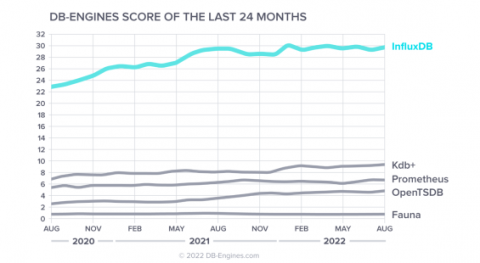
For many workloads, using a time series database is a smart choice that saves time and storage space. Developers and companies have more database choices than ever. Choosing the right database for a project saves time when writing and querying data. As companies work with larger datasets to make increasingly intelligent and automated systems, efficiency is key. For many workloads, using a time series database is a smart choice that saves time and storage space.
In our inaugural State of Availability Report, we discovered that not only do metrics matter but the way we use them also does. Our research found that teams with fewer KPIs were more likely to meet their Service Level Agreements (SLAs) and provide their customers with higher levels of availability. The problem with having too many KPIs is that they cause information overload and noise.
Today, Cribl is releasing The State of Security Data Management 2022 in collaboration with CITE Research. The report examines the challenges that enterprises are facing as they work to balance evolving business priorities with cyber threats. The report was conducted in September 2022 and surveyed 1,000 senior-level IT and security decision-makers. The survey found that, although most organizations are confident in their data management strategy, few believe it’s actually sustainable.
You know that old adage about not seeing the forest for the trees? In our Authors’ Cut series, we’ve been looking at the trees that make up the observability forest—among them, CI/CD pipelines, Service Level Objectives, and the Core Analysis Loop. Today, I'd like to step back and take a look at how observability fits into the broader technical and cultural shifts in technology: cloud-native, DevOps, and SRE.