Operations | Monitoring | ITSM | DevOps | Cloud

4 Tips Manufacturers Should Adopt To Make More Profits

Boosting your growth as a manufacturer is not difficult if you have a proper plan. The more time you spend on planning, the easier it will be to identify the needs of your target audience and leave your competitors behind. If you are looking for ways to improve your growth as a manufacturer by the end of 2023, you are at the right place. Keep reading to find four indispensable tips you can add to your business plan to make more profits in a short time.


Why You Need to Use Mobile Applications to Increase Business Efficiency

As more people continue to use smartphones, there is a surge in the need to develop mobile applications for businesses. Smartphones are changing how businesses interact with their customers and how customers look for products and services. They have transformed communication and made it part of day-to-day life. Doing so has brought a lot of changes in the market. Therefore, businesses must know how to take advantage of this evolution to increase efficiency, get more customers, and ensure growth.

How a corrupted file took down 12,000 flights across the US: Real-world consequences of minor IT negligence

The airport is shutdown in the midst of a busy time, masses of people are stranded, pilots wait in the cockpit awaiting ground information, there’s confusion and panic among the crew. This could easily be a scene from Die Hard 2 where the villains take over an airport and seize control of all electrical equipment. But, hate to break it to you, this actually happened. Is it possible for one person to disrupt the entire nation’s aviation system? Apparently, yes.

Sponsored Post

Uptime monitoring: How to track your network availability, 24/7

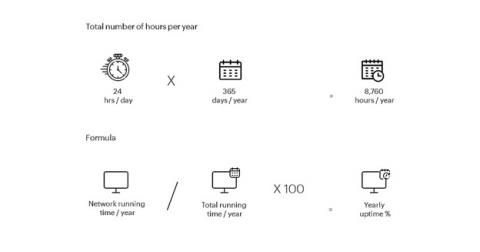
When it come to measuring an organization's ability to support end users and provide services, network uptime can be a great yardstick. An inability to ensure optimum uptime can negatively impact your business delivery, resulting in financial and reputational losses. If you're doing it manually, ensuring 24/7 network uptime is a challenging exercise requiring considerable resources. It is way more convenient to have a monitoring mechanism in place that can monitor network uptime and notify the network admin proactively about any bottlenecks that might lead to network downtime.
Sponsored Post

Using AIOps for Better Adaptive Incident Management

An effective incident management strategy is crucial for any business, especially those offering consumer-facing digital services. This is because when incidents occur, they may be easily detected by your users, impact your reputation, and ultimately affect your bottom line. So, to minimize the reach and severity of incidents, your response needs to be swift and effective. One way to ensure your approach meets these requirements is to implement AIOps.

Sponsored Post

Runbook Automation as a Baseline for Controllability and Observability

Some of the highest priorities for engineers - from NOC Engineers, DevOps & Site Reliability Engineers - are the automation and optimization of their production environments. Many companies today face tough challenges with their Network Operations Centers (NOCs) or production environments. These challenges fall into the hands of engineering teams.

Sponsored Post

On-Premises vs Cloud MDM deployment: Key Differences between them

On-premises vs cloud MDM deployment With the rise of SaaS application management, mobile device management (MDM) services have gained popularity among IT professionals. Modern computing environments rely on the efficient use and provisioning of resources. But which one is right for your business: on-premise or cloud MDM deployment? While this may seem like a simple question, there are many factors that come into play when deciding which method to go with. This article discusses the differences between on-premises vs. cloud MDM deployment. It will also present examples, use cases, and pros and cons of these two deployment options.

How to use Kubernetes events for effective alerting and monitoring

Kubernetes, a graduated project of the Cloud Native Computing Foundation (CNCF) ecosystem, is the most prominent and widely used container orchestration systems. It’s used to manage and deploy containers in a wide range of environments, from IoT devices based on Raspberry Pis to enterprise environments consisting of millions of services.

7 Container Orchestration Tools for Managing Microservices Efficiently

When people hear ‘containers,’ they don’t immediately think about an IT solution that helps businesses create and distribute applications seamlessly. However, the container concept has been around for a long time, helping companies in various industries globally. Containers continue to change the landscape of app development and deployment. This guide below will help you understand containerization and the best orchestration tools to manage containers.