Operations | Monitoring | ITSM | DevOps | Cloud

Boosting supply chain resilience and supplier relations

Supply chain business leaders around the world have been taking a close look at their resilience, agility, and supplier relationships. They’re saddled with a multitude of legacy systems, enterprise resource planning (ERP) systems, supply chain applications, and point solutions. This combination results in a fragmented view of the supply chain and supplier relationships and ultimately leads to delays and elevated operating expenses that are passed on to customers.

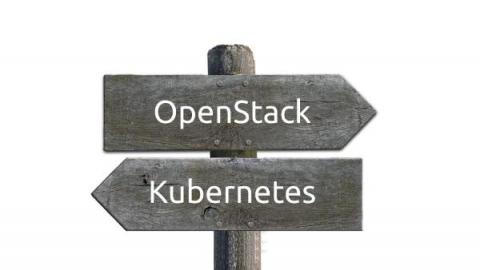
Kubernetes vs OpenStack: which one to choose?

Kubernetes vs OpenStack is a common dilemma that organisations face when considering the modernisation of their IT infrastructure. Both are well-established open-source technologies for building cloud infrastructure, and both bring tangible benefits, especially when used in combination. Yet, they differ significantly and need to be properly bundled to feel like a fully-integrated solution. What does this mean in practice? Let’s take a look!

Kubernetes CPU Requests & Limits VS Autoscaling

In a prior blog post, we discussed the basics of Kubernetes Limits and Requests: they serve an important role to manage resources in cloud environments. In another article in the series, we discussed the Out of Memory kills and CPU throttling that can affect your cluster. But, all in all, Limits and Requests are not silver bullets for CPU management and there are cases where other alternatives might be a better option.

MIAX and Cribl Stream: Enriching Data for Improved Observability and Faster Time to Value

Using Cribl Stream for observability is a given, but what about using Cribl Stream to get MORE from your data? Observability is all about being able to collect, route, store, and search your data. Implementing enrichment with observability provides more context and elevates your ho-hum data to robust information. This is key to faster, more confident decision-making!

Exceptions Happen. Handle Them Quickly.

It’s ironic, but exceptions happen all the time. We all can relate to these in supply chain operations: the crushed package, the barcode damaged to the point it can’t be decoded, the misplaced or abandoned tote. When these errors occur, what happens? The person who discovers it is responsible for reporting it. How long does that take? Who do they report the incident to? Should they address it themselves?

What is an ESXi cluster, and how do you cluster ESXi servers

ESXi clusters involve a combination of ESXi hosts, VMware services, and vCenter to optimize load balancing, availability, and resource management for virtual machines (VMs). These clusters feature a vCenter server that centralizes the management process to facilitate shared resources that drive higher availability, scalability, and load-balancing capabilities.

8 Must-have Features of Asset Management Systems Used in Education

Asset Management systems used in education often demand more detail than what’s expected in other environments. However, educational institutions rarely consider IT Asset Management (ITAM) as a priority. There are several reasons of this. For once, they commonly have a small IT team and hardly ever have dedicated resources for Asset Management. In addition, their budget is always limited, so they must spend it wisely to accommodate their most urgent needs.

Centralized Log Management Best Practices and Tools

Centralized logging is a critical component of observability into modern infrastructure and applications. Without it, it can be difficult to diagnose problems and understand user journeys—leaving engineers blind to production incidents or interrupted customer experiences. Alternatively, when the right engineers can access the right log data at the right time, they can quickly gain a better understanding of how their services are performing and troubleshoot problems faster.

Why an Incident Commander is crucial to ITOps

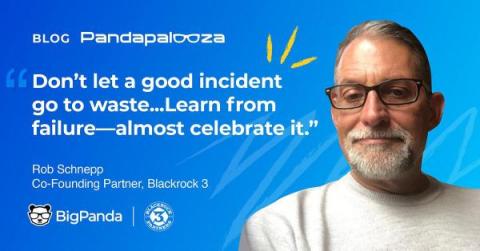
It may be counterintuitive to tackle a problem without knowing exactly what the problem is, but an incident commander often does just that. In fact Rob Schnepp—founding partner at Blackrock 3, an Alameda, California-based incident management consulting group—says identifying the root cause of an incident is typically secondary to addressing the symptoms.