Operations | Monitoring | ITSM | DevOps | Cloud

Citrix Workspace Monitoring and Management

This is another customer blog highlighting common customer scenarios that we typically see while working with large enterprise customers. There are many use cases in regard to a typical Citrix Digital Workspace environment where the endpoint is managed by a different team, outsourced to an external organization, or even unmanaged when employees work from home on a non-corporate device.
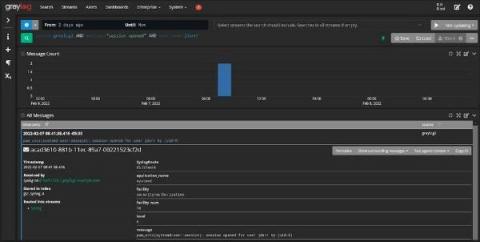

CIS Control Compliance and Centralized Log Management

Your senior leadership started stressing out about data breaches. It’s not that they haven’t worried before, but they’ve also started looking at the rising tide of data breach awareness. Specifically, they’re starting to see more new security and privacy laws passed at the state and federal levels. Now, you’ve been tasked with the very unenviable job of choosing a compliance framework, and you’re looking at the Center for Internet Security (CIS) Controls.

Ask Miss O11y: Do I Need Observability If My Stack Is Boring?

Observability came out of microservices and cloud-native, right? If you have a simpler architecture, does o11y matter?” — this question came up during recent office hours Yeah, sort of. On both counts—yeah, it sorta came out of microservices and cloud native, and yeah sorta, you need it with a simpler architecture (though perhaps not as desperately as you otherwise might).

Five Things Every MSP Should Do to Optimize Their Service Delivery

One of the best parts of my job is helping our partners work through challenges. In these situations, I usually review their N-able N-central® configuration and offer suggestions on operational adjustments they can make to best align their service delivery to their RMM. I also enjoy working with leadership, such as the managing VP or director of IT, who can invoke real transformational change in their organization.

Distributed Tracing 101

The boom of digital commerce is making all businesses take a closer look at how they deliver great customer experiences. To stay competitive, businesses today are using cloud-native architectures, because the cloud-native applications they produce deploy quickly and better support the continuous improvement cycles of agile methodology. Behind the practicality of keeping online customers happy are distributed cloud environments that business applications use for each customer interaction.

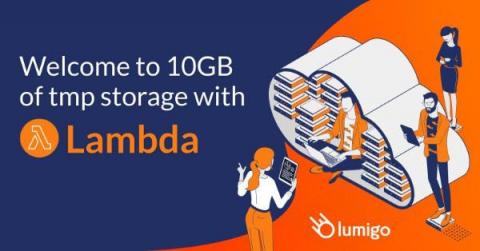
Welcome to 10GB of tmp storage with Lambda

Every Lambda function comes with 512MB of ephemeral storage in the shape of a /tmp directory. This storage space can be reused across multiple invocations for the same instance of a Lambda function. Each instance of a function has its own /tmp directory and data is not shared amongst different instances of a function.

Continuous Availability: How It's Changed, and Why It's Critical

Remember when Slack went down in early January? The three-hour outage, set off by AWS capacity issues, cost the company an untold amount of money. And the effects rippled across the enterprise. The outage devalued the company’s stock and seemed to send all 142,000 of its customers to Twitter to gripe. This high-profile outage is just the most recent of many outages highlighting the critical nature of continuous availability. And there’s only one answer to the problem.

Monitoring GraphQL APIs with OpenTelemetry

GraphQL is a query language for APIs developed by Facebook in 2012. It was then open-sourced in 2015. GraphQL enables frontend developers or consumers of APIs to request the exact data that they need, with no over-fetching or under-fetching. In this article, we will learn how to monitor GraphQL APIs with the open-source APM tool, SigNoz. GraphQL has become a popular alternative to REST because of its ease of use. It enables developers to pull data from multiple data sources in a single API call.