Operations | Monitoring | ITSM | DevOps | Cloud

SRE Signals: 3 Types of Metrics for Site Reliability Engineering

Site Reliability Engineering, or SRE, is a widely-used set of interdisciplinary practices that help increase the efficiency of software development. But, aside from that, its purpose is to create scalable, connected, reliable, communicated systems that keep providing better, more reliable results. SRE leads to more connected, efficient organizations that can build resilient, iterable, and scalable software. To do this, SRE engineers leverage their coding expertise.

Kubernetes Metrics Server | How to deploy k8s metrics server and use it for monitoring

Modern digital businesses have adopted cloud technology and distributed architectures to enable on-demand scaling of resources. Containerization technologies like Kubernetes and Docker have made it possible to handle customer demands at scale. However, orchestrating a complex microservices architecture with Kubernetes is challenging. Monitoring your Kubernetes cluster can give you insights to better manage your cluster.

What Are the Technologies Used for Effective Asset Management?

For effective asset management organizations need to improve their daily operations and business growth is the need of the hour. However, managing assets manually brings new challenges every day which impacts business in every way. That is why organizations need to invest in technologies for effective asset management. So, without wasting any time let us begin! But first, let us cover the basics!

Restrict API Access with Client Certificates (mTLS)

An application programming interface (API) provides access to the features of a business application, but with the visual elements stripped away. By using APIs, devices like tablets, self-service kiosks, point-of-sale terminals, and robotic sensors can connect up to apps running on servers in a datacenter or in the cloud. Because they give access to the heart of your business applications, it should come as no surprise that there are some APIs that the general public should not have access to.

Product Update - Task Management at Scale and Invokable Scripts from the Tasks API

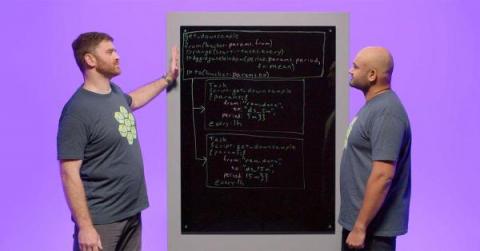
Thanks to Vinay Kumar for being a key contributor to this article. We love to write and ship code to help developers bring their ideas and projects to life. That’s why we’re constantly working on improving our product to meet developers where they are, to ensure their happiness, and accelerate Time to Awesome. This week, we are covering a featured product release that we think will save you time and effort when building with time series, InfluxDB – and specifically – Tasks.

Authors' Cut-Not-So-Distant Early Warning: Making the Move to Observability-Driven Development

This is how the developer story used to go: You do your coding work once, then you ship it to production—only to find out the code (or its dependencies) has security or other vulnerabilities. So, you go back and repeat your work to fix all those issues. But what if that all changed? What if observability were applied before everything was on fire? After all, observability is about understanding systems, which means more than just production.

What is Swap Space?

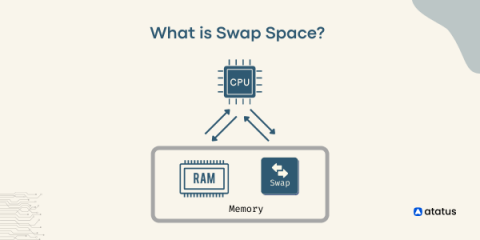
For a machine to run and store the loaded applications, every processor needs data capacity. Storage is an serious issue if you work in IT since you will have bundles of software packages to run a single application. When RAM is nearly exhausted, the Linux swap function can help you. Using swap space instead of RAM in Linux systems can slow down the system’s performance. At the same time, there are more benefits when swap space is enabled.

Mobile Device Management (MDM) Overview

The use of mobile devices within organizations is steadily increasing, and it’s not slowing down anytime soon. Zippia reported that around 3 out of every 4 employees use their personal cell phones for work. Mobile devices in the workplace can provide many benefits, but can also bring more risks, which is why mobile device management is needed.

Using Grafana and machine learning to analyze microscopy images: Inside Theia Scientific's work

At GrafanaCONline 2022, Theia Scientific President, Managing Member, and Lead Developer Chris Field and Volkov Labs founder and CEO Mikhail Volkov — a Grafana expert — delivered a presentation about using Grafana and machine learning for real-time microscopy image analysis. Real-time microscopy image analysis involves capturing images on a microscope using a digital device such as a PC, iPad, or camera.