Operations | Monitoring | ITSM | DevOps | Cloud

Part 6: Observability Maturity Model Summary

For decades, IT operations teams have relied on monitoring for insight into the availability and performance of their systems. But the shift to more advanced IT technologies and practices is driving the need for more than monitoring – and so observability evolved. With infrastructures and applications that span multiple dynamic, distributed and modular IT environments, organizations need a deeper, more precise understanding of everything that happens within these systems.


Virtual CISO Services: A New Revenue Stream for MSPs?

As you look to optimize your MSP’s growing business, it’s going to become more and more important to maintain an acceptable return on your investment. To do this, you’ll need to find services that increase your gross margin on every client engagement. Virtual CISO services can greatly help in this function. While solutions like Auvik already help MSPs have visibility inside of client networks, we want to take this a step further with the addition of vCISO services.

Demystifying Observability and Making it Work for You

This article is the final installment in a series that demystifies observability. The first three focused on the history of observability, dispelling myths around observability, and what observability is and what it can offer. In this last article of the series (Check out part 1), I want to offer a complete definition of observability.

Sense and Signals

Complex, distributed software systems are chatty things. Because there are many components interoperating amongst themselves and with things outside their bounds like users, those components and the systems themselves emit many information signals. It’s the goal of monitoring, logging, and observability (o11y) tools to help the systems’ “stewards,” those developers and operators tasked with maintaining and supporting them, make sense of those signals.

What is new in Calico v3.24

A couple of weeks ago, TIgera engineers released the new version of Calico, as part of a community effort to drive cloud security and networking even further. But before I begin diving into the details of this new release, I want to first spotlight a few of our community members who have merged their contributions to Calico Open Source for the first time.

OpenAPI testing with Schemathesis and Golang

When you maintain an internal or public-facing API, the API documentation is an important component of the overall user/developer experience. One of the industry standards for such documentation is the OpenAPI specification. With an OpenAPI specification, you define a contract that specifies how your API should behave, but nothing stops the parties involved from breaking such a contract (e.g., using a wrong implementation or invalid input).

The 2022 Guide to Managed Services Agreements for MSPs

Wouldn’t it be great if all business transactions could be conducted over lunch and executed with a handshake? It would sure cut down on the paperwork. Unfortunately, business is far too complicated for the kind of vagueness and misunderstanding that would arise from such a deal. Everything needs to be in writing. Love them or hate them, those piles of paperwork are your allies. This is especially true when evolving your business from a break/fix model to managed services.

How to build machine learning models faster with Grafana

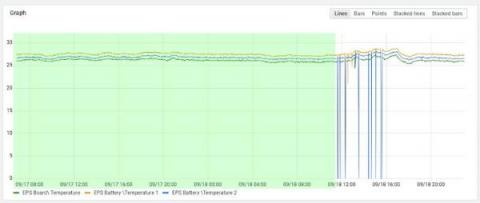
Armin Müller is the co-founder of ScopeSET. ScopeSET specializes in R&D work to build and integrate tools in the model-based systems engineering domain, with a track record of more than 15 years of delivering innovative solutions for ESA and the aerospace industry. Training machine learning models takes a lot of time, so we’re always looking for ways to accelerate the process at ScopeSET. We use open source components to build research and development tools for technical companies.