Operations | Monitoring | ITSM | DevOps | Cloud

Counting Forest Fires

If you were asked to evaluate how good crews were at fighting forest fires, what metric would you use? Would you consider it a regression on your firefighters’ part if you had more fires this year than the last? Would the size and impact of a forest fire be a measure of their success? Would you look for the cause—such as a person lighting it, an environmental factor, etc—and act on it? Chances are that yes, that’s what you’d do.

Scout APM: Reasons to Get a New Dog

Veteran programmer? Experienced application performance monitoring (APM) connoisseur? Whatever your specific tech chops, you know the importance of ensuring your applications are running optimally. Every minute a business app is down or slow to respond translates into lost revenue and frustrated customers. That’s why smart businesses rely on APM solutions to monitor and analyze their applications’ performance in real-time.

Looking at the Crystal ball for 2023!

It has become cliché to be doing market predictions, but it certainly enables Enterprises to get a pulse on the market, get informed, evaluate and strategize for course correction. My post-pandemic 2021 Predictions, highlighted the coming out party for AI/ML Ecosystem across multiple regulated verticals. My 2022 Predictions discussed the rise of the Data Economy and Data becoming the new source code.

Efficiently Upgrading Infrastructure with Qovery: Syment's Success Story

Join us as we take a deep dive into the tech journey of Syment, a leading SAAS platform for property management in France. Led by new CTO Florent Blaison, with a wealth of experience in high-traffic platforms and scalability, Syment set out to overcome the limitations of their previous infrastructure. Discover how they transitioned from a mix of manual deployment and AWS's EC2 to the flexibility and scalability of Kubernetes with Qovery.

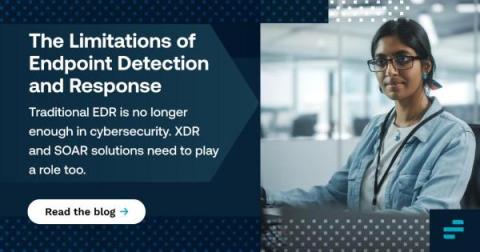
The Limitations of Endpoint Detection and Response (EDR)

Every IT environment – whether it’s on-prem or in the cloud, and regardless of how it’s designed or what runs in it – is made up of endpoints. That’s why Endpoint Detection and Response, or EDR, has typically been one of the pillars of cybersecurity. EDR helps businesses monitor each of their endpoints for security risks so that they can detect problems before they escalate to other endpoints.

Understanding the Advantages of Flow Sampling: Maximizing Efficiency without Breaking the Bank

The whole point of our beloved networks is to deliver applications and services to real people sitting at computers. So, as network engineers, monitoring the performance and efficiency of our networks is a crucial part of our job. Flow data, in particular, is a powerful tool that provides valuable insights into what’s happening in our networks for ongoing monitoring and troubleshooting poor-performing applications.

APIs Impact on DevOps: Exploring APIs Continuous Evolution

An application programming interface (API) is a set of rules and protocols that enables different software applications to communicate and share data and functionality. The concept of an API has been around for a long time. However, APIs as you know them emerged in the late 1990s and early 2000s with the rise of the internet and web-based services. As more businesses began to offer online services, the need for a standardized way for these services to interact and share data became apparent.

Challenges and Solutions with Cloud Native Persistent Storage

Persistent storage is essential for any account-driven website. However, in Kubernetes, most resources are ephemeral and unsuitable for keeping data long-term. Regular storage is tied to the container and has a finite life span. Persistent storage has to be separately provisioned and managed. Making permanent storage work with temporary resources brings challenges that you need to solve if you want to get the most out of your Kubernetes deployments.

Cloud Observability For IT

Observability has become increasingly important for IT professionals as the complexity of modern systems has grown. In the past, IT environments were typically composed of a few servers and applications that were all running on-site. However, with the rise of cloud computing, IT has become more distributed, with applications and services running on a wide variety of infrastructure and platforms.

5 DCIM Software Success Stories as Told by Real Customers

Managing a data center is not easy. Today’s data center professionals must maintain uptime, increase the efficiency of capacity utilization, and boost the productivity of people in more complex and more distributed environments than ever before. Legacy management tools like Excel, Visio, and homegrown systems no longer get the job done for the modern data center. They are hard to use, difficult to maintain, time-consuming, and error-prone.