Operations | Monitoring | ITSM | DevOps | Cloud

Attachments in Alloy Mobile Apps

As the saying goes, a picture is worth a thousand words. This is especially true when describing your problem to IT support. The good news is that Alloy mobile apps can since now handle attachments, including pictures and documents! Technicians and end-users can attach files when submitting issues or collaborating on tickets—in short, in all their daily operations. The new feature enables uploading an existing file from the device library and taking a picture immediately in the app.

Bad Observability

Observability has become a bit of a buzzword in the industry for the last few years. Exactly what "observability" means depends on who you ask, but most people would agree its about both: There's plenty of content out there telling you how to implement observability, or what good looks like. But what about bad observability? What are some anti-patterns to watch out for?

Using ChatGPT + Icinga?

The news have been full of coverage: ChatGPT (Generative Pre-trained Transformer), the prototype chatbot released by OpenAI in November 2022 seems to hail in a new era of information sourcing, schooling and learning, and interacting with a computer. The service sprinted to one million users in five days after the launch, with many more following until this date.

Reduce MTTR with Logz.io's Single-Pane-of-Glass Observability Data Analytics

Observability data provides the insights engineers need to make sense of increasingly complex cloud environments so they can improve the health, performance, and user experience of their systems. These insights can quickly answer business-critical questions like, “what is causing this latency in my front end?” Or, “why is my checkout service returning errors?” Observability is about accessing the right information at the right time to quickly answer these kinds of questions.

5 Proven Ways to Better Protect Customer Data

Technology and innovation have made access to customer data a walk in the park for many businesses. In today’s world, access to customer data is one significant way businesses can provide services that their customers will find acceptable. It helps you provide personalized services and offer customers products and services they will find relevant, which will lead to increased sales conversion. But, unfortunately, most good things have their downsides, and access to customer data is not excluded.

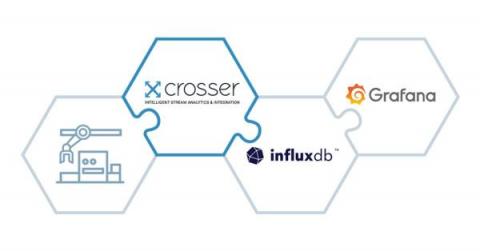
Easily Deploy Modern Digital Historian at Scale with Crosser, InfluxDB, and Grafana

Crosser is a Swedish company that builds a streaming analytics platform. The idea behind Crosser is to take the data from a connected, sensor-rich world and integrate it in real time to deliver faster insights and innovation. Primarily focused on the industrial IoT (IIoT) space, Crosser helps manufacturers gain insight into their machines and processes to drive improvements and to take advantage of newer trends and requirements that companies have for their data.

How to Have a More Professionally Rewarding Workplace with Automation

I love automation. Seriously, what could be more satisfying than tricking a machine into doing all the things you don’t want to do using only the power of your mind? Paying bills, brewing coffee, making appointments, ordering food… it’s like being Tom Sawyer without all the manipulation and questionable ethical choices.

An In-Depth Overview of Azure Storage Accounts & Services

Azure storage accounts offer powerful, cost-effective options for managing your data and applications. With various services such as blobs, queues, files, and tables, you can use Azure Storage to store and access virtually limitless amounts of data effectively. This guide will walk you through all the basics of setting up and using an Azure Storage Account.

Kubecost Vs. Cast.ai: Battle Of The Kubernetes Cost Tools

Kubecost and Cast AI promise real-time Kubernetes cost monitoring. Both deliver this to a good extent. For example, Kubecost provides cost data from within and outside a K8s cluster. It also shares the data in a granular format, such as cost by Kubernetes concepts like namespaces, pods, and custom labels. Cast.ai offers several similar capabilities, including cost savings recommendations, and is currently available for AWS, Google Cloud, Azure, and on-prem Kubernetes.