Operations | Monitoring | ITSM | DevOps | Cloud

Reflecting on one of the biggest incidents in our history

We have to come clean. During KubeCon, we experienced an incident that we weren’t ready to discuss until now. This incident caused quite a disruption and, had it been left unresolved, would have had a massive snowball effect. At the time, we didn’t want to raise any alarms, so we kept it quiet while our team rallied to resolve it. And to be honest, most folks probably didn’t even realize that it happened since we moved so quickly.

Mastering Event Breaking Management with Cribl Stream

Log events come in all sorts of shapes and sizes. Some are delivered as a single event per line. Others are delivered as multi-line structures. Some come in as a stream of data that will need to be parsed out. Still, others come in as an array that should be split into discrete entries. Because Cribl Stream works on events one at a time, we have to ensure we are dealing with discrete events before o11y and security teams can use the information in those events.

Automating with LogicMonitor: Ansible, Terraform, Stackstorm

Automation has been a bit of a buzzword in the IT community in the last few years. Companies around the world are looking for ways to scale and automate routine tasks so they can focus on more strategic initiatives. But “automation” is a word that can cover a lot of workflows and can mean something different to every team. What do we mean when we talk about automation here at LogicMonitor?

Start with endpoint security fundamentals and build from there

Global cyberattacks increased by 38% in 2022 (Source). And because attacks are not only becoming more common, as well as difficult to detect, 65% of organizations plan to increase their cybersecurity spending in 2023 (Source). Even so, hackers will continue to hone their skills and exploit vulnerabilities. Successful ransomware attacks will happen. Theft and sale of personally identifiable information (PII) and other “valuables” on the dark web will happen.

What the 2023 National Cybersecurity Strategy Means for Your IT

The Biden-Harris administration released the National Cybersecurity Strategy on March 2, 2023. The national cyber strategy document establishes expectations and offers guidance on how the United States government intends to protect the country’s digital assets and critical infrastructure from the threat of cyberattacks.

Building better mobile experiences: tips from Riot Games and Nextdoor

Building high quality, performant mobile apps is hard. Developers need to keep up with rapidly changing technologies, high user expectations, and competitive app stores. We sat down with Julius Skripkauskas and Walt Leung to discuss how mobile developers can build better mobile experiences, including choosing the right technology, focusing on the right KPIs, and staying on top of trends in device formats and AI.

It's time to rethink the way you do external comms

April was a month to remember at incident.io. Not only did we attend our second conference ever with KubeCon in Amsterdam, but we also very subtly released our brand-new Status Pages product. OK, it probably wasn't subtle. Both moments required months of preparation, feedback loops, iteration, and so much more behind-the-scenes work to get right. So if you ran into us at KubeCon, thank you for stopping by and meeting with our team.

Mastering IT Response Time

In today’s fast-paced digital landscape, businesses heavily rely on their IT departments to ensure smooth operations and deliver exceptional customer experiences. When it comes to IT support, one critical metric stands out: response time. A prompt and efficient response can be the difference between a satisfied customer and a frustrated one. In this blog post, we will explore strategies to improve IT response times, enhance customer satisfaction, and optimize overall productivity.

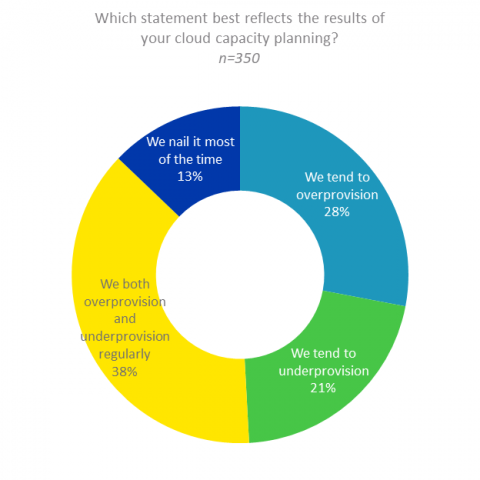
Cloud Capacity Planning Is a Hit-or-Miss Exercise That Mostly Misses

The goal of capacity planning is to match resources with demand. There are essentially three outcomes from this analysis. You can underestimate the resources you need (underprovision), which can hurt performance. You can overestimate (overprovision), which adds unnecessary costs. Or you can get it just right (rightsized). And, of course, you want to be rightsized at the lowest possible cost. Because many factors go into cloud capacity planning, it can feel like more of an art than a science.