Operations | Monitoring | ITSM | DevOps | Cloud

Scale Time Series Workloads on AWS: Introducing Amazon Timestream for InfluxDB Read Replicas

The world runs in real-time. From industrial automation and IoT monitoring to AI-powered analytics, developers rely on time series data to power critical systems and make split-second decisions. But as workloads grow, so do the challenges: keeping queries fast, ensuring high availability, and scaling efficiently without adding operational complexity. Not having to worry about operational overhead enables companies to focus on deriving value from their data.

HTTP/3 is Fast!

HTTP/3 is here, and it’s a big deal for web performance. See just how much faster it makes websites! Wait, wait, wait, what happened to HTTP/2? Wasn’t that all the rage only a few short years ago? It sure was, but there were some problems. To address them, there’s a new version of the venerable protocol working its way through the standards track. Ok, but does HTTP/3 actually make things faster? It sure does, and we’ve got the benchmarks to prove it.

How Dotcom-Monitor Enhances Your API Monitoring

APIs (Application Programming Interfaces) play a crucial role in connecting applications, facilitating data exchange, and ensuring seamless user experiences. However, APIs are only as effective as their reliability and performance. Without proper monitoring, even the most well-designed API can encounter issues such as slow response times, unexpected downtime, or security vulnerabilities.

Stronger together: (Agentic) AIOps and observability are the keys to IT resilience

Every new layer of infrastructure piles onto an already fragile web of interconnected challenges, making it painfully clear: traditional monitoring can’t keep up. You’re drowning in alerts, buried in data, and yet somehow still flying blind when real issues arise. More notifications don’t mean more insight, and more data doesn’t guarantee better decisions.

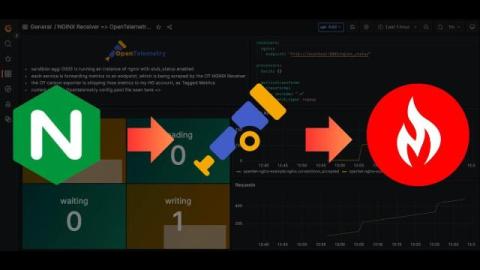
Easiest Way to Monitor NGINX Performance with OpenTelemetry

If you're looking for a straightforward way to collect NGINX metrics via OpenTelemetry and send them to your Graphite-based monitoring setup, this article is for you! With minimal configuration you’ll be collecting key metrics from your NGINX connections within minutes. In this article, we'll explain how to install the OpenTelemetry Collector, and easily configure it to receive and export NGINX metrics to a Hosted Carbon endpoint.

Tomcat Logs: Locations, Types, Configuration, and Best Practices

Apache Tomcat logs are essential for monitoring, debugging, and maintaining Java applications running on Tomcat. These logs capture critical information such as server startup details, request handling, and application errors. They help developers and system administrators troubleshoot issues, analyze traffic, and ensure application stability. Tomcat generates multiple logs, each serving a distinct purpose.

A Quick Guide for OpenTelemetry Python Instrumentation

OpenTelemetry is an open-source tool that helps you keep an eye on your application’s performance. Whether you’re building microservices, using serverless setups, or working with a traditional monolithic app, it’s crucial to monitor and trace your app’s behavior for debugging and optimization. OpenTelemetry's Python instrumentation is an excellent way to track traces, metrics, and logs across your entire app.