Operations | Monitoring | ITSM | DevOps | Cloud

Lost in the clouds: Managing risk and reaping rewards on your cloud journey

Moving applications to a public cloud, no matter why you’re making that journey, is a high-stakes proposition. As an industry, we’re focused on rapidly moving forward to give our businesses the competitive edge they need. However, when it comes to cloud migration, we often fail to stop and ask some critical questions, and as a result we end up overspending and underperforming.
How IT Pros Will Help the World Come Out Stronger After COVID-19

In 2016, we wrote about the exponential value of computer networks and the importance of IT professionals as champions of the network, “doing their part to secure, maintain, and advance the engines that keep everything running.” Today, those words ring true in ways we could never have predicted four years ago.

Topology Maps: Connecting the Dots for Hybrid and Multi-Cloud Infrastructure

In this article, learn: Given that enterprises use a mix of physical, virtual, and cloud native infrastructure, it can be a struggle to maintain the availability and performance of digital services. OpsRamp's Topology Explorer delivers visual representations of dependency relationships between application components and hybrid infrastructure that feed into both service maps and service-centric AIOps.

Honeycomb at OSU Libraries & Press

This is a guest post by Ryan Ordway, DevOps Engineer at Oregon State University. At Oregon State University Libraries & Press (OSULP) we have been using Honeycomb for about 18 months. We were in the beginnings of automating our infrastructure and needed an APM solution that we could scale with. New Relic was becoming too expensive, and we couldn’t afford to monitor our whole infrastructure and trace all of our applications anymore. Thus began our Observability journey.

The COVID-19 Crisis and the need for Citrix XenApp 6.5 Monitoring!

The COVID-19 crisis has put organizations in a position where 100% of employees need to work remotely from their homes. Popular technologies used for supporting remote employees include Citrix virtual application and desktops, virtual desktop technologies based on VMware Horizon, cloud-hosted desktops (DaaS), or just VPN connectivity. Until now, remote access from home was something a small percentage of employees used.

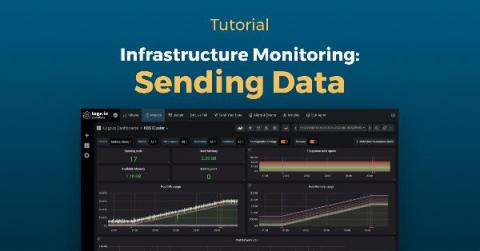
Logz.io Infrastructure Monitoring Tutorial: Getting Started Shipping Metrics

This Logz.io Infrastructure Monitoring tutorial will cover our latest product, our new metrics solution based on Grafana. Engineers monitor metrics to understand CPU and memory utilization for infrastructure, duration and serverless execution, or for network traffic. For more advanced metrics monitoring operations, teams can send custom metrics to monitor signals like the number of active users. Logz.io’s flagship product is Log Management, which delivers a fully-managed ELK Stack.

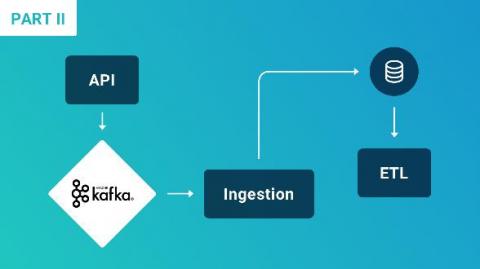
Apache Kafka Example: How Rollbar Removed Technical Debt - Part 2

April 7th, 2020 • By Jon de Andrés Frías In the first part of our series of blog posts on how we remove technical debt using Apache Kafka at Rollbar, we covered some important topics such as: In the second part of the series, we’ll give an overview of how our Kafka consumer works, how we monitor it, and which deployment and release process we followed so we could replace an old system without any downtime.

Grafana vs. Graphite

This blog post will pit Grafana vs Graphite against each other, two of the most popular observability tools on the market today. R&D organizations typically implement a wide technology stack. They include varying services, systems, or tools to support their production and development environments. Most, if not all, of these companies have SLAs requiring R&D to provide high availability solutions and the ability to respond to incidents in real time.

OpenMetrics: Is Prometheus unbound?

Historically, the monitoring landscape has been a mess; today, it still is. It’s even worse given how software architectures have changed with all of the cloud-native principles. As “techies”, we need to do something about this. Otherwise, we’ll remain chained up by an inability to properly observe our own platforms and applications.