Operations | Monitoring | ITSM | DevOps | Cloud

This is why you should use content checks with all your web monitors

Do all your synthetic monitors include a content check? Why not? Content checks are free with all our monitor types, but for the most part, Uptrends users underutilize content checks. In this article, we talk about why content checks are important for your monitoring, and we touch on some tips to help you pick the content checks that work best for you.


Blocking USB Drives For Work From Home Employees

With so many people working from home, the perimeter of corporate data safety has suddenly grown very large, in many cases encompassing employee home computers. Data loss prevention (DLP) was challenging enough already, but now it takes on even more importance. One way that data can escape the corporate network is by getting copied to USB thumb drives. Some companies take the approach of gluing or epoxying the USB ports closed.

Identity Guard: Identity Theft Protection Tool

Identity theft is on the rise and it is not enough to simply stay on top of the latest trends in this arena to avoid falling victim to common cons; you need to be proactive to prevent sensitive information being stolen and used against you. This is where Identity Guard’s identity theft protection tool comes into play. It aims to deliver always-on protection from the biggest threats faced by innocent web users.

Your Last Local IP Address, Giving Context to IT's Remote Worker Data

With millions of employees recently making the jump to remote work, some IT departments are finding themselves on unfamiliar ground, and with newfound stress and pressure. The stakes seem higher now. IT cannot visit an employee’s desk or stop them in the hallway whenever they encounter an issue, they now have to solve problems proactively and remotely. But for some companies, the switch to remote work has been smooth and painless.

7 Remote Work Problems IT is Solving With Nexthink

The past several weeks have been anything but normal, especially for those in enterprise IT. Though every company is facing their own unique challenges, we have noticed that certain technical use cases come up over and over again with our customers. After two months, and hundreds of use cases, we’ve picked the top remote work problems that enterprise IT departments are solving with Nexthink.

An IT Operations Exec Discusses DevOps Collaboration, AIOps Trends

Donnie Berkholz is a VP of IT Service Delivery and comments frequently on trends in IT infrastructure in his newsletter. We talked to Donnie about his typical day on the job, his initiatives in self-service platforms and product management and his take on top infrastructure management trends such as AIOps and Kubernetes.

HoneyByte: Make a Beeline Toward Observability Just Like DEV's Molly Struve

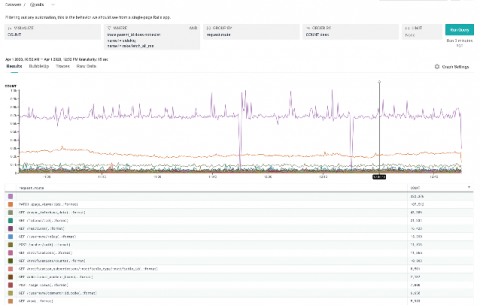
“When things broke,” Molly explained, “you’re mad scrambling—jumping from website to website to website, trying to put the pieces together.” Molly was able to use Honeycomb to fix things up: “It makes my job easier as an SRE.” Getting started with Honeycomb doesn’t require a lot of work: at dev.to, they used the Ruby Beeline to get it going: “I didn’t do that much,” she said.

Hardening Windows security: How to secure your organization - Part 1

The cybersecurity threat landscape is quickly changing. Administrators have become more cautious when it comes to security and governing access, end users have become tech-savvy and security-aware, and attackers have also raised their game. Living-off-the-land attacks, or LOTL, is one clear trend today, with attackers exploiting preinstalled features and default tools built into system.

Azure Monitor (Part 9): Azure Service Health

Now that we’ve talked a lot about how to monitor your Azure resources, let’s talk about how to monitor Azure itself. As the classic statement goes, “there is no cloud – it’s just someone else’s computer” – and all computers can go down. Even Microsoft’s. So how do you know when poor availability or performance of your resources is actually a result of Azure itself being sick?

Ride Down Into JavaScript Dependency Hell

Every JavaScript project starts ambitiously, trying not to use too many NPM packages along the way. Even with a lot of effort on our side, packages eventually start piling up. package.json gets more lines over time, and package-lock.json makes pull requests look scary with the number of additions or deletions when dependencies are added. “This is fine” — the team lead says, as other team members nod in agreement. What else are you supposed to do?