Operations | Monitoring | ITSM | DevOps | Cloud

Introducing the Sumo Logic Observability suite with distributed tracing (beta) - a cornerstone of cloud-native APM

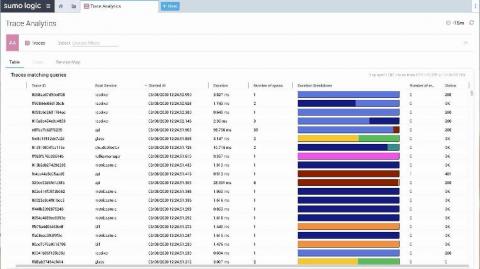
Last week Sumo Logic announced our new Observability Suite, which included the public introduction of the closed beta for our distributed tracing capabilities as part of our Microservices Observability solution. This new solution will provide end-to-end visibility into user transactions across services, as well as seamless integration into performance metrics and logs to accelerate issue resolution and root-cause analysis. In this blog, we’ll explore the new solution in detail.


Interview: Why Applications Fail and What to Do About It

Lee Atchison is a recognized industry thought leader in cloud computing and has significant experience architecting and building high scale, cloud-based, service oriented, SaaS applications. Formerly the Senior Director for Cloud Architecture at New Relic, Lee is now the owner of Atchison Technology LLC, a cloud consulting and advising firm. Lee is also the author of “Architecting for Scale,” a book published by O’Reilly Media.

Debugging AWS Lambda Timeouts

Some time ago, an ex-colleague of mine at DAZN received an alert through PagerDuty. There was a spike in error rate for one of the Lambda functions his team looks after. He jumped onto the AWS console right away and confirmed that there was indeed a problem. The next logical step was to check the logs to see what the problem was. But he found nothing. And so began an hour-long ghost hunt to find clues as to what was failing and why there were no error messages.

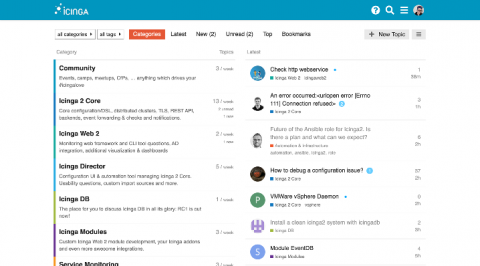
community.icinga.com

The community forum is a place where you can meet and chat with other Icinga users. It’s hosted by Icinga and moderated by both the Icinga team and members of the community. It’s mostly being used as a platform to ask and answer technical questions about Icinga, which is a great way to learn more about the tool stack! What does it look like? It’s a discourse platform, so it’s a collection of threads or topics which are open for anyone to leave a comment on!

How to Spot Website Errors and Reduce Troubleshooting Time

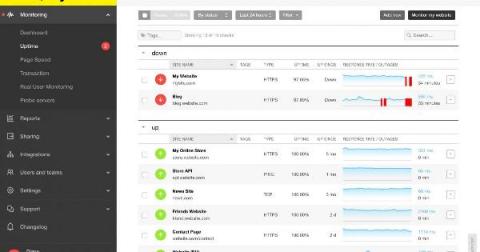
Errors and bugs are a nightmare for any software engineer or developer. Even though errors can seem like a bad experience for any developer or website owner, errors can help improve the quality of a website. You may be wondering, “But how?” Errors pinpoint the weaker parts of the website, giving you direction of what to work on.

Logstash CSV: Import & Parse Your Data [Hands-on Examples]

The CSV file format is widely used across the business and engineering world as a common file for data exchange. The basic concepts of it are fairly simple, but unlike JSON which is more standardized, you’re likely to encounter various flavors of CSV data. This lesson will prepare you to understand how to import and parse CSV using Logstash before being indexed into Elasticsearch.

21 new ways we're improving observability with Cloud Ops

We’ve heard from customers about how important it is to be able to reliably operate your applications and infrastructure running on Google Cloud. In particular, observability is critical to reliable operations. To help you quickly gain insight into your Google Cloud environment, we’ve added 21 new features to Cloud Operations, the observability suite we launched earlier this year, which gives you access to all our operations capabilities directly from the Google Cloud Console.

Scaling Prometheus: How we're pushing Cortex blocks storage to its limit and beyond

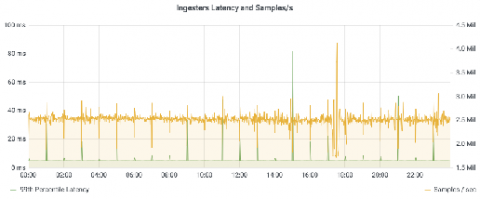
In a recent blog post, I wrote about the work we’ve done over the past year on Cortex blocks storage. Cortex is a long-term distributed storage for Prometheus. It provides horizontal scalability, high availability, multi-tenancy and blazing fast query performances when querying high cardinality series or large time ranges.

10 filter patterns that are helpful for managing your logs

Log files, which are the records of everything that has happened in your server, application, or framework, are generally unfiltered and huge. Going on for pages, these plain text files are packed with tons of information and are the initial go-to place for any troubleshooting. However, the challenge lies in reading, understanding, and interpreting log files, and ultimately pulling out the right piece of information required for analysis.