Operations | Monitoring | ITSM | DevOps | Cloud

Getting Started: Streaming Data into InfluxDB

This is Part Two of Getting Started Tutorials for InfluxDB v2. If you’re new to InfluxDB v2, I recommend first learning about different methods for writing static data in batches to InfluxDB v2 in Part One of this Getting Started series. This is a beginner’s tutorial for how and when to write real-time data to InfluxDB v2. The repo for this tutorial is here. For this tutorial, I used Alpha Vantage’s free “Digital & Crypto Currencies Realtime” API to get the data.
Getting Started: Writing Data to InfluxDB

This is a beginner’s tutorial for how to write static data in batches to InfluxDB 2.0 using these three methods. Before beginning, make sure you’ve either installed InfluxDB OSS or have registered for a free InfluxDB Cloud account. Registering for an InfluxDB Cloud account is the fastest way to get started using InfluxDB.

How to "Translate" Grafana Dashboards from Prometheus to Elasticsearch

In the field of open-source metrics and time series monitoring, it is quite clear today that Grafana is the most popular tool of choice. One of Grafana’s main advantages is its storage backend flexibility. It can support almost all the major time series datastores (Prometheus, InfluxDB, Elasticsearch, Graphite etc.), when each datastore has its own query language syntax, and slight differences in the actual Grafana UI and capabilities resulting from these differences.

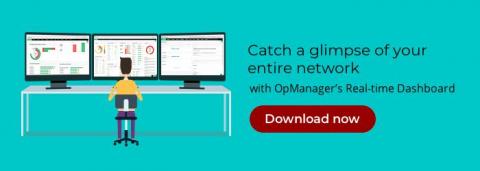
Get a live view of network performance with OpManager's Real-time Dashboard

Although network monitoring is an unenviable task, it must be done to sustain your network’s health. But what if you had a real-time report containing only key metrics, revealing how your network is doing without overloading you with information? This would (1) assure you that there are no aberrations in your network and (2) give you peace of mind.

A Simple Introduction to AWS Step Functions

Step Functions is a managed service by AWS that implements the Finite-state Machine (FSM) model. You coordinate multiple AWS services into serverless workflows so you can build and update apps quickly. Using Step Functions, you can design and run workflows that stitch together services such as AWS Lambda and Amazon ECS into feature-rich applications. You can read Wikipedia’s definition of a Finite-state Machine, but I think you’ll like the next section more. Keep on reading.

What is a release? Vanessa Gil, Head of Development at Pandora FMS explains

What is a release? As many of you know, one stormy autumn night Pandora FMS team climbed to the most abrupt and outstanding peak of the surrounding area and swore, above all, to launch a release with new features and updates every month, whether it rained or thundered. And since that illustrious day, new releases have been launched to the delight of our followers.

How to Get Up to Speed at a New Gig in IT

When IT professionals change jobs, it isn’t always a smooth and easy transition. Let’s say you worked somewhere else for a couple of years and got used to the environment you worked in. It was your kitchen; you knew what was in each drawer and where to put everything away. And even though the technology will be the same at your new job (the network is the network, after all), there will still be significant differences.