Operations | Monitoring | ITSM | DevOps | Cloud

Integrating Sensu Go into your CI/CD pipeline with sensuctl prune

Since the release of Sensu Go, many in our community have told us Sensu is easier and faster to deploy, more portable, and more compatible with containerized and ephemeral environments (as compared to Sensu Core, the original version of Sensu). In a recent webinar, I talked about integrating Sensu Go with your CI/CD pipeline and how to use the sensuctl prune command to keep your Sensu resources in a declarative state, reducing dependence on traditional configuration management tools.

Interview with Honeycomb Engineer Chris Toshok: Dogfooding OpenTelemetry

At Honeycomb, we talk a lot about eating our own dogfood. Since we use Honeycomb to observe Honeycomb, we have many opportunities to try out UX changes ourselves before rolling them out to all of our users. UX doesn’t stop at the UI though! Developer experience matters too, especially when getting started with observability. We often get questions about the difference between using our Beeline SDKs compared with other integrations, especially OpenTelemetry (abbreviated “OTel”).

How to Debug Slow Lambda Response Times

When you build your application on top of Lambda, AWS automatically scales the number of “workers” (think containers) running your code based on traffic. And by default, your functions are deployed to three Availability Zones (AZs). This gives you a lot of scalability and redundancy out of the box. When it comes to API functions, every user request is processed by a separate worker. So the API-level concurrency is now handled by the platform.

Introducing the redesigned Check Statistics widget

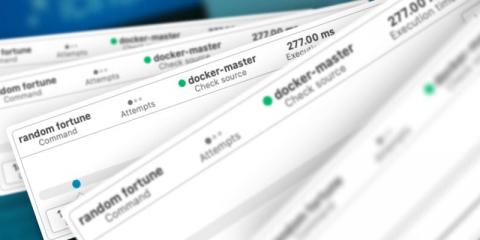
Those of you, who’ve already tried out the Web Interface for Icinga DB might have noticed the redesigned layout of the check execution statistics section in a monitoring object’s detail view. For all the others: Learn about it in this post. On first hand we wanted to make the informations more compact and put them in relation with each other, where possible. We aimed to keep all the information of the old one, though.

Top 5 Mobile Application Performance Monitoring Tools

Your app is done and the client is ready to launch! Everything looks great. But how can you ensure that you will achieve your SLA for uptime? How are you tracking revenue growth (& optimizing)? Do you know how many users you have, and what they’re doing at any given moment in the app? What you need is a monitoring platform that will be able to track these different types of data in one place.

Are you paying too much for your logging solution?

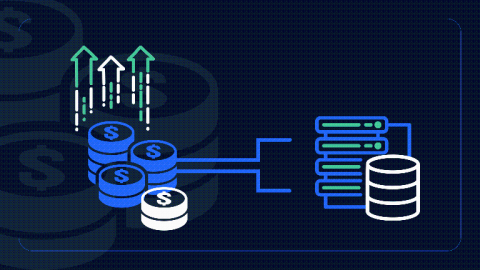
The cost of logging is one of the big problems of a scaled software system. Logging solutions now need to support far more than they ever have. You need to make a real investment in a logging solution that can support these initiatives. However, the up-front costs of a custom-built logging solution are prohibitive for many organizations. No business wants its bottom line affected by logging costs. That’s where Coralogix comes in.

Take a peek inside the latest version of the Dynatrace Enterprise plugin for Grafana

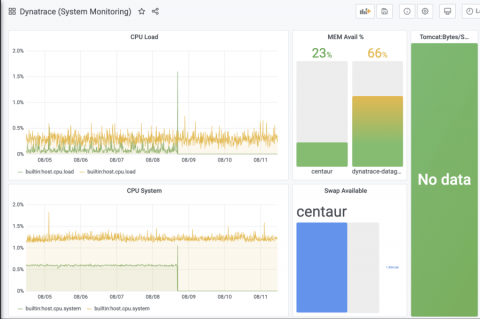
Hi, everyone! In honor of bingeing every season of Community over the last few weeks, Eldin and Christine have been inspired to rebrand ourselves as none other than our other favorite dynamic duo, Troy and Abed! Yet, instead of singing “Troy and Abed in the morning,” we are back to write about some useful improvements we’ve made to our Enterprise Dynatrace plugin.

Celebrating issue 50 of Performance Matters

When we first launched Performance Matters a year ago, we didn’t just want to surface the performance stories of the big tech companies; our goal was to share and highlight the hard work of thousands of people making software faster. Since then, we’ve delivered over 550 articles, community ideas, tweets, videos, and the occasional comic strip from every corner of the web to your inbox. Here are the 10 most popular articles from all 50 issues of our weekly performance newsletter. Enjoy!