Operations | Monitoring | ITSM | DevOps | Cloud

A Gentle Introduction to Web Services With Go

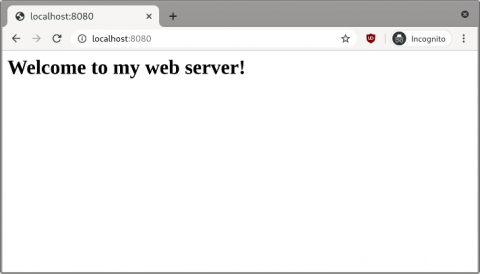
When you're deciding on a technology to use for your project, it helps to have a broad understanding of your options. You may be tempted to build a web service in Go for performance reasons - but what would that code actually look like? How would it compare to languages like Ruby or JS? In this article, Ayooluwa Isaiah gives us a guided tour through the building blocks of go web services so you'll be well-informed.


What are Some of the Perks Offered by Pandora FMS Network Mapper?

When it comes to mapping your network, having the right tools at your disposal can make things much easier, which is why Pandora FMS offers an extensive network mapper, so you can always keep track of your network. Our network mapping tool offers a comprehensive number of features. Our software enables you to mix network monitoring solutions with server monitoring. Here we’re going to discuss some of the biggest perks offered by our network mapper!

Enhanced Data Analysis and Insights with Catchpoint and Splunk

Digital experience monitoring is only effective if incidents are detected immediately and the data aids in quick root cause analysis and resolution. To track the availability, reachability, performance, and reliability of each component in the application delivery chain, different teams within an organization, use multiple tools. Each of these tools generate huge volumes of data that can make it difficult to gain any meaningful insight or even to correlate relevant KPIs.

New monitoring agent in Go: Glouton

Bleemeo announces the General Availability of the new monitoring agent written in Go. This agent is the successor of the previous agent written in Python. All good aspects have been kept: Open Source, easy to deploy, and to use, available as a package for main Linux distributions: Debian/Ubuntu, CentOS/RedHat, available for Windows and available as a container.

Calculating IOPS Utilization for EBS Volumes

When looking at an EBS volume in CloudWisdom, you’ll notice that in addition to the metrics we collect from AWS, we also create a number of computed metrics, one of which is netuitive.aws.ebs.iopsutilization. Simply put, IOPS Utilization compares the current number of IOPS that the disk is performing against the total IOPS capacity, and expresses this as a percentage. Thus, if you are currently running 1050 IOPS against a volume whose capacity is 3000 IOPS, the IOPS Utilization would be 35%.