Operations | Monitoring | ITSM | DevOps | Cloud

Using LogDNA To Troubleshoot In Production

In 1946, a moth found its way to a relay of the Mark II computer in the Computation Laboratory where Grace Hopper was employed. Since that time, software engineers and operations specialists have been plagued by “bugs.” In the age of DevOps, we can catch many bugs before they escape into a production environment. Still, occasionally they do, and they can spawn all kinds of unexpected problems when they do.

Debunking 3 Website Availability Monitoring Myths

Debunking 3 Website Availability Monitoring Myths Some myths in life are harmless, or even helpful. For example, Santa Claus has come in very, very handy for parents who want to nudge their kids from the naughty list to the nice one. And let’s give a round of applause to the Tooth Fairy, whose promise of nominal financial compensation has turned the prospect of losing a tooth from a meltdown trigger into a motivational factor.

Resolving Issues Caused By the May 6th Neustar UltraDNS Outage - A True Partnership Experience

At Catchpoint, our award-winning support team aims to be a partner, not just a gateway to the tool. Earlier this month when UltraDNS, a major DNS provider, went down, they found themselves faced with nine support tickets within one hour. Our customers were experiencing outages on their websites and online services. They needed urgent help from Catchpoint in understanding what was causing the disruption, so they could quickly resolve the situation.

Debugging Azure Functions Locally

Azure Functions are great for running bits of processing on a trigger without having to worry about hosting. Recently, I needed to debug an Azure Function—I needed to hunt down a particularly evasive bug that wasn’t showing up in the unit and integration tests. As it turns out, debugging an Azure Function isn’t as trivial as simply running the debugger in Visual Studio. Instead, it requires some setup to replicate the environment and configuration typically available in Azure.

Why Does My Database Need Indexes?

Have you ever deployed a new application that ran fine at first, then slowed to crawl as more and more data was added? Or tried to run a report that took minutes or even hours to come back? Database performance is a frequent bottleneck for many applications, and in this post you’ll learn about a critical aspect of database performance—indexes.

End-User Monitoring for IT Operations Monitoring

I’ll be the first to admit one of my weaknesses is public speaking. I spend hours before a training session, online seminar, or live event rehearsing exactly what I want to say and how I want to say it. But all my time spent practicing an engaging presentation only mildly prepares me for the moment I’m in front of others and it’s my time to speak.

Top 10 PromQL examples for monitoring Kubernetes

In this article, you will find 10 practical Prometheus query examples for monitoring your Kubernetes cluster. So you are just getting started with Prometheus, and are figuring out how to write PromQL queries. At Sysdig, we’ve got you covered! A while ago, we created a PromQL getting started guide. Now we’ll jump in skipping the theory, directly with some PromQL examples.

Analyze your logs easier with log field analytics

We know that developers or operators troubleshooting applications and systems have a lot of data to sort through while getting to the root cause of issues. Often there are fields like error response codes that are critical for finding answers and resolving those issues. Today, we’re proud to announce log field analytics in Cloud Logging, a new way to search, filter and understand the structure of your logs so you can find answers faster and easier than ever before.

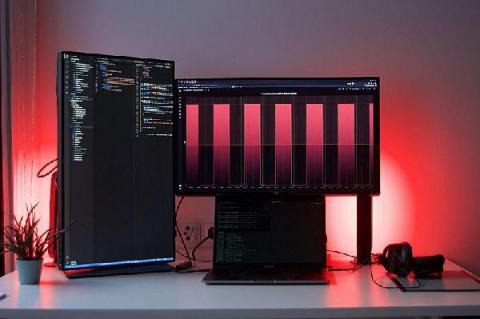
Turn your home office into a NOC room with Philips Hue and Grafana

I recently got a couple of Philips Hue Play lights to spice up my home office setup, and after a bit of tinkering with the APIs, I decided it would be a fun project to create my own personal NOC room, using them to visualize the status of some system I’m monitoring.