Operations | Monitoring | ITSM | DevOps | Cloud

Investigating Network Anomalies - A sample workflow

Network anomalies vary in nature. While some of them are easy to understand at first sight, there are anomalies that require investigation before a resolution can be made. The MITRE ATT&CK framework introduced in Kemp Flowmon ADS 11.3 streamlines the analysis process and gives security analyst additional insight by leveraging knowledge of adversaries' techniques explaining network anomalies via the ATT&CK framework point of view.

Uptime Monitoring: A One-week Project, a Decade In the Making

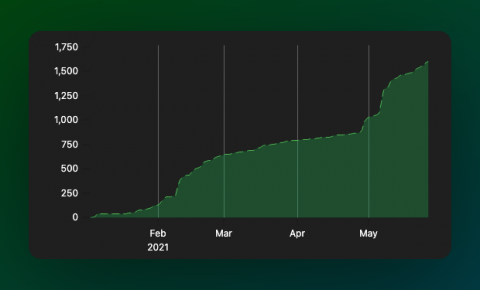
We recently released uptime monitoring, a pretty big addition to our set of features. Our customers have often requested it, and it was a logical next step for us to add uptime monitoring to our app. In today’s post, we’ll explain how we went from considering uptime monitoring impossible to build, to building it in a week. We’ll break down how seemingly over-engineering can really pay off in the end.

Sponsored Post

How to Monitor ALL of Microsoft 365

Only Exoprise provides full coverage for synthetic monitoring of the entire Microsoft 365 suite. The use of 8-10 different synthetic sensors per site provides customers and prospects with an ideal start. These site locations may include corporate headquarters, branch offices, or work from home settings with knowledge workers. Exoprise effectively monitors the health, availability, and performance of applications such as Azure AD, Exchange Online, Teams, Yammer, OneDrive, Outlook, Portal, etc. via synthetic sensors and captures real-time metric data in CloudReady.

Kudos, You've Earned a Digital Experience Monitoring Reward!

Digital experience has existed for a while now. We have now begun to scratch the surface to measure it. So that calls for Digital Experience Monitoring (DEM). DEM extends Application Performance Monitoring (APM) and Network Performance Management (NPM) to view and optimize application performance issues from the end-user perspective.

What is Network Optimization? 8 Reliable Techniques

Network optimization is a set of tools and techniques used to improve network performance and reliability. As such, it’s not a “one and done” operation but an ongoing process. Business requirements dictate a certain level of performance, but time and budget often limit what you can and can’t tweak. So, you optimize within those constraints.

AWS Kinesis vs SNS vs SQS (with Python examples)

How to choose a decoupling service that suits your use case? In this article we’ll take you though some comparisons between AWS services – Kinesis vs SNS vs SQS – that allow you to decouple sending and receiving data. We’ll show you examples using Python to help you choose a decoupling service that suits your use case. Decoupling offers a myriad of advantages, but choosing the right tool for the job may be challenging.

Google Authenticator and Pandora FMS, defend yourself from cyberattacks

For a long time, the Internet has been an easily accessible place for most people around the world, full of information, fun, and in general, it is an almost indispensable tool for most companies, if not all, and very useful in many other areas, such as education, administration, etc. But, since evil is a latent quality in the human being, this useful tool has also become a double-edged sword.

What Is PromQL?

PromQL is a functional query language that’s meant for use with the Prometheus monitoring tool. In fact, PromQL is short for “Prometheus Query Language.” The point of this language is to make it easy for users to choose and collect time-series data in Prometheus, which can then be displayed in a graph or as tabular data in the browser for this tool. Get a free trial with MetricFire and start visualizing your data.

What is Prometheus rate?

Prometheus was originally developed in 2012 and has grown in popularity since then. It's an open-source systems toolkit that monitors and alerts. While it was developed for SoundCloud, the project is now independent and standalone. Why would you need this model? It comes with several features, but perhaps the most important ones are the fact that it offers multiple graphing modes, dashboard support, and does not rely on distributed storage. Instead, it uses autonomous single server nodes.