Operations | Monitoring | ITSM | DevOps | Cloud

The Benefits of Structuring Logs in a Standardized Format

Image via Pixabay As any developer or IT professional will tell you, when systems experience issues, logs are often invaluable. When implemented and leveraged effectively, the data produced by logging can assist DevOps teams in more quickly identifying occurrences of problems within a system. Moreover, they can prove helpful in enabling incident responders to isolate the root cause of the problem efficiently. With that being the case, maximizing the value of log data is vital.
Do You Know What's Keeping Your Cloud Team up at Night?

Cloud teams are busy. In fact, Virtana’s recently published State of Hybrid Cloud and FinOps survey found that 44% of respondents have deployed more than half of their workloads in a public cloud, and 88% have deployed more than one-quarter of their workloads in a public cloud. That’s a lot of migration, optimization, and management on the cloud team’s plate; and it’s not just for right now but for the foreseeable future.

What is Synthetic Monitoring?

Synthetic monitoring is automated testing of critical business transactions and user experiences. Synthetic monitoring helps businesses find, fix and prevent availability issues, performance issues and 3rd party vendors from giving you an insight into performance improvements that you can make to your website and supply chain to improve conversions and user happiness. Synthetic monitoring is also sometimes called user journey monitoring.

Silect and OpsLogix extends partnership in North America

Last year, we announced that OpsLogix partnered up with the Canadian company Silect, a Microsoft GOLD Partner specializing in Microsoft's System Center; read more here. We are extending this Partnership with Silect that has a strong presence on the North American market, with an additional product - our Oracle Management Pack. This means that Silect will exclusively provide customers in Canada and the US with the OpsLogix Oracle MP.

Introducing Atatus Synthetic Monitoring

A high-performance customer experience might spell the difference between business success and failure in today's always-on, competitive digital economy. However, in today's complex application environment, ensuring optimal performance across digital services and applications has become increasingly difficult. As a result, application performance management (APM) must adapt to provide real-time visibility into the application landscape and to reveal precisely what is affecting user experiences.

Monitor your CircleCI environment with Datadog

Datadog CI Visibility provides a unified platform for monitoring your CI/CD pipelines. Now, we are partnering with CircleCI to extend that same critical visibility to your CircleCI environment. Datadog’s integration uses CircleCI webhooks to capture information about the status and performance of your workflows and associated jobs, such as a job’s duration and whether or not it failed or was canceled.

Azure, Microsoft 365, and the Monitoring Story

Learn how to make the Azure Monitor a valuable tool to monitor your Microsoft 365 subscription, including services such as Exchange, SharePoint, Teams, OneDrive, and more. See how the Metric Explorer in Azure Monitor will work for you, including addressing custom metrics quickly. Understand how to display Log Analytics metric data in PowerBI Reports and Azure Monitor Workbooks. Join this educative and fun session about Azure and Microsoft 365, united into one magnificent monitoring solution.

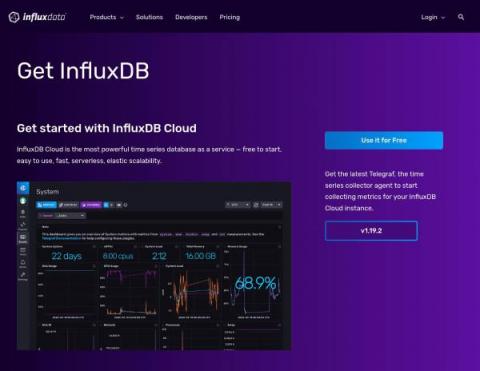
InfluxDB Cloud and Telegraf for the Home Lab

Home labs are popular among technology enthusiasts. Often they are unmonitored and even the smallest home lab can benefit from monitoring. This post will show how getting started with an InfluxDB Cloud account and Telegraf can make this super easy! InfluxDB is an open source time series database. As such, InfluxDB is well-suited for operations monitoring, application metrics, IoT sensor data, and real-time analytics.

Top DevSecOps Tools For 2022

DevSecOps combines the responsibilities of development, security and operations in order to make everyone accountable for security in line with the ongoing activities conducted by development and operations teams. DevSecOps tools serve to assist the user in minimising risk as part of the development process and also support security teams by allowing them to observe the security implications of code in production.