Operations | Monitoring | ITSM | DevOps | Cloud

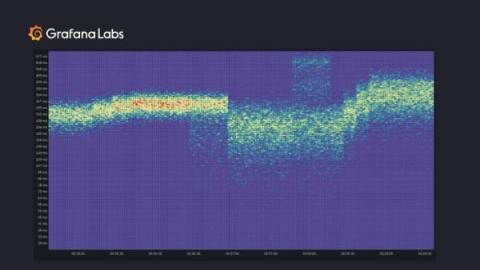
How sparse histograms can improve efficiency, precision, and mergeability in Prometheus TSDB

Grafana Labs recently hosted its first company-wide hackathon, and we joined forces with Björn “Beorn” Rabenstein to bring sparse high-resolution histograms in Prometheus TSDB into a working prototype. The Prometheus TSDB has gained experimental support to store and retrieve these new sparse high-resolution histograms. At PromCon 2021, we presented our exciting, fresh-off-the-presses results from the ongoing project.

Crossed 5000+ GitHub stars, metrics generation from spans - SigNal 06

Welcome back to SigNal #6. Every month, SigNal from SigNoz gives you an update on what we've been building, shipping, and iterating. In the midst of sprint plannings, feature releases, and bug fixes, time just flew by, and here we are, with another monthly product update! Also, we crossed 5000+ GitHub stars this month.

NGINX Monitoring: Best Tools and Key Metrics You Should Know About

NGINX is a popular web server featuring a wide range of capabilities, including reverse proxy, mail proxy, HTTP cache, and load balancing. It offers TLS offloading and a health check of the backends and supports gRPC, WebSocket, and HTTP/2. In short, NGINX is a one-stop solution for most of your web server needs. When using NGINX, monitoring its metrics is crucial for tackling issues.

Top 5 Challenges of Monitoring Complex IT Infrastructures

When monitoring a large IT infrastructure, there are multiple aspects you need to keep under control. Doing things manually and relying on people to ensure the infrastructure reliability can be a wrong decision and mislead you when resolving issues or troubleshooting problems. All these complexities faced while managing a large ecosystem can seem hard to overcome, but in reality, they can be handled.

Sponsored Post

Alerting has landed: Never miss another mission-critical issue again

Time is of the essence when identifying and resolving issues in your software. The longer it takes for a fix to be deployed, the greater the consequences for your customers. Visibility and speed are core to what makes Raygun powerful and is why today we're excited to continue this journey with our latest feature - Alerting.

Sponsored Post

Hybrid Multi-Cloud Demands Holistic Observability

As I said before, Speed is King. Business requirements for applications and architecture change all the time, driven by changes in customer needs, competition, and innovation and this only seems to be accelerating. Application developers must not be the blocker to business. We need business changes at the speed of life, not at the speed of software development.

Understanding why businesses require network topology software

It is crucial for network admins to fully understand their network topology. Even basic troubleshooting can be needlessly complicated without a network topology diagram which is vital for building and maintaining a network. A network topology diagram shows how the various components work together; it shows the devices, connections and pathways of a network visually so you can figure out how devices interact and communicate with one another.

How to Parse JSON with Telegraf into InfluxDB Cloud

In Telegraf 1.19 we released a new JSON parser (json_v2). The original parser suffered from an inflexible configuration, and there were a handful of pretty common cases where data could not be parsed. While a lot of edge cases for parsing can be resolved using the Starlark processor, it is still a more advanced approach that requires writing scripts. We have made a lot of enhancements to the new JSON parser that can help you easily read in your JSON data into InfluxDB.

5 Sustainable IT Practices for Your SaaS Applications

With web browser-accessed applications reaching record levels, employees are now spending most of their productive work time inside a cavern of business web applications. These may be custom applications built by a company for specific business purposes, or commercial SaaS applications for important functions such as collaboration, workflow management, scheduling, communication, transactional business, single sign-on, development, service desk, CRM, HR, and others.