Operations | Monitoring | ITSM | DevOps | Cloud

Why Use OpenTelemetry Processors to Change Collected Backend Data

When managing distributed environments, we find ourselves challenged with looking for different ways to understand performance better. Telemetry data is critical for solving such a challenge and helping DevOps and IT groups understand these systems’ behavior and performance. To get the most from telemetry data, it has to be captured and analyzed, then tagged to add relevant context, all while being sure to maintain the security and efficiency of user and business data.
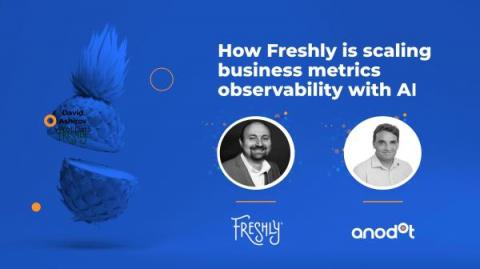
How Freshly is Scaling Business Metrics Observability with AI

Anodot recently took part in the 2021 Data Agility Day, an event dedicated to examining how organizations are extracting value from data. CEO and Co-Founder David Drai was joined by David Ashirov, VP of Data at Freshly, where he has worked to build a data stack that departments across the company could leverage to drive business. Ashirov is a senior executive with two decades of experience in data engineering, business intelligence, and marketing.

What can you learn from IoT with i2M - Part 1

The Internet of Things (IoT) is a wonderful marketing term given to devices that are connected to the internet. Today everything from light switches, air conditioners to door locks have the option of being internet-connected. Now that multiple companies have created “tags” that you can add to anything from keys to cars and packages, anything can be tracked. Across the business, industry, and retail almost every physical component has the option of being internet-connected.

New Integrations from Logz.io: November 2021

It’s been a busy couple of months at Logz.io. We’ve added new features, made critical updates, and added a slew of integrations. Those integrations run the gamut from observability and security services, to cloud tools and container orchestration. Let’s take a quick look at what’s new and what’s coming up at Logz.io.

Department of Defense Information Network (DoDIN) Approved Products List (APL): What is it and Why it Matters

This is the second of a four-part security blog series covering why ScienceLogic is listed in the DoDIN APL catalog, what this means for monitoring critical IT infrastructure, and why APL certification is relevant for all organizations. Part two is about what the DoDIN APL is and why it matters to both government and non-government organizations.

My goals as a newly elected OpenTelemetry Governance Committee member

I joined Grafana Labs as a software engineer in October to help build out a team focused on OpenTelemetry, and within a few weeks, I was promptly encouraged to run for a seat on the OpenTelemetry board. Every year, the OpenTelemetry community holds elections for a few seats on the Governance Committee board, which oversees the project at large. The results of this year’s elections are now available, and I am glad to share that I have been elected to serve on the board!

Dynamically control your custom metrics volume with Metrics without Limits

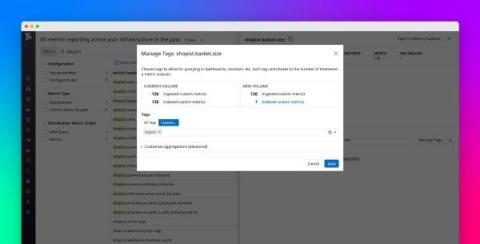
Sending custom metrics to Datadog allows you to monitor important data specific to your business and applications, such as latency, dollars per customer, items bought, or trips taken. And tags are key to being able to slice and dice these custom metrics to quickly find the information you need. But collecting enough custom metrics to have complete visibility can be cost prohibitive. For example, you might run microservices instrumented across thousands of containers.

LogDNA vs. Logz.io

Logz.io is a SaaS (software as a service) provider with an observability offering made up of various managed open source technologies. These technologies include the Elastic Stack for logging and SIEM (security information and event management), Prometheus, for monitoring, and Jaeger for tracing. The company positions itself as an alternative to the Elastic Stack (or ELK Stack), which is made up of Elasticsearch, Logstash, Kibana, and Beats.