Operations | Monitoring | ITSM | DevOps | Cloud

Slow Application? Here's What to Do

Today, everything we work on relies on being connected to an app. Whether we are in a household or running a business, applications have become as accessible as air. Alright, almost like air. If your business relies on applications to survive, a Slow Application spells disaster. Getting to the bottom of the slowdown becomes a tedious exercise of pointing fingers and going down the rabbit hole. Even worse is if it affects a business’ customers.

How Does Docker Network Host Work?

Docker is a platform as a service product. With Docker, you can easily deploy applications into Docker containers. Containers are software "packages" that bundle together an application's source code with its libraries, configurations, and dependencies. This helps software run more consistently on different machines. To use Docker containers, you need to understand how Docker networking works. Below, we'll answer the question: "what is Docker network host?". We'll also take a look to see how it works.

How Does Observability Help an Organization Move the Needle?

If you’re new to the concept or just trying to keep up with the conversation, Gartner defines Observability as the evolution of monitoring into a process that offers insight into digital business applications, speeds innovation and enhances customer experience. Some folks think that Observability is a new buzzword, but in fact the term was coined in 1960 by Rudolf E. Kalman, a Hungarian-American engineer.

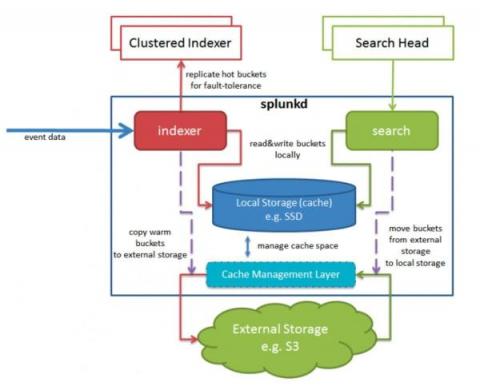
Splunk 9.0 SmartStore with Microsoft Azure Container Storage

With the release of Splunk 9.0 came support for SmartStore in Azure. Previously to achieve this, you’d have to use some form of S3-compliant broker API, but now we can use native Azure APIs. The addition of this capability means that Splunk now offers complete SmartStore support for all three of the big public cloud vendors. This blog will describe a little bit about how it works, and help you set it up yourself.

New Features and Enhancements in SQL Server 2022

In the era of technology defined by cloud computing, features evolve at the blinding speed of continuous deployment. When large software development organizations like Microsoft deliver semi-annual releases of products, like SQL Server, the volume of new features can be so large they can be hard to grasp. Microsoft continues to push the boundaries on what’s possible, both in on-premises and cloud data platforms, and they aim to make the life of data professionals much more manageable.

Building a Custom Grafana Dashboard for Kubernetes Observability

Distributed systems open us up to myriad complexities due to their microservices architecture. There are always little problems that arise in the system. Therefore, engineering teams must be able to determine how to prioritize the challenges. Viewing logs and metrics of such systems enables engineers to know the shared state of the system components, thereby informing the decision-making on what challenge needs to be solved most immediately.

elmah.io launches two GitHub Actions in the GitHub Marketplace

While developing the ecosystem around the elmah.io API and App Store, we see an increasing interest and adoption of GitHub and the services around it. We have a range of integrations with GitHub that I’ll introduce you to later in this document. But first of all, I’m happy to announce that elmah.io has been chosen as a GitHub Technology Partner to build integrations in the Marketplace and extend developer capabilities. elmah.io integrates with GitHub in two ways.

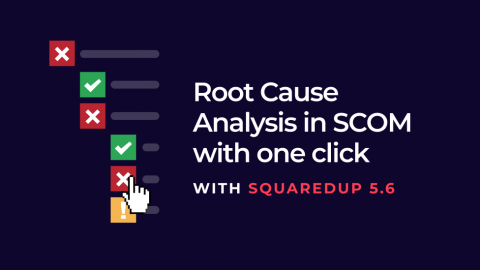
How to get One-click SCOM Root Cause Analysis

SCOM has incredible powers, but it’s not always easy to find the root cause of issues fast. And you definitely don’t get one-click SCOM root cause analysis. We’ve all been there. A business-critical server goes down and you don’t know why. Let’s imagine you had a dashboard showing the health statuses of all your server groups and you notice that the United States is showing as critical.

Sponsored Post

Open Source vs. Commercial Cloud Monitoring Tools: How to Choose

There is a multitude of options on the market when it comes to open source and commercial monitoring platforms that are available for cloud management. It can be hard to sift through the various tools and come to an informed decision on what is the best fit for your team. In this article, we will explore the strengths and weaknesses of both open source and commercial tools and when each option is suitable for deployment.

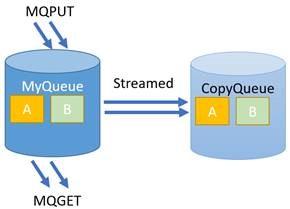
IBM MQ Streaming Queues Adds Business Value to Middleware

Last year we published this blog post about the benefits of IBM MQ streaming queues. On July 15th, 2022 this functionality was also made available for MQ on the mainframe (z/OS) and it’s also been announced for the MQ appliance for Aug 2nd, 2022. Nastel has been supporting and embracing this functionality for some time in its integration infrastructure management (i2M) platform.