Operations | Monitoring | ITSM | DevOps | Cloud

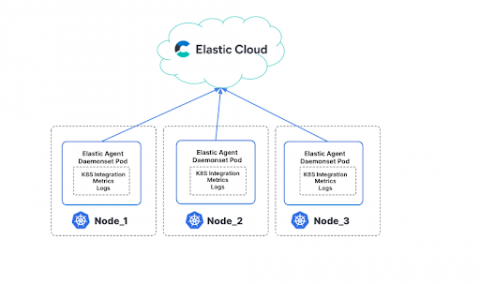
Managing your Kubernetes cluster with Elastic Observability

As an operations engineer (SRE, IT manager, DevOps), you’re always struggling with how to manage technology and data sprawl. Kubernetes is becoming increasingly pervasive and a majority of these deployments will be in Amazon Elastic Kubernetes Service (EKS), Google Kubernetes Engine (GKE), or Azure Kubernetes Service (AKS). Some of you may be on a single cloud while others will have the added burden of managing clusters on multiple Kubernetes cloud services.
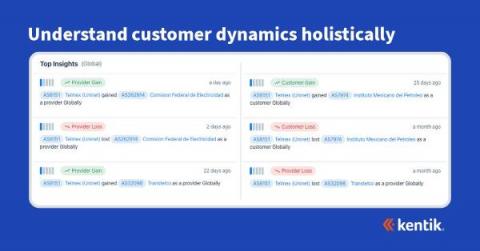
Kentik Market Intelligence just increased its IQ - introducing KMI Insights!

Early this year we launched Kentik Market Intelligence (KMI). If you missed it, KMI enumerates transit and peering relationships as well as produces rankings based on the volume of IP space transited by ASes in different geographies. Using tables and charts, KMI offers a global view of the internet out-of-the-box without any configuration or setup. KMI uses public BGP routing data to rank ASes based on their advertised IP space.

Watch Grafana Labs CEO, Co-founder Raj Dutt discuss why companies need observability

Grafana Labs CEO and Co-founder Raj Dutt sat down with “NYSE Floor Talk” ahead of ObservabilityCON to discuss why companies are increasingly focused on observability as a means to improve customer satisfaction. In his conversation with Judy Khan Shaw, host of “NYSE Floor Talk,” Dutt also talked about Grafana Labs’ big tent philosophy and the growth of Grafana Labs and the Grafana open source community.

Current DevOps Problems & How Scout APM Solves Them

Most software companies rely on DevOps at some scale to aid their software development and deployment processes. DevOps has recently seen a major increase in popularity due to the advent of cloud-based tools and automation possibilities. DevOps can help you completely forget the woes of deploying software and focus better on building better apps and providing a holistic experience for your end user. However, just like other things in tech, DevOps is not perfect.

Announcing general availability of Elastic APM .NET agent profiler auto-instrumentation

A few months back, we introduced the beta release of Elastic APM.NET agent profiler auto-instrumentation. Fast forward to today, we're excited to announce the general availability (GA) of this powerful capability that allows the.NET APM agent to automatically instrument.NET Framework, .NET Core, and.NET applications without requiring code changes or recompilation.

Faster MQTT Data Collection with InfluxDB

Native MQTT eliminates the need to write custom code, orchestrate additional technology layers or incorporate additional hosting services. MQTT is a powerhouse within the Internet of Things (IoT) space. Its pub/sub model and lack of defined payload structure make it infinitely adaptable to the needs of modern sensors, devices and systems. IoT data is also time-series data.

October Monthly Product Update - InfluxDB New Engine and More!

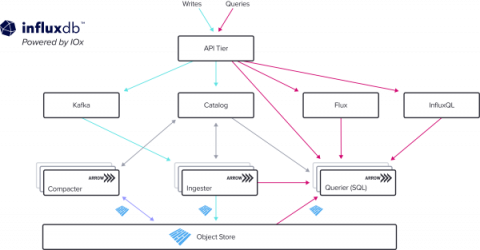
We love to write and ship code to help developers bring their ideas and projects to life. That’s why we’re constantly working on improving our product in sync with developer needs to ensure their happiness and accelerate Time To Awesome. This month is very special. We now have a new engine that significantly increases the “horsepower and torque” for InfluxDB.

Interlink Software Achieves Cyber Essentials Certification

Cyber Essentials is a UK government backed scheme, developed by the National Cyber Security Centre. Since its inception the scheme has become the benchmark for IT security, helping organizations to deploy technical controls to guard against the common types of cyber-attacks and improve data security.

Saving your team from alert fatigue

It's a story as old as the web itself: someone on your team gets excited to install a new tool. The tool promises to finally give you a clear view into the problems your users have with your product. Your team agrees to give it a go. The errors start coming... ...and they don't stop coming... Soon enough, most of your team has either created an email filter to manage all the alerts, or has unsubscribed themselves entirely. Just like all the other tools. Welcome to alert fatigue.