Operations | Monitoring | ITSM | DevOps | Cloud

How universities preserve and protect digital assets with Grafana dashboards

Anthony Leroy has been a software engineer at the Libraries of the Université libre de Bruxelles (Belgium) since 2011. He is in charge of the digitization infrastructure and the digital preservation program of the University Libraries. He coordinates the activities of the SAFE distributed preservation network, an international LOCKSS network operated by seven partner universities.
Learning in public: How to speed up your learning and benefit the OSS community, too

Technical folks in OSS communities often find themselves in permanent learning mode. Technology changes constantly, which means learning new things — whether it’s a new feature in the latest OSS release or an emerging industry best practice — is, for many of us, simply a natural part of our jobs. This is why it’s important to think about how we learn, and improve the skill of learning itself.

Mage.ai for Tasks with InfluxDB

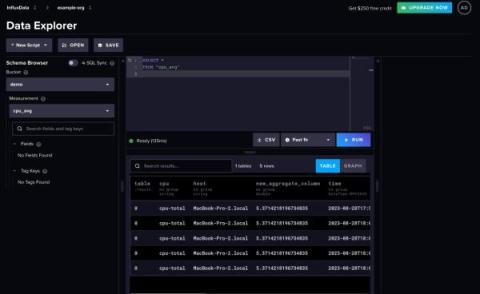
Any existing InfluxDB user will notice that InfluxDB underwent a transformation with the release of InfluxDB 3.0. InfluxDB v3 provides 45x better write throughput and has 5-25x faster queries compared to previous versions of InfluxDB (see this post for more performance benchmarks). We also deprioritized several features that existed in 2.x to focus on interoperability with existing tools. One of the deprioritized features that existed in InfluxDB v2 is the task engine.

Why You Need An Application Performance Monitoring Tool

As organisations strive to deliver seamless user experiences, maximise operational efficiency, and maintain a competitive edge, the need for comprehensive Application Performance Monitoring (APM) tools becomes increasingly evident. APM tools offer invaluable insights into the performance and behaviour of applications in real-time. They go further than the conventional monitoring approach by providing a holistic view of the entire stack, encompassing servers, databases and user interactions.

SQL Performance Tuning: 7 Practical Tips for Developers

Being able to execute SQL performance tuning is a vital skill for software teams that rely on relational databases. Vital isn’t the only adjective that we can apply to it, though. Rare also comes to mind, unfortunately. Many software professionals think that they can just leave all the RDBMS settings as they came by default. They’re wrong. Often, the default settings your RDBMS comes configured with are far from being the optimal ones.

ICMP Required for Traceroute and Network Diagnostics

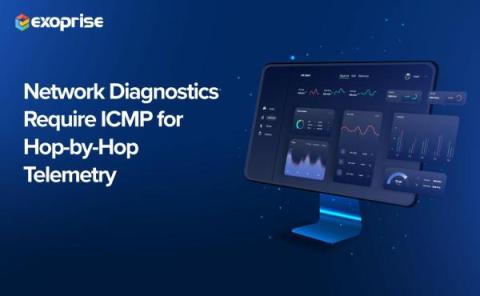
As previously detailed on the Exoprise blog, the ICMP (Internet Control Message Protocol) is crucial for troubleshooting, monitoring, and optimizing network performance in today’s Internet-connected world. Despite historical security concerns, disabling ICMP is unnecessary and hampers network troubleshooting efforts. Modern firewalls can effectively manage the security risks associated with ICMP.

Top tips: 5 steps to take while implementing a predictive maintenance strategy

Top tips is a weekly column where we highlight what’s trending in the tech world today and list out ways to explore these trends. This week we’re looking at five steps should follow when devising an effective predictive maintenance strategy for your organization. Have you ever wondered what it would feel like to be able to look into the future? Well, thanks to predictive maintenance, you can do just that!

5 AWS Logging Tips and Best Practices

If you’re an Amazon Web Services (AWS) user, you’re probably familiar with some of Amazon’s native services available for logging and monitoring, such as CloudWatch and CloudTrail. With that said, log management can get complicated quickly, especially if you’re dealing with a high volume of logs from AWS Lambda functions or a multi-cloud/hybrid cloud environment.

Building a Distributed Security Team

In this live stream, Cjapi’s James Curtis joins me to discuss the challenges of building a distributed global security team. Watch the full video or read on to learn about some hard-won examples of how to be successful with remote team building and management. Talent is hard to find, and companies are hiring from all over the world to build the best teams possible, but this trend has a price.

Machine Learning for Fast and Accurate Root Cause Analysis

Machine Learning (ML) for Root Cause Analysis (RCA) is the state-of-the-art application of algorithms and statistical models to identify the underlying reasons for issues within a system or process. Rather than relying solely on human intervention or time-consuming manual investigations, ML automates and enhances the process of identifying the root cause.