Operations | Monitoring | ITSM | DevOps | Cloud

Can you have a career in Node without knowing Observability?

”Isn’t Observability something for Ops to worry about?” I’ve heard this response more than once when talking about how developers should learn OpenTelemetry. I wanted to write this piece to show you how important and how easy it is to learn observability from day one as a coder.
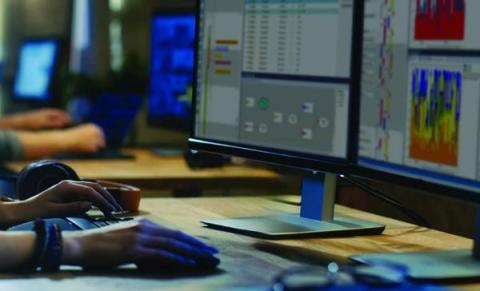

The Microscope for Embedded Code: How Tracealyzer Revealed Our Bug

Tracealyzer. You can’t stay in the wonderful world of debugging and profiling code without hearing the name. If you look at Percepio’s website, it is compared to the oscilloscopes of embedded code. Use it to peek deep inside your code and see what it does. Of course, the code receives an interrupt and checks a CRC before sending the data through SPI, but how does it do it? And how long does it take?

Acing server performance: Don't overlook these crucial 11 monitoring metrics

A server, undeniably, is one of the most crucial components in a network. Every critical activity in a hybrid network architecture is somehow related to server operations. Servers don’t just serve as the spine of modern computing operations—they are also pivotal for network communications. From sending emails to accessing databases and hosting applications, a server’s reliability and performance have a direct impact on the organization’s growth.

From LCP to CLS: Improve your Core Web Vitals with Image Loading Best Practices

If you’re a front end developer, there’s a high probability you’ve built (or will build) an image-heavy page. And you’ll need to make it look great by serving high-quality image files. But you’ll also need to prioritize building a high-quality user experience by making sure your Core Web Vitals such as Cumulative Layout Shift and Largest Contentful Paint aren’t negatively affected, which also help with your search engine rankings.

The importance of SDT and how to successfully schedule planned downtime

Scheduled downtime (SDT), also known as planned downtime, lets you perform maintenance, testing, or repairs on your systems, servers, software, data centers, and other infrastructure. While no business likes being offline, this preventative work is essential for ensuring your assets function correctly. Unlike unplanned outages, you can limit downtime so it minimizes impact on your company and customers.

Monitor your mobile tests with Sofy's offering in the Datadog Marketplace

As your apps scale, testing can become repetitive, manual, and time-consuming, leading to slower release cycles and lower-quality code. Sofy is a SaaS platform that enables you to create and run automated tests on your mobile apps without writing any code. Sofy will automatically test your mobile apps on real iOS and Android devices, so you can optimize their performance and debug end-user experiences without setting up or maintaining your own test infrastructure.

Continuous Improvement and Pure Excellence: Advantages of RCA in Troubleshooting

As a good technology superhero you will know that in the world of troubleshooting, there is an approach that goes beyond simply fixing superficial symptoms. We call this approach “Maximum Heroics” or Root Cause Analysis (ACR), a charming method that seeks to unravel the mysteries behind an incident. Through the RCA, the causal factors of an incident are examined, and why, how and when it happened are broken down in order to prevent it from repeating itself and ensure smooth continuity.

Custom Management Packs - for your needs

Each organization's IT environment has its own prerequisites and unique challenges. This also means that there are different needs for the monitoring and automation of every organization's critical applications. However, finding a monitoring solution that fits your unique needs is not always easy. Especially if your organization has particular regulations and demands that need to be taken into consideration.

Efficiently Tracing Zephyr Syscalls

Using Tracealyzer to view applications running on Zephyr RTOS comes with a special challenge: unlike some other microcontroller-oriented real-time operating systems, Zephyr exposes its kernel services via a syscall layer. A syscall is essentially a way to programmatically communicate with the operating system kernel from user level code.