Operations | Monitoring | ITSM | DevOps | Cloud

Can Claude Code Observe Its Own Code?

One of the great things about OpenTelemetry is that it’s a standard, and standards tend to proliferate. I was excited to see Claude Code add OpenTelemetry metric and log support in a recent release. What was really interesting—beyond the ability to capture usage data from Claude Code—is that you can also get pretty detailed logs about what you’re doing with Claude Code.

Why GovRAMP-authorized observability matters for state, local, and education IT teams

Building on our FedRAMP Moderate authorization and our “In Process” status for FedRAMP High, Datadog for Government is now "In Process" for GovRAMP High Authorization, giving agencies a unified observability platform that meets the toughest public-sector security bars.

Operational Intelligence - the new horizon of observability

Monitoring your systems isn't enough anymore. Neither is “asking questions about your system”. Operational Intelligence embraces observability to proactively deliver business insights, support decision-making, and accelerate innovation. It seems that as the observability market grows and more and more products come into the space, the meaning of the term observability itself becomes more and more nebulous.

A Quick Guide To Kubernetes Observability

Many companies are rapidly adopting cloud-native computing services, like containers, microservices, and serverless computing. Unlike monolithic applications, these technologies rely on distributed architectures. Whether you are running them in the cloud, on-premises, or both, distributed systems consist of thousands or millions of processes and components. The challenge now is to make these complex systems’ inner workings visible, controllable, and improvable.

From Detection to Resolution: How Selector + Itential Deliver AI-Driven Observability and Automated Recovery

Every second counts when it comes to detecting, diagnosing, and resolving network incidents, yet many teams still find themselves stuck in reactive mode, drowning in alerts, manually writing scripts, and managing tickets across disconnected systems. This is where Selector and Itential come in. Together, Selector and Itential deliver a powerful, enterprise-ready solution that closes the loop between detection and action.

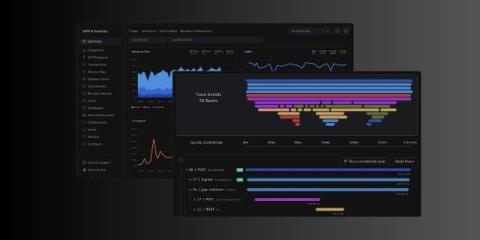
Understanding APM and Distributed Tracing in the Observability Stack

To keep modern applications running smoothly, you need more than just basic monitoring. APM (Application Performance Monitoring) gives you a broad overview, tracking metrics like latency, errors, and system health. Distributed Tracing, on the other hand, shows the full journey of each request across services, helping you pinpoint the root cause of slowdowns or failures.

Master Your AWS Cloud Environment With Observability

In many cases, cloud and on-premises environments exist side by side. The only way to maintain visibility into such intricate hybrid ecosystems is with a sophisticated end-to-end observability solution. Here are the key factors in choosing a comprehensive observability solution to help you master your AWS cloud and on-prem environments.

Observability 2.0: Seeing More, Knowing More, Fixing More

The era of scattered monitoring tools and fragmented operational visibility is over. As hybrid and multi-cloud environments have become the norm rather than the exception, traditional observability approaches—siloed metrics, isolated logs, and disconnected traces—can no longer keep pace with the complexity of modern IT infrastructure. Organizations today need more than just monitoring.

Observability Without Tradeoffs: Introducing Powerful New Honeycomb Telemetry Pipeline Features

Every day, enterprise companies generate terabytes of observability data while engineering teams are under pressure to cut costs. One of the easiest ways to reduce observability bills is through sampling: intentionally sending only a representative portion of telemetry data, rather than the full volume, to your observability tool. But turning down the dial is risky.

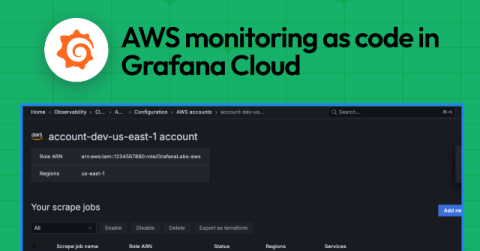
Grafana Cloud: Manage the AWS Observability app as code with Terraform

Imagine setting up your AWS configuration in Grafana Cloud by hand and clicking through menus. When you only have a few services, it’s not a big deal. But as you add more and more, keeping track of every little change becomes a headache. It’s easy to make mistakes, and before you know it, things can get out of sync and your monitoring becomes unreliable.