Operations | Monitoring | ITSM | DevOps | Cloud

Grafana Cloud: Manage the AWS Observability app as code with Terraform

Imagine setting up your AWS configuration in Grafana Cloud by hand and clicking through menus. When you only have a few services, it’s not a big deal. But as you add more and more, keeping track of every little change becomes a headache. It’s easy to make mistakes, and before you know it, things can get out of sync and your monitoring becomes unreliable.


Slash Observability Costs Without Sacrificing Reliability: The OTEL + PagerDuty Advantage

In a time when budgets are tight but reliability still needs to be high, observability is under the spotlight. Monitoring and observability tools are some of the most expensive parts of a tech stack, often eating up the bulk of the budget. Luckily, there are strategies organizations can implement to reduce costs, such as utilizing open-source solutions like OpenTelemetry (OTEL), which provides a flexible, open standard for data collection without the price tag of proprietary tooling.

Harnessing Network Observability to Speed the Telco-to-Techco Transition

For telecommunications firms (telcos), the race is on. If these organizations are to rise to meet their top challenges and growth objectives, transformation is a must. Those who make this move most rapidly will be best positioned for sustained success. Today, telcos face several significant challenges, which are creating fundamental disruption: Telcos need to transform to contend with these shifts.

Brand-Driven Observability: Crafting Monitoring That Reflects Your Product Identity

In the fast-paced world of modern IT operations, observability has become a crucial pillar in ensuring the health, reliability, and performance of complex systems. As organizations scale their infrastructures and embrace distributed architectures, monitoring systems have evolved beyond simple uptime checks to holistic observability platforms. However, in this technical landscape, one often overlooked element is the role of branding in observability design.

Honeycomb Observability Day London: A Jam-Packed Day of Great Talks

On May 15th, 2025, Honeycomb hosted Observability Day (or O11yDay) in the London financial district. The skies were clear and the weather was wonderful and we had a huge turnout, from our networking breakfast to the happy hour at the end of the day.

Tales From the Trench: Building With LLMs and Honeycomb

AI discourse these days is all over the place. Depending on who you talk to, AI’s are absolute flash-in-the-pan junk, or they’re the best thing since sliced bread. I want to cut through the noise, though, and see for myself what someone can do out here on the bleeding edge. Thus, I’m setting myself a challenge: write a usable—and useful—application with Claude Code, from soup to nuts. Here are the rules: With our ground rules established, let’s figure out our app!

Announcing Qovery Observability: the simplest way to understand your application

We are thrilled to announce the next major milestone in our platform vision: Qovery observability! Qovery Observability is our new product, ready to give you the fastest way to gain a crystal-clear, unified understanding of your application and infrastructure. Fully managed, zero lock-in, you keep the data. Devs love it, no DevOps needed. Coming soon!

Defining SLA/SLO-Driven Monitoring Requirements in 2025

SLA/SLO-driven monitoring aligns your observability strategy with business objectives by defining measurable service targets and implementing monitoring systems that track progress toward those goals. Service Level Agreements (SLAs) represent commitments to users, while Service Level Objectives (SLOs) are internal targets that ensure you meet those commitments with a safety buffer. In 2025, organizations running distributed systems need monitoring that goes beyond basic uptime checks.

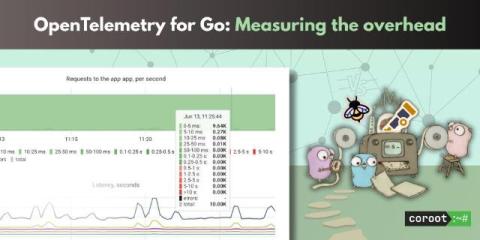
OpenTelemetry for Go: measuring the overhead

Everything comes at a cost — and observability is no exception. When we add metrics, logging, or distributed tracing to our applications, it helps us understand what’s going on with performance and key UX metrics like success rate and latency. But what’s the cost? I’m not talking about the price of observability tools here, I mean the instrumentation overhead.

Observability trends in Japan: Insights from Grafana Labs' latest survey

Japanese organizations are focused on controlling costs and limiting complexity—and they might be getting ready to broaden their adoption at just the right time, according to analysis of a micro survey on observability recently conducted by Grafana Labs. Observability is an evolving space in Japan, and this is the first time Grafana Labs has run a Japanese version of our annual Observability Survey.