Operations | Monitoring | ITSM | DevOps | Cloud

Sponsored Post

The Network-First Advantage: How Fabrix.ai Redefines Observability from the Ground Up

Modern enterprises today often find themselves in a peculiar predicament: they are drowning in a deluge of telemetry data—including logs, metrics, and traces—yet paradoxically remain blind to what truly matters. Despite making substantial investments in observability tools, teams frequently find themselves reacting to incidents rather than proactively preventing them, with alerts flooding dashboards often devoid of critical context.
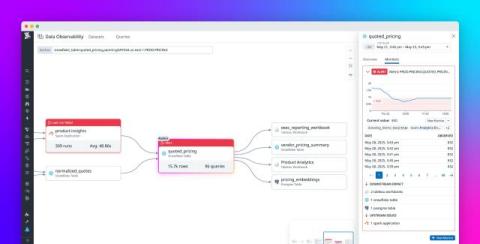

Ensure trust across the entire data life cycle with Datadog Data Observability

As data systems grow more complex and data becomes even more business-critical, teams struggle to detect and resolve issues that impact data quality, reliability, and, ultimately, trust. Engineers have to rely on manual checks and ad hoc SQL queries to catch data quality issues—often after teams relying on the data have noticed something has gone wrong.

Smarter Telemetry Pipelines: The Key to Cutting Datadog Costs and Observability Chaos

Log volume is exploding, costs are rising, and most teams are stuck duct-taping together short-term fixes. During our webinar, "Optimizing Log Management in Datadog: Cut Costs Without Losing Insights," we discuss how DevOps and engineering leaders are navigating the growing pains of observability, especially in environments where tools like Datadog are mission-critical but challenging to manage. Here’s a recap of the key takeaways.

It's The End Of Observability As We Know It (And I Feel Fine)

In a really broad sense, the history of observability tools over the past couple of decades have been about a pretty simple concept: how do we make terabytes of heterogeneous telemetry data comprehensible to human beings? New Relic did this for the Rails revolution, Datadog did it for the rise of AWS, and Honeycomb led the way for OpenTelemetry.

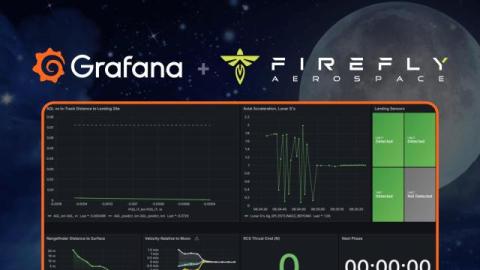
Lunar-level observability: How Firefly Aerospace used Grafana to monitor its historic moon landing

On March 2, 2025, Firefly Aerospace made history. The company — a space services firm that offers safe, reliable, and economical access to space — completed the first fully successful lunar landing by a commercial provider with its Blue Ghost Mission 1. But behind the headlines and highlight reels was a team of dedicated engineers, years of preparation, and a mission control center outfitted with Grafana dashboards.

Beyond Shift Left: Engineering Leaders Increase Speed and Resilience With Observability

We recently had the privilege of hosting several industry experts and technology executives across platform strategy, SRE, and engineering enablement for breakfast at our Observability Day in London. We noted that they’re all facing the same fundamental tension: deliver faster, scale smarter, stay resilient, and somehow get ahead of what’s coming next. But how do you move fast without breaking things? And how do you prove the value of the things you don’t break?

Top 5 Observability Tools DevOps Teams Should Know

Observability and monitoring are the cornerstone of resilient, high-performing applications. Nearly every IT or software engineering leader we come into contact with emphasizes the importance of the ability to understand and diagnose what is going on with their applications at all times. Having clear and concise visibility into your applications is no longer optional.

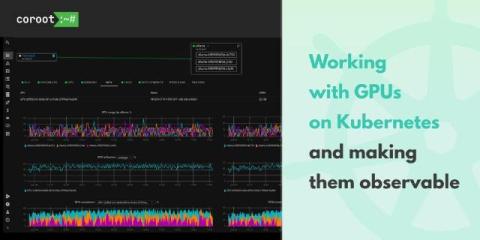
Working with GPUs on Kubernetes and making them observable

GPUs are everywhere powering LLM inference, model training, video processing, and more. Kubernetes is often where these workloads run. But using GPUs in Kubernetes isn’t as simple as using CPUs. You need the right setup. You need efficient scheduling. And most importantly you need visibility. This post walks through how to run GPU workloads on Kubernetes, how to virtualize them efficiently, and how Coroot helps you monitor everything with zero instrumentation or config.

Inside the Wins: Real Stories of Transforming Azure Observability into Business Value

Azure environments are growing fast, and so are the challenges of monitoring them at scale. In this blog, part of our Azure Monitoring series, we look at how real ITOps and CloudOps teams are moving beyond Azure Monitor to achieve hybrid visibility, faster troubleshooting, and better business outcomes. These real-life customer stories show what’s possible when observability becomes operational. Want the full picture? Explore the rest of the series.

Real-Time Observability with ClickHouse, Coroot, and GlassFlow

Coroot is excited to feature an editorial from GlassFlow for our first Open Source Spotlight. We hope to improve the workflow of our global community of SREs and DevOps professionals by sharing exciting projects like Glassflow, which make innovation accessible for everyone through the freedom of open source. If you have an open source or open core project you’d like to see on our blog next, send us a message!