Operations | Monitoring | ITSM | DevOps | Cloud

AWS Service Observability using OpenTelemetry

Efficient use of observability statistics is essential to any microservice architecture. OpenTelemetry is a project supported by the Cloud Native Computing Foundation (CNCF) to enhance the observability of microservice projects. AWS Distro for OpenTelemetry (ADOT) is an AWS-supported distribution of the OpenTelemetry project specifically designed to improve the observability of AWS projects.

Quickly Turn ALB/ELB Status Codes into an Issue-Seeking Heatmap

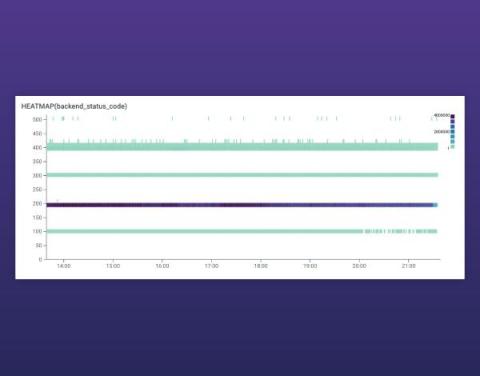
More often than not, as developers, when we get a report that a large customer is hitting 502 errors, there's a flurry of activity. What's wrong? Is something deeply broken? So you start digging through AWS logs to see what you can find, but it's hard to reproduce. Sometimes, there's no clear answer, and you move on without any resolution. What if I told you it doesn't have to be this way?

How can observability help telecom providers accelerate 5G monetization

The telecom industry is at an inflection point today, where the endless possibilities of 5G meet the growing challenges of accelerating 5G monetization. This is particularly true for telecom providers who have pumped billions of dollars in building 5G networks. The telecom cloud market is expected to cross USD 74 billion by 2026.

How New Relic uses Kentik for network observability

New Relic is known for empowering the world’s leading engineering teams to deliver great software performance and reliability. And the network that delivers that service to New Relic’s users plays a critical role. Hiccups in the performance of the network between New Relic’s mission-critical service and their users can create a cascade of problems.

Deep Learning Toolkit 3.7 and 3.8 - What's New?

We are excited to share the latest advances around the Deep Learning Toolkit App for Splunk (DLTK). Earlier this year, Splunk’s Machine Learning Toolkit (MLTK) was updated with some important changes. Please refer to the blog post Driving Data Innovation with MLTK v5.3 and the official documentation to learn more about what changes were made and most importantly how they may affect you, especially if you run MLTK models in production.

How to Complement Cisco AppDynamics Full-Stack Observability With Automated Actions From Resolve

In today’s digital world, application responsiveness isn’t just an end-user desire but an expectation. Nobody understands the challenges of meeting these demands better than IT, which must remain poised to act when an issue occurs while also finding ways to innovate, improve, and implement continuously.

How the growing Grafana Observability team restructured themselves successfully

Over the past year, Grafana Labs has grown from 300 to 700 Grafanistas. Moving forward, we expect to continue to maintain a high rate of change, and to sustain that, we need to ensure there is flexibility in how our teams* are set up. The majority of our Engineering squads have changed in size and structure — and the same goes for the Grafana Observability team, where I work.

New observability features for your Splunk Dataflow streaming pipelines

We’re thrilled to announce several new observability features for the Pub/Sub to Splunk Dataflow template to help operators keep a tab on their streaming pipeline performance. Splunk Enterprise and Splunk Cloud customers use the Splunk Dataflow template to reliably export Google Cloud logs for in-depth analytics for security, IT or business use cases.

Get visibility into AWS Lambda serverless functions with Elastic Observability

Adoption of AWS Lambda functions in cloud-native applications has increased exponentially over the past few years. Serverless functions, such as the AWS Lambda service, provide a high level of abstraction from the underlying infrastructure and orchestration, given these tasks are managed by the cloud provider. Software development teams can then focus on the implementation of business and application logic.

Ask Miss O11y: Not Your Aunt's Tracing

Dear Miss O11y, How is modern observability using tracing, such as Honeycomb, different from the previous distributed tracing software I'm familiar with, like Dapper, at my company? I haven't really been able to wrap my head around Dapper. Does "advanced" observability mean that it's even more complicated than Dapper is? Auntie Alphabet.