Operations | Monitoring | ITSM | DevOps | Cloud

New StackPod Episode: OpenTelemetry - the Future of Observability?

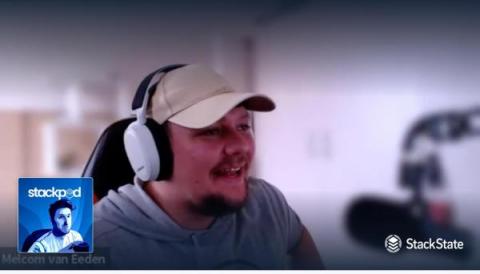
OpenTelemetry has been getting a lot of attention in the observability field. Moreover, in StackState’s latest release, we added support for OpenTelemetry traces. Melcom van Eeden, software developer at StackState, was one of our developer champions who made this possible. In addition to joining us on this episode of StackPod, he wrote a blog post on how to leverage OpenTelemetry with StackState and he recorded a tutorial video about the topic.

Why SolarWinds Is Evolving From Monitoring to Observability

At SolarWinds, our purpose is to enrich the lives of the people we serve. In a world where complexity is expanding, our commitment to offer simple yet powerful IT solutions has served us well throughout our more than 20-year history. Today’s pace of digital transformation means businesses are actively building new applications and leveraging multi-cloud deployments, while reworking their existing ones, to achieve operational excellence.

Simplify Your Digital Transformation With Hybrid Cloud Observability

Today marks a significant milestone for SolarWinds, as we’ve formally announced our organizational direction to evolve from our leadership position in monitoring to become a leader in observability. Today is also significant because it marks the official release of our Hybrid Cloud Observability, and I’m excited to share more details on what we believe expands the scope of observability for the market.

Why UX Designers Don't Feel Valued-and Why This Is a Problem for Your Business

It’s time we had a real conversation about why UX designers everywhere are still unhappy, why that elusive “seat at the table” feels so impossibly out of reach to so many (even at companies that embrace design), and how this impacts your business Design is facing down an epidemic of designers who feel burned out, taken for granted, marginalized, and disrespected. Yes, there is something different about our experience compared to other disciplines.

Monitoring vs. Observability: What's The Role of Each For DevOps?

DevOps: Development and Operations joined together in perfect harmony, one feeding the other and vice-versa. That's the dream. But it's easy for the link between the two to be broken. 'Dev' stops talking to 'Ops,' or Ops falls out with Dev, often because of a lack of understanding of each other's goals. That's where Monitoring and Observability come in. They're like the mediators whose job is to make sure the two main players in DevOps keep that metaphorical dialogue open.

Leveraging Elastic to improving data management and observability in the cloud

Two recent studies conducted by Nucleus Research, focused on how a global telecommunications provider, and multi-line insurance company realized quantified business value through Elastic. The companies that were studied saw great levels of satisfaction from deploying Elastic Cloud. Through their adoption they were able to increase the maturity of their tech stack and circumvent prior limitations in scalability.

Service level objectives: How SLOs have changed the business of observability

Forget the latest tech gadgets and the newest products. One of the most talked about trends in observability right now? “SLOs have really become a buzzword, and everyone wants them,” said Grafana Labs principal software engineer Björn “Beorn” Rabenstein on a recent episode of “Grafana’s Big Tent,” our new podcast about people, community, tech, and tools around observability.

Spring Transaction Debugging in Production with Lightrun

Spring makes building a reliable application much easier thanks to its declarative transaction management. It also supports programmatic transaction management, but that’s not as common. In this article, I want to focus on the declarative transaction management angle, since it seems much harder to debug compared to the programmatic approach. This is partially true. We can’t put a breakpoint on a transactional annotation. But I’m getting ahead of myself.

Ask Miss O11y: Logs vs. Traces

Ah, good question! TL;DR: Trace instead of log. Traces show connection, performance, concurrency, and causality. Logs are the original observability, right? Back in the day, I did all my debugging with `printf.` Sometimes I still write `console.log(“JESS WAS HERE”)` to see that my code ran. That’s instrumentation, technically. What if I emitted a “JESS WAS HERE” span instead? What’s so great about a span in a trace? Yeah, and so do logs in any decent framework.