The latest News and Information on CyberSecurity for Applications, Services and Infrastructure, and related technologies.
The #LifeatTorq Team Spotlight is a Q&A series dedicated to the talented and generally kick-ass team that form the foundation of our growing company. Today we are spotlighting Kostya Ostrovsky , a Software Architect at Torq based in our Tel Aviv office. Kostya is one of the first employees at Torq.
As developers, we spend a lot of time in our IDEs writing new code, refactoring code, adding tests, fixing bugs and more. And in recent years, IDEs have become powerful tools, helping us developers with anything from interacting with HTTP requests to generally boosting our productivity. So you have to ask — what if we could also prevent security issues in our code before we ship it?
Almost all tasks within a Linux system, whether it’s an application, system daemon, or certain types of user activity, are executed by one or more processes . This means that monitoring processes is key to detecting potentially malicious activity in your systems, such as the creation of unexpected web shells or other utilities.
Kubernetes operations (kOps) is one of the official Kubernetes (K8s) projects. The kOps project allows for rapid deployment of production-grade K8s clusters in multiple cloud platforms. By leveraging yaml manifests, kOps delivers a familiar experience to users who have worked with kubectl. Similar to K8s clusters in popular cloud platforms, kOps helps set up self-managed clusters to easily deliver high availability.
Directly embedding passwords and API keys into the code you write is a bad practice. Of course, everyone knows this, but I’ll be the first to admit that it still happens now and then. In the world of source control and shared codebases, leaking a password can be a huge problem that costs your team time and money. Of course, today many companies leverage a secrets management system to lower the probability of something like this happening.
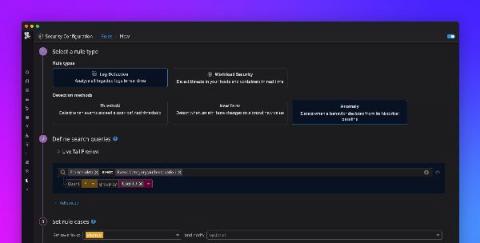
Securing your environment requires being able to quickly detect abnormal activity that could represent a threat. But today’s modern cloud infrastructure is large, complex, and can generate vast volumes of logs. This makes it difficult to determine what activity is normal and harder to identify anomalous behavior. Now, in addition to threshold and new term –based Threat Detection Rules , Datadog Security Monitoring provides the ability to create anomaly.