Operations | Monitoring | ITSM | DevOps | Cloud

Autonomous Worker Agents: AI Agents in Your Pipelines | Harness Blog

AI is writing more of the code. Software delivery, the work between writing code and running it in production, is where most of the day still goes. Building, testing, scanning, deploying, remediating, and operating still require the same, if not more, effort as before AI. Today, we're introducing Autonomous Worker Agents for software delivery: the platform for enterprises to build and safely run AI agents that handle the work between writing code and shipping it to production.

How to Choose a Cloud Migration Partner in New Jersey: What IT Leaders Need to Verify

A failed cloud migration does not announce itself in advance. Data loss, extended downtime, misconfigured security controls, and compliance gaps surface during or after the move, when reversing course is expensive and the business is already affected. For New Jersey organisations in financial services, healthcare, legal, and manufacturing, the stakes are high enough that choosing the right migration partner is at least as important as choosing the right cloud platform. The hard part is separating providers who can execute a migration cleanly from those who can describe one convincingly.

How to Prevent Cash Theft and Skimming in Your Business

Every business that takes cash or cards is a target, even when nothing has gone wrong yet. Money tends to leak out quietly: a few notes missing from the till, a cloned card at the terminal, and a slow drain that only surfaces when the numbers stop matching. Most of it is preventable with a handful of steady habits. Here is how to protect both your drawer and your customers.

Quantum is the least interesting part of quantum certificates

On June 3, Let’s Encrypt announced that the post-quantum web is going to run on something called Merkle Tree Certificates. The internet did what it does and turned this into a doomsday Q-Day countdown. The quantum computers are coming, your certificates are about to break, panic! Unlike every other security vendor, I’m not worried about quantum computers. But the announcement is still worth your attention. Just not for the reason you’ve been told.

How Agentic AI Enables Autonomous Threat Response at Machine Speed

Why do 40% of alerts received by security teams today go completely uninvestigated? It’s not due to a lack of concern but instead caused by shortening attack windows and compounded by overwhelming tech sprawl. Today’s security teams are operating in a threat landscape defined by escalating attacks, tighter budgets and mounting alert fatigue. Organizations process an average of 960 security alerts per day, and large enterprises handle more than 3,000 daily alerts across roughly 30 tools.

Building a resilient workspace with an integrated security framework

Since 2020, the modern workspace has fundamentally changed, where employees now operate across a mix of office, hybrid and remote locations. Critical systems are now distributed between data centres and public cloud platforms, and most corporate data lives in the cloud. This shift has expanded the attack surface for many businesses.

Ivanti Neurons for Secure Access

Ivanti Neurons for Secure Access: Full Platform Demo | Ivanti Discover how Ivanti Neurons for Secure Access gives your security team complete, real-time visibility across your network — with automated threat detection, Zero Trust access control, and centralized gateway management, all from one cloud-based platform. Watch the demo and see what unified secure access looks like in action.

Sanctioned Isn't Secured: The AI Audit Logs Your SIEM Never Sees

Your organization has approved AI platforms for development, data science, and productivity. Procurement signed off. Legal reviewed the terms. Employees are using them. The tools are sanctioned. What isn’t sanctioned is invisibility. The administrative layer of every AI platform in your environment — OpenAI, Amazon Bedrock, Google Gemini, Cursor, Databricks, Glean and others — generates security-relevant events that your SIEM has never seen.

How to Choose Managed IT Services in Addison, IL: A Buyer's Guide for Local Businesses

If your servers go down during a shipping window or a ransomware email slips past an unpatched laptop, the cost lands on your business within hours - not next quarter. For the manufacturers, warehouses, logistics operators, and professional-services firms packed into Addison's roughly 21 million square feet of industrial and commercial space, that risk is the reason managed IT services have moved from "nice to have" to baseline infrastructure. The hard part isn't deciding whether to outsource technology operations. It's choosing the right provider.

Commercial Security Systems and Operational Resilience - What Businesses Need to Know

In most organizations, "security" has quietly become shorthand for cybersecurity. Budgets, headcount, and executive attention flow toward firewalls, endpoint protection, and threat detection - and rightly so. But this focus has created a blind spot. The physical layer of security, the cameras and access controls and alarms that protect the building itself, is too often treated as a facilities expense rather than what it actually is: a core component of operational resilience.

Canonical announces live kernel patching for Arm64

Canonical Livepatch now officially supports Arm64, further expanding its security patching automation capabilities. For the first time, Ubuntu on an Arm64 machine can apply critical kernel updates, without service interruption or rebooting. Starting with Ubuntu Core 26 for Arm64, and for Ubuntu Core 20 and onwards for AMD64 machines, a wider range of devices and cloud virtual machines can achieve timely vulnerability remediation through Canonical Livepatch.

How Businesses Are Building More Resilient Technology Strategies

In an increasingly digital world, businesses face constant pressure to keep their technology systems secure, efficient, and adaptable. From cyber threats and system outages to changing customer expectations and market disruptions, organizations can no longer rely on technology strategies that focus solely on short-term needs. Instead, companies are investing in resilient technology strategies designed to support long-term growth, minimize risk, and maintain business continuity in uncertain conditions.

AI Coding Security Risks Demand Dependency Firewalls | Harness Blog

AI coding assistants accelerate development but can rapidly introduce vulnerable, malicious, or non-compliant open-source dependencies into your codebase. Harness Artifact Registry's Dependency Firewall acts as a registry-level control point, evaluating and blocking risky external packages before they enter your CI/CD pipeline—essential protection against modern npm-style supply chain attacks.

Get Your Business Off The Ground With These Ideas

Have you always wanted to build and open your very own business? If so, you could be in the beginning stages of planning how to go about this. Building a brand new business from scratch can be incredibly difficult. However, if you get it all right from the get go then you will likely create a company that not only survives, but thrives. Check out the article below to find out more on what you need for your new business.

WordPress at Enterprise Scale: What IT and Ops Teams Need to Know in 2026

Enterprise WordPress success depends on the people, processes, and infrastructure behind the platform Most enterprise CMS decisions don't land on a marketing director's desk. They land on the ops lead's, the DevOps team's, or the CISO's - because the real questions aren't about brand aesthetics. They're about uptime, compliance, integrations, and long-term cost of ownership.

Why Nonprofits Need Dedicated Board Management Software - Not Just a Shared Folder

The setup is familiar across the nonprofit sector: a Google Drive folder that holds board packs in various states of version, an email thread that doubles as the distribution list and the minutes archive, and a governance team that is, in practice, one person - usually the executive director - managing board logistics alongside everything else. It works, up to a point.

7 Ways Digital Protection Services Are Safeguarding High-Risk Individuals in 2026

In today's hyper-connected world, personal security no longer begins and ends with physical protection. For executives, entrepreneurs, public figures, journalists, activists, and other high-risk individuals, digital threats have become just as significant as real-world risks. A single exposed piece of personal information can open the door to identity theft, financial fraud, online harassment, reputational damage, or even physical safety concerns.

Beware of PII in Testing Data: The Security Iceberg and Where PII Actually Hides

If you run a platform tools or security team, you have likely heard this request from developers: “I just need a copy of the production database for staging so I can run realistic load and integration tests.” It is a completely reasonable request. Production traffic and data contain the actual request shapes, real-world value distributions, long-tail anomalies, and timing patterns that make tests useful.

7 Best AI Search Tools Across Slack, Google Drive, and GitHub That Flag Stale Docs

An authoritative-looking snippet can be poisonous if it's two versions behind. A Gartner CX survey found that 56 percent of users complain about outdated documentation, and a 2026 Support Ops study attributes nearly 40 percent of tickets to articles that are stale or unclear. If a deployment script changes yet the old README still ranks first in Slack, you can lose an afternoon chasing errors. Multiply that across every lapsed policy, pricing deck, or support macro, and productivity shrinks-along with audit scores and customer trust.

What to look for in a global managed IT services partner

Operating across several countries can create IT problems that are difficult to manage from one central office. Your employees may work in different time zones, use different suppliers and rely on systems that were introduced independently by local teams. Choosing the right provider of global IT support services can help you bring those systems together, improve service consistency and give employees access to dependable technical help wherever they work.

Why We Built Lynx: Bringing Control to the Age of AI Agents

For a decade, one idea has guided everything we’ve built at Tigera: How do you secure a dynamic system with a lot of moving parts that is changing rapidly, with a programmatic approach? Calico has applied that idea for Global 2000 companies running the largest Kubernetes platforms in the world, securing tens of millions of mission-critical transactions every day. Today I’m excited to announce the next chapter of that work: Lynx, a unified control plane for Kubernetes-native AI agents.

We wrote the docs

Most security vendors hide their documentation behind a login. Some don’t write it at all. You get a sales page, a demo, and a request to install an agent on your servers, and you’re expected to trust that the thing does what the marketing says. That’s backwards. So we wrote the docs, and we put all of them at certkit.io/docs. No login, no account gate, no “contact us for details.” You can read every page before you create an account.

Harness Named a Leader in the 2026 Gartner Magic Quadrant for DevSecOps Platforms for the Third Consecutive Year | Harness Blog

Harness has been recognized as a Leader in the 2026 Gartner Magic Quadrant for DevSecOps Platforms for the third consecutive year. Harness was also positioned furthest on the Completeness of Vision axis in the report. Harness has been recognized as a Leader in the 2026 Gartner Magic Quadrant for DevSecOps Platforms for the third consecutive year. Harness was also positioned furthest on the Completeness of Vision axis in the report.

Why Physical Key Tracking Remains an Operational Blind Spot in Dealership Operations

Modern dealership operations have become increasingly connected, data driven, and process oriented. Dealership groups now rely on advanced systems to manage inventory, customer communication, service scheduling, vehicle logistics, and sales performance. However, one operational area still remains heavily dependent on outdated manual workflows: vehicle key tracking.

How Worker Safety RTLS Creates Safer Industrial Work Environments

Step onto the floor of any heavy stamping plant, automotive fabrication cell, or high-velocity distribution hub, and you see safety treated like an afterthought wrapped in a compliance checklist. You find yellow lines painted across the concrete, warnings stuck to every pillar, and flashing blue strobe lights mounted on the backs of forklifts. Yet close calls, near-misses, and serious floor injuries keep happening. These old-school safety methods fail because they place the entire burden of survival on human vision and split-second reflexes.

Beyond Mythos: responding to a new threat landscape

Canonical’s security philosophy has always been built on the premise that vulnerabilities exist and will be discovered. Our response relies on defense-in-depth architecture, rapid patch deployment, and strict adherence to Coordinated Vulnerability Disclosure (CVD). AI changes vulnerability discovery volume and speed. We have a robust vulnerability management process that is backed by rigorous compliance certifications.

How Zero Trust is Reshaping Federal IT Strategy

Zero trust sparked a paradigm shift for federal agencies, changing the way they approach IT and data management as they "assume breach" from threat actors. Brian Chamberlain, Public Sector Business Development Lead at SolarWinds, explains how starting with observability helps federal agencies lay critical groundwork for meeting zero trust directives.

The Miasma worm explained: How it Hit Red Hat and Microsoft

Miasma has already hit Red Hat and 73 Microsoft GitHub repos. Here's how it works and what your team can do right now. Nigel Douglas, Head of Developer Relations at Cloudsmith, breaks down the Miasma worm – a self-replicating supply chain attack and evolved variant of Mini Shai-Hulud from threat group TeamPCP. Learn how Miasma uses the yo-yo attack method to move laterally across registries and workstations, why conventional scanners missed it, and the practical steps security teams can take today, including cooldown policies and continuous risk assessment.

AI Found 18 OpenSSL Vulnerabilities. Now Your Team Has to Patch Them.

On June 9, 2026, the OpenSSL project released patches covering 18 vulnerabilities across its supported releases. The headline flaw, CVE-2026-45447, is rated high severity and has the potential for remote code execution. Not too long ago, a security advisory with 18 vulnerabilities would have been routine. Microsoft’s Patch Tuesday provided a predictable cycle, and organizations operated with the expectation of a meaningful remediation window. That model is under pressure.

What Key Features Matter Most When Evaluating Business Software

Selecting new software feels like a massive chore for growing companies. Your team spends hours looking at features and watching complex demonstrations. You want a tool that actually helps your business grow without adding confusion. The wrong choice wastes money and causes immense frustration for everyone. Finding the perfect fit requires a clear strategy from the very start. Focus on specific capabilities to make the best choice for your unique workflows.

How Cloud Computing Is Revolutionizing Prop Firm Technology

The financial trading world has changed dramatically over the past decade, and much of that change has been driven by one thing: cloud computing. For proprietary trading firms, staying competitive means being faster, smarter, and more reliable than ever before. That is where prop firm technology comes in.

Payment Device Testing Companies

Payment device testing is a huge field. It could mean testing products that include POS terminals, PIN pads, unattended payment devices, ATMs, SoftPOS apps, mobile payment software, firmware, remote management, backend systems, APIs, cloud services, and cardholder data environments. Then within these areas, different kinds of organizations will have different focus points. For device manufacturers, what matters is PCI PTS, product security, embedded systems, pre-compliance work, and certification readiness.

Why Small Business IT Disasters Are Almost Always Preventable

A server goes down on a Tuesday morning. A ransomware file starts encrypting documents at 2 a.m. A key employee clicks a link in what looked like a vendor invoice, and by the time anyone notices, credentials have been sitting in the wrong hands for six hours.

Top Real Estate Investment Software Development Companies in US

Real estate investment firms often run on software that wasn't designed for fund mechanics. Waterfall calculations live in spreadsheets that break on edge cases. K-1 season turns into a fire drill. Investor questions sit in inboxes instead of being resolved inside self-service portals. The cost shows up in slower capital raises, audit friction, and operational drag that scales worse than AUM does.

7 Features Growing Businesses Should Prioritize in Coworking Spaces

Choosing a coworking space in Frankfurt isn't just about finding a desk. For a growing business, it's a strategic decision that affects how your team works, how clients perceive you, and how quickly you can scale. The wrong space can quietly hold you back. The right one genuinely supports your next stage of growth. With hundreds of options available across major business hubs, knowing what to look for matters. This guide walks through the seven features that should be non-negotiable for any business that's serious about growing.

We won't train on your data is not a security architecture

Every enterprise contract I’ve signed in the last two years has the same clause. “Vendor will not use Customer Data to train machine learning models.” Sometimes it’s a paragraph. Sometimes it’s a whole section. The language varies but the intent is identical: don’t feed our production data into your AI. I get it. I sign the same clause as a vendor. But here’s what’s been bothering me: that clause is a promise, not an architecture.

Secret Manager Integration: One Source of Truth for Humans and Agents.

Production secrets should live in one place and stay there, whether your next deployment is triggered by a developer or an AI agent. The Secret Manager integration connects AWS Secrets Manager, AWS SSM, or GCP Secret Manager to Qovery so secrets are referenced, never copied, and enterprise governance holds regardless of who deploys. Alessandro leads product at Qovery. He drives the changelog, roadmap, and product strategy - turning customer feedback into platform capabilities.

A field guide to the agents in your cluster

You know every service in your cluster by name. You know which team owns each one, what it talks to, how it scales, where its logs go. The agents are a different story. That’s not a criticism, it’s an observation, and it’s one we keep running into. Every company we talk to is shipping agents of some kind, from scales of 10s to 1000s. Customer service bots that field tier-one tickets. Internal copilots that draft emails and summarise meetings and write the boring half of every PR.

Five Principles of an Accountable AI Agent Network: How to Evaluate Any Governance Platform

The first post in this series argued that AI agent governance hasn’t kept pace with deployment. The second laid out the five pillars of accountability, and what is required. The third walked through why network policies, API gateways, MCP/A2A protocols, DIY security patterns, and Role-based Access Control (RBAC) each leave critical accountability gaps. So what does good look like? The five pillars define what AI agent accountability requires.

Why Critical Vulnerabilities Often Get Stuck in Remediation Queues

Critical vulnerabilities rarely fail because engineers can't patch. They fail because organizations can't decide. That sounds like an insult. It's a diagnosis. A queue forms when work competes, when ownership blurs, when risk turns into an abstract noun that nobody can put on a calendar. Security teams shout in numbers, CVSS, exploitability, and blast radius. Product teams answer in dates, revenue, and churn. Operations teams answer with uptime and the bitter memory of the last "quick fix" that took down production at 2 a.m. The queue becomes a diplomatic zone where everyone stays polite, and the bug stays alive.

Stop Building AI Agents That Can't Be Audited

AI agents have moved beyond experimentation. Today, they schedule meetings, process invoices, respond to customers, analyze contracts, update records, and make decisions that directly affect business operations. As organizations race to automate more workflows, one critical question is often overlooked: Can you explain exactly what your AI agent did, why it did it, and how it reached that decision?

Why Your Vendor Monitoring Strategy Has a Blind Spot: The Case for Continuous TPRM

You monitor everything. Network traffic, application performance, authentication events, infrastructure health. If something meaningful changes in your environment, you have a signal for it. That discipline is foundational to how modern IT and security operations work. But there is one part of your stack you almost certainly cannot see in real time: your vendors.

Why Security Teams Spend So Much Time Reconciling Data

Security teams today are managing growing volumes of cybersecurity data across increasingly complex environments. This blog explores the hidden operational cost of disconnected tools, manual data reconciliation, and fragmented reporting, and how Teneo’s Cyber Asset Attack Surface Management (CAASM), powered by ThreatAware, helps organizations create a more unified and trusted view across their security estate. Most organizations are not short of security tools.

Why Most Organizations Still Don't Know What's Protected

Organizations invest heavily in cybersecurity tools, yet many still struggle to confidently understand what is actually protected across their environment. This blog explores how disconnected systems, unknown assets, and inconsistent data create blind spots, and how Teneo’s Cyber Asset Attack Surface Management (CAASM), powered by ThreatAware, helps organizations gain a trusted view of security coverage.

Enforce Artifact Governance with OPA Policy-as-Code | Harness Artifact Registry

Artifact governance should not depend on manual checks. But for many teams, container images, software packages, and open-source dependencies are imported into registries from multiple internal and external sources. Without automated guardrails, vulnerable images, untrusted packages, end-of-life dependencies, or non-compliant artifacts can reach developers and delivery pipelines.

Top Semgrep Alternatives

Application security has recently become one of the most important parts of software development. Today, there is an increasing number of threats that target code, dependencies, and cloud environments, so developers need tools that go way beyond basic static analysis. Semgrep is a popular tool for code scanning (SAST), but many teams are looking for other alternatives that provide broader security coverage, better automation capabilities, or just easier workflows.

Certificate lineage: the concept your tools already use but nobody named

The word “certificate” means too many different things. When someone says “the certificate for example.com,” they might mean the public key the CA signed. They might mean the key-pair sitting on the filesystem. They might mean the signature that expires in 47 days. Or they might mean all the things together, that you’ve been renewing for the last 10 years. That last one doesn’t have a name in any PKI standard. And it should.

Protecting against HTTP/2 Bomb vulnerability (CVE-2026-49975) with HAProxy

On June 2, 2026, security researchers disclosed a remote denial-of-service (DoS) exploit named the HTTP/2 Bomb. This flaw allows unauthenticated remote attackers to rapidly exhaust server memory, rendering major web servers inaccessible.

Shai-Hulud Miasma: Inside the Compromise of Red Hat's Packages | Harness Blog

The Shai-Hulud lineage has a new face. On June 1, 2026, security teams independently flagged a fresh supply chain compromise inside the @redhat-cloud-services npm namespace. 32 packages and 96 versions were all republished with a credential-stealing worm. These aren't typosquats. They are the official packages in a trusted scope, pulling somewhere 80,000-117,000 average weekly downloads.

From Tee Time to Uptime: A True Cyber Resilience Story

In this 90-second customer case study, Mehdi Salehi from Golfbreaks shares the operational and security gains his team saw with N-central. Highlights include about 20% annual cost savings, around 20 minutes saved per end-user support session, a 90% increase in third-party patch coverage, and about 70% improvement in server OS update coverage. Watch the short video to see how automation and a central pane of glass helped reduce the burden on the team and deliver greater peace of mind.

Keeping Critical Systems Online Across Dynamic Operational Locations

Keeping critical systems online has always been a technical challenge, but the scale of that challenge shifts considerably when operations span multiple physical locations, none of which are fixed. Field sites, temporary installations, marine vessels, mobile command units, and dispersed industrial assets all place unique demands on the infrastructure designed to keep them running. In these environments, avoiding downtime and maintaining business continuity is not simply a matter of patching software or monitoring a server room.

4 Best Chainguard Alternatives for Zero-CVE Images in 2026

Chainguard helped make zero-CVE and near-zero-CVE container images a mainstream topic in cloud-native security. For many engineering and security teams, the core appeal is clear: fewer vulnerabilities in base images, smaller attack surfaces, stronger software provenance, and less time wasted chasing noisy vulnerability reports.

Why Outsourcing Global Payroll is Critical for Growing Global Teams

A crucial part that manages your distributed workforce across various countries is the global payroll. As remote workers continue to rise, organisations need more than just simple solutions. They need a system that ensures accurate and timely payments to their employees globally. This calls for the need for a comprehensive, compliant global payroll solution that scales with your growth.

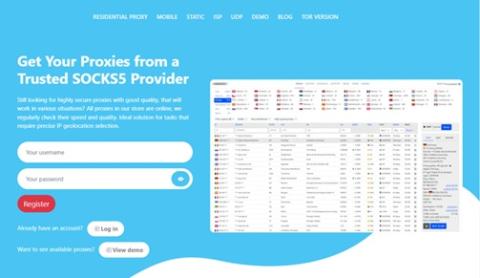
Live proxy stock visibility on NSOCKS for smarter pre purchase decisions

Buying proxy access becomes much more controlled when the user can inspect real inventory instead of relying on vague package promises. On the homepage, NSOCKS presents a model where specific IPs can be reviewed before payment, with visible details such as geolocation, speed, ISP data, protocol support, and live availability. That shifts the buying process away from blind subscription logic and toward deliberate selection based on current stock. The practical value of the service comes from this visibility layer, because it lets users judge what they are paying for before money leaves the balance.

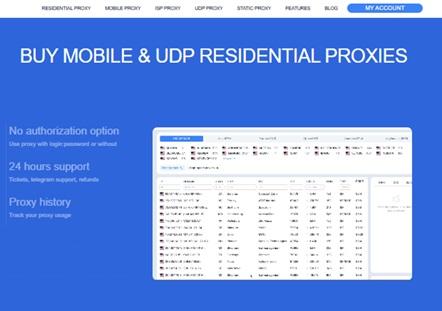
INSOCKS for proxy governance quality control and scalable team workflows

Proxy infrastructure becomes more valuable when it is managed like a governed business resource instead of a one click purchase. For teams that need repeatable buying rules, visible quality signals, and cleaner reporting, INSOCKS can be treated as a platform for proxy governance rather than only a catalog of IP addresses. The service combines product variety, fraud screening, usage history, API access, and support channels in a way that helps teams build internal standards for selection, testing, approval, and renewal.

Should platform, SRE, and security merge into one function?

Platform, SRE, and security are three distinct functions in modern engineering orgs, each shaped by a different problem. SRE was the operations function's answer to scale: how to keep systems reliable when the systems get big. Platform answered a different problem: how to let developers ship without becoming infrastructure experts. Security drew the line on what could safely reach production.

Top IT Ticketing & SOAR Tools for Automated Workflows

For IT and SecOps teams, the challenge is not a lack of alerts. It is the sheer volume of noise coming from monitoring tools, security systems, and support channels. Trying to manage this volume manually is not just slow; it’s a recipe for mistakes, team burnout, and critical system failures.

What's new in Calico: Spring 2026 Release

Kubernetes has come a long way since its debut in 2014. It’s gone from running a couple of containerized microservices to orchestrating fleets of production workloads spanning everything from AI agents to full scale VMs running in pods. As Kubernetes adoption grows, and its use cases stretch to cover more ground, managing its increasingly complex networking and security landscape demands operational maturity and a platform that supports it.

What High-Performing DevOps Teams Get Right About Cloud Security

Most DevOps teams understand that cloud security matters, but the gap between understanding the problem and operationalizing it effectively remains fairly large. Cloud environments move quickly, infrastructure changes constantly, and teams are under pressure to deploy faster without creating unnecessary friction inside development pipelines.

Apple doesn't care who signed your certificate

The pitch for private PKI gets more compelling every year. Public certificate lifetimes are down to 200 days, dropping to 47 by 2029. If you run your own private certificate authority, you make your own rules. Issue certificates for as long as you want, skip the renewal churn. Let’s Encrypt and DigiCert don’t get to tell you what to do. Apple does though.